UK Online Safety Rules Bite
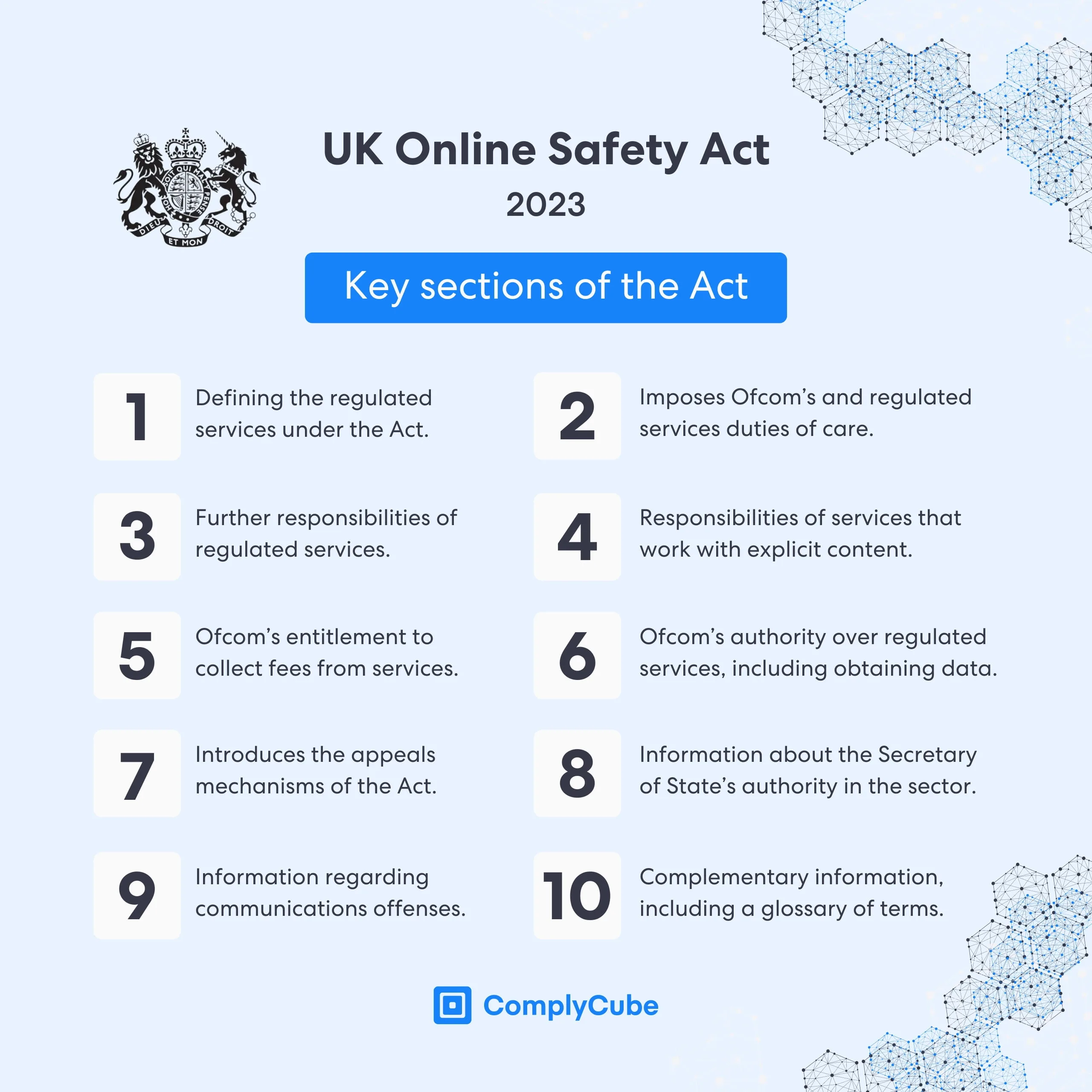
UK Online Safety Rules Bite
The internet’s long-running bargain is cracking: grow first, clean up later. The latest shift around UK online safety rules puts that model under direct pressure, especially for platforms that host user-generated content, private messaging, livestreams, search, gaming communities, or algorithmic feeds. For years, companies treated harmful content, underage access, and opaque recommendation systems as operational headaches. Now they are becoming board-level risk. The pain point is not just compliance paperwork. It is the collision between child protection, privacy, free expression, product growth, and the brutal economics of moderation. If regulators follow through, online services will need to prove they understand their own risks before those risks become headlines.
- Platforms face a higher burden of proof around child safety, content moderation, and risk assessment.
- Age assurance is moving from a niche compliance feature to a core product and trust issue.
- Encryption and privacy remain the hardest fault line in the safety debate.
- Smaller services are exposed because compliance costs can scale faster than revenue.
- The global impact could be larger than the UK as product teams avoid building country-by-country safety systems.
Why UK online safety rules are now a product problem
The important shift is that online safety is no longer just a legal function buried inside policy teams. It reaches directly into product design, engineering architecture, data governance, user onboarding, and machine-learning operations. A platform cannot credibly claim it protects users if its recommendation engine amplifies harmful content, its reporting tools are buried, or its moderation queue is permanently overwhelmed.
That means the new compliance battlefield is practical. Can a company map where children are likely to encounter risk? Can it explain how content moderation decisions are made? Can it audit recommendation algorithms? Can it show that age assurance systems are proportionate and privacy-preserving? The answers require evidence, not slogans.
The defining question is no longer whether platforms care about safety. It is whether they can demonstrate safety under pressure, at scale, and before regulators come knocking.
This is where the UK approach matters beyond its borders. Large platforms typically hate maintaining radically different versions of the same service for different markets. If a safety workflow, age gate, reporting system, or transparency dashboard is built for one major jurisdiction, it can quickly become the default elsewhere. Regulation has a way of becoming product infrastructure.
The Deep Dive on UK online safety rules
Age checks are the new trust layer
Age assurance sounds simple until it touches real users. A service can ask someone to enter a birth date, but that is weak. It can require government ID, but that creates privacy and exclusion risks. It can use facial age estimation, but that raises accuracy, bias, and biometric concerns. It can rely on payment data or third-party verification, but that introduces new data-sharing relationships and attack surfaces.
The most serious platforms will likely move toward layered systems. Low-risk features may require lighter checks. Higher-risk spaces, such as adult content, private adult-to-child messaging, or livestream monetisation, may trigger stronger verification. This risk-based model is more defensible than a blanket approach, but it is also harder to build.
Pro Tip: companies should treat age assurance as part of user experience, not a bolt-on compliance wall. If the flow is confusing, invasive, or unreliable, users will abandon it, work around it, or flood support teams with complaints.
Moderation must become auditable
The old moderation model was reactive: wait for reports, remove the worst content, publish occasional transparency numbers. That is not enough for a regime built around systemic risk. Platforms need to understand patterns: where abuse clusters, which features are exploited, which user journeys expose minors to harm, and where human moderators need escalation support.
This makes trust and safety data infrastructure crucial. Companies need consistent taxonomies for harmful content, clear internal policies, quality assurance for moderation decisions, and logs that can withstand external scrutiny. A messy spreadsheet culture will not survive serious enforcement.
The toughest challenge is accuracy. Automated systems can detect some categories of content quickly, especially known illegal material or spam-like behaviour. But context-heavy harms – grooming, coercive control, harassment, self-harm encouragement, and coded extremist language – are much harder. Over-enforcement chills speech. Under-enforcement leaves users exposed. The best systems combine automation, human review, appeal routes, and continuous policy testing.
Encryption remains the hardest conflict
No part of the debate is more volatile than end-to-end encryption. Safety advocates argue that private channels can be exploited for abuse, grooming, and illegal content distribution. Privacy advocates counter that weakening encryption creates systemic risk for everyone, including children, journalists, activists, and ordinary users trying to keep personal data secure.
The technical reality is unforgiving. A backdoor built for one purpose can become a vulnerability for another. Client-side scanning, metadata analysis, and behavioural detection each introduce trade-offs. Some approaches may help identify suspicious patterns without reading message content, but none magically resolves the tension between private communication and proactive detection.
For platforms, the safest strategic path is transparency about design choices. If a service uses end-to-end encryption, it should explain what signals it can still act on, how reporting works, how accounts are investigated, and what safeguards prevent abuse of enforcement tools. Silence invites suspicion from every side.
Why this matters for startups and smaller platforms
Big Tech has armies of lawyers, policy staff, machine-learning engineers, and moderators. Smaller companies do not. That imbalance is one of the under-discussed consequences of tougher online safety regimes. A well-funded platform can absorb compliance as a cost of doing business. A small forum, game studio, dating app, or social startup may find the burden existential.
Yet ignoring safety is not a viable growth strategy. Investors increasingly view trust and safety as part of operational maturity. Enterprise partners ask about data protection. App stores enforce content rules. Payment processors can cut off risky services. Users are more willing to leave communities that feel chaotic or unsafe.
The practical answer is prioritisation. Smaller services should start with a clear risk assessment, identify child-facing features, document moderation workflows, improve reporting tools, and set escalation procedures for urgent harms. They do not need to copy the infrastructure of a global platform on day one, but they do need a defensible plan.
- Map user risk: identify where minors, strangers, messaging, livestreaming, or algorithmic discovery intersect.
- Document decisions: keep records of policies, enforcement actions, appeals, and product changes.
- Reduce risky defaults: limit unsolicited contact, improve privacy settings, and control recommendation exposure for younger users.
- Test reporting flows: users should be able to report harm quickly, clearly, and from the exact place it happens.
The business model problem behind safer platforms
The uncomfortable truth is that many online harms are not bugs in the business model. They are adjacent to the growth model. Engagement-driven feeds reward content that triggers emotion. Frictionless sharing helps communities grow but also helps abuse spread. Anonymous accounts can protect vulnerable users but also empower bad actors. Viral discovery can make creators rich while pushing extreme material into mainstream feeds.
That is why meaningful compliance can become a revenue issue. Slower onboarding may reduce sign-ups. Stricter recommendations may reduce watch time. More moderation may increase costs. Better age checks may shrink addressable audiences for certain products. Safety has always had a price. The difference now is that ignoring it may cost more.
The next generation of winning platforms will not be the ones that promise zero risk. They will be the ones that can prove they designed for predictable risk and responded when reality changed.
What comes next
Expect a messy adjustment period. Regulators will test their powers. Platforms will challenge interpretations. Privacy groups will scrutinise age-checking systems. Child safety campaigners will push for faster enforcement. Product teams will quietly redesign features that once shipped with minimal oversight.
The most likely future is not a single dramatic switch but a gradual hardening of the internet’s safety layer. More prompts. More verification. More transparency reports. More default protections for minors. More friction in high-risk interactions. More internal audits of AI moderation and recommendation systems.
There is a real risk of overreach, especially if rules encourage surveillance-heavy compliance or push smaller communities offline. But there is also a real cost to the status quo. The open web, social platforms, messaging apps, and gaming spaces have become critical infrastructure for childhood, politics, commerce, and culture. Treating safety as optional no longer matches the scale of the systems we have built.
The bottom line: UK online safety rules are not just another regulatory headache. They are a forcing function for a more accountable internet. The companies that adapt early will turn compliance into trust. The ones that wait will discover that safety debt, like technical debt, compounds painfully.
The information provided in this article is for general informational purposes only. While we strive for accuracy, we make no guarantees about the completeness or reliability of the content. Always verify important information through official or multiple sources before making decisions.