US Boat Strikes Test the Limits of War
US Boat Strikes Test the Limits of War
The most dangerous fights over presidential power rarely begin with a formal declaration. They begin with a target, a legal memo, and a public told to trust the mission. The growing controversy around US boat strikes is now forcing a brutal question into the open: when a government kills people at sea outside a conventional battlefield, is it enforcing the law, fighting a war, or committing something far darker? The allegations reported around recent maritime attacks are not just another argument over counter-narcotics policy. They go to the core of international law, executive restraint, and whether states can rebrand lethal force as policing when the targets have no trial, no warning, and no realistic chance to surrender.
- The legal stakes are enormous: repeated lethal attacks on boats may trigger scrutiny under human rights law, the law of armed conflict, and crimes against humanity standards.
- The policy risk is bigger than one administration: normalizing maritime strikes could hand future presidents a broad template for killing outside declared wars.
- The facts matter: legality turns on who was targeted, what evidence existed, whether capture was possible, and whether attacks were systematic.
- The geopolitical fallout is real: allies, courts, and international bodies may view these actions as a test of whether US power remains bounded by law.
Why US Boat Strikes Have Become a Legal Flashpoint
At first glance, a strike on a suspected trafficking vessel can sound like a narrow security operation. Governments have long used coast guards, naval patrols, surveillance aircraft, and intelligence-sharing to disrupt smuggling routes. But lethal force changes everything. Once a state moves from interdiction to destruction, the legal framework shifts from routine enforcement to an inquiry about necessity, proportionality, accountability, and intent.
The controversy over US boat strikes centers on whether the people aboard were legitimate military targets or civilians suspected of criminal conduct. That distinction is not academic. Criminal suspects are not stripped of their rights because they are at sea. They cannot be summarily executed because boarding a vessel is difficult or politically inconvenient. Unless there is an armed conflict framework that lawfully applies, the default standard is law enforcement: stop, search, arrest, and prosecute where possible.
The core issue is not whether trafficking is dangerous. It is whether a state can use wartime killing rules against people it has not lawfully placed inside a war.
This is where the phrase crime against humanity enters the debate. The threshold is high. It generally requires widespread or systematic attacks directed against a civilian population, with knowledge of the attack. A single unlawful strike may be a grave violation. A pattern of strikes, policy approvals, dehumanizing rhetoric, and a lack of accountability could invite far more serious scrutiny.
The Core Legal Question Behind US Boat Strikes
The United States has powerful tools at sea. It can board vessels, coordinate with partner nations, seize cargo, arrest suspects, and pursue prosecutions. The question is whether it can also fire first and explain later. For that, officials would need a persuasive legal theory.
Law enforcement is not a kill box
Maritime crime is usually handled through law enforcement. That means force may be used when necessary, but lethal force is supposed to be a last resort against an imminent threat to life. If a boat is fleeing, carrying contraband, or suspected of smuggling, that does not automatically make every person aboard targetable.
A lawful operation would normally require attempts to identify the vessel, issue warnings, use non-lethal measures where feasible, and preserve life after force is used. If survivors are left unaided or if strikes are designed to destroy people rather than disable a vessel, the legal exposure deepens.
War powers cannot be stretched indefinitely
Governments often prefer the flexibility of the armed conflict model because it permits targeting based on status or conduct, not only immediate self-defense. But that model cannot simply be declared into existence. There must be an actual armed conflict, identifiable parties, and a legal basis for applying wartime rules.
Calling alleged traffickers narco-terrorists or enemy actors may be politically potent, but labels do not settle the law. If the targets are civilians involved in crime rather than members of an organized armed group engaged in hostilities, lethal strikes look less like combat and more like extrajudicial killing.
Evidence and transparency are the pressure points
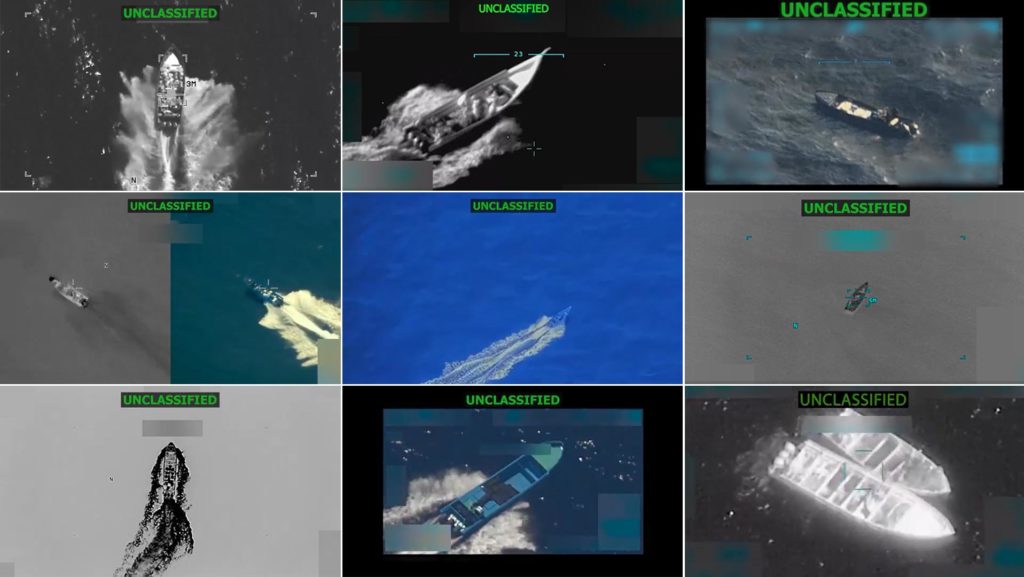
The public often sees only fragments: a statement about a dangerous vessel, a claim about illicit cargo, perhaps grainy imagery from the air. That is not enough for accountability. Investigators would want to know what intelligence existed before the strike, how certain officials were about the identities of the people aboard, whether any children or non-combatants were present, and whether capture was feasible.
In other words, the legality of US boat strikes cannot be assessed through slogans. It depends on records, orders, targeting criteria, after-action reviews, and whether decision-makers built a process that protected life or bypassed it.
Why This Matters Beyond One Set of Strikes
The immediate victims matter most, but the precedent may be the bigger story. If a country can launch lethal attacks against suspected criminals in international waters with limited disclosure, other states will notice. A doctrine built for one government will not remain exclusive to that government.
Imagine rival powers adopting the same logic against dissidents, smugglers, pirates, militia financiers, or political opponents described as transnational threats. The sea would become a legal gray zone where powerful states test the edges of sovereignty and accountability. That is why international lawyers are alarmed. The debate is not soft on crime. It is hard on unchecked killing.
Once lethal force becomes an administrative tool, the barrier between policing and war begins to collapse.
There is also a democratic accountability problem. A president or defense leadership can move faster than Congress, faster than courts, and faster than public scrutiny. By the time lawmakers demand answers, the operation may be complete and the evidence classified. That lag is where expansive power grows.
The Strategic Guide to Reading the Official Claims
When officials defend maritime strikes, the language tends to follow a predictable pattern. Readers should look for what is said and what is missing.
- Claim: The vessel was linked to trafficking. Missing question: Was everyone aboard personally involved, and did they pose an imminent threat to life?
- Claim: The strike disrupted a dangerous network. Missing question: Why was arrest, boarding, or disabling the vessel not feasible?
- Claim: Intelligence confirmed the target. Missing question: What was the confidence level, and was the intelligence independently reviewed?
- Claim: The operation was lawful. Missing question: Under which legal framework:
self-defense,armed conflict, orlaw enforcement? - Claim: The targets were terrorists or cartel members. Missing question: Does that designation create a lawful basis for killing them without trial?
Pro Tip: The most important sentence in any official defense is often the one that identifies the legal authority. If the justification is vague, shifting, or hidden behind classification, skepticism is warranted.
Could US Boat Strikes Amount to Crimes Against Humanity
That is the hardest and most explosive question. A crime against humanity allegation is not just a claim that an act was illegal. It suggests a broader attack on civilians, carried out as part of a policy or systematic practice. For prosecutors or investigators, the key issues would include scale, repetition, command responsibility, and intent.
If strikes were isolated mistakes, the legal analysis may center on unlawful killings, negligence, or excessive force. If they were part of a deliberate campaign that treated suspected civilians as disposable targets, the analysis becomes far more severe. The difference lies in the pattern and the paper trail.
Command responsibility is especially important. Senior officials do not need to personally press a button to face scrutiny. If they approved rules that made unlawful killings likely, ignored warnings, failed to investigate prior incidents, or celebrated questionable attacks as policy victories, they could become part of the legal story.
The Political Incentive Behind Lethal Maritime Policy
There is a reason hardline maritime operations appeal to political leaders. They are visually decisive, easy to message, and can be framed as action against cartels, migration pressure, or border insecurity. A destroyed boat is a cleaner political image than a complex prosecution.
But the appearance of strength can conceal strategic weakness. Killing low-level operators rarely dismantles trafficking economies. Networks adapt routes, recruit replacements, and exploit corruption. Without financial investigations, port security, demand reduction, regional cooperation, and prosecutions that reach leadership structures, strikes may become symbolic violence with limited long-term impact.
The danger is that spectacle replaces strategy. A state can look tough while weakening the very legal norms that protect its own forces and citizens abroad.
What Accountability Should Look Like Now
A credible response does not require leaking every operational detail. It does require enough transparency to test legality. Lawmakers should demand the legal memos, targeting rules, casualty assessments, and intelligence standards behind the strikes. Inspectors general should examine whether commanders followed the rules. Courts may eventually need to assess whether victims or families have remedies.
Internationally, allies will watch whether the United States investigates itself seriously or treats legal concerns as public relations obstacles. That matters because legitimacy is a strategic asset. Countries that ask partners to support sanctions, maritime patrols, and security coalitions cannot easily dismiss the rules when those rules become inconvenient.
- Publish the legal basis for lethal maritime operations.
- Clarify whether targets are treated as criminals, combatants, or both.
- Disclose civilian casualty review procedures.
- Preserve evidence from each strike for independent oversight.
- Explain why non-lethal alternatives were rejected in each case.
The Bottom Line on US Boat Strikes
The debate over US boat strikes is not a niche maritime law dispute. It is a stress test for the modern national security state. If lethal power can be pushed into the open ocean with minimal transparency, then the boundary between policing and warfare becomes dangerously negotiable.
Drug trafficking, organized crime, and transnational violence are real threats. But real threats do not erase legal limits. They make those limits more important. The central question is not whether governments should confront criminal networks at sea. They should. The question is whether they can do so while preserving the principle that the state does not kill suspects simply because prosecution is harder than destruction.
If the allegations surrounding these strikes are substantiated, the consequences could reach far beyond one operation or one administration. They could redefine how democracies wage undeclared force in the twenty-first century. That is why the scrutiny now building around these attacks is not just warranted. It is essential.
The information provided in this article is for general informational purposes only. While we strive for accuracy, we make no guarantees about the completeness or reliability of the content. Always verify important information through official or multiple sources before making decisions.


