US Iran Russia Ukraine Shock the Global Order
US Iran Russia Ukraine Shock the Global Order
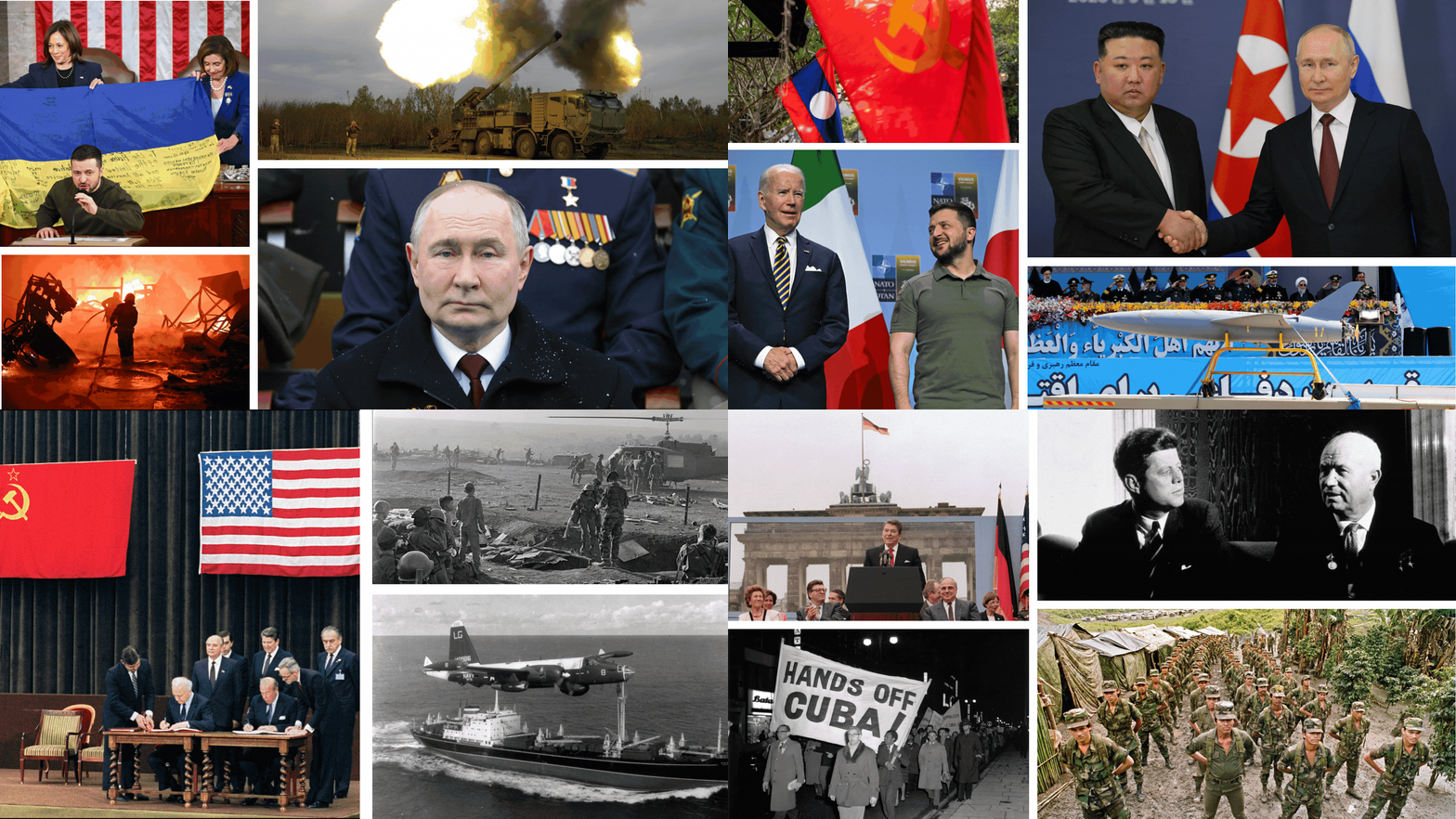
The geopolitical map is getting redrawn in real time, and the pressure is landing on the systems that keep the modern world moving: energy, weapons supply, sanctions, diplomacy, and trust. The latest escalation involving US Iran Russia Ukraine is not just another foreign policy headline. It is a stress test for an international order already straining under war, economic fragmentation, and shifting alliances. For governments, investors, and security planners, the question is no longer whether these flashpoints are connected. It is how quickly they can cascade into one another. When one arena heats up, the others rarely stay quiet for long. That is what makes this moment so dangerous, and so consequential.
- The US Iran Russia Ukraine dynamic is becoming one interconnected crisis, not four separate stories.
- Sanctions, energy leverage, and battlefield pressure are reinforcing each other.
- Allies are being forced to choose between deterrence, restraint, and risk management.
- Markets should expect higher volatility across oil, shipping, defense, and currency-sensitive sectors.
- The next phase will likely be defined by escalation management, not clean resolution.
Why the US Iran Russia Ukraine nexus matters now
The most important thing to understand is that this is no longer a regional set of conflicts. The US Iran Russia Ukraine nexus is a global systems problem. Russia’s war in Ukraine continues to reshape European security and energy policy. Iran’s regional posture raises the threat of wider conflict and disrupts the flow of oil and maritime trade. The United States is trying to deter both adversaries without overcommitting resources or inviting deeper escalation. Those goals often collide.
That collision matters because each actor is watching the others for weakness. Russia probes for cracks in NATO unity. Iran measures how far the US will go before it blinks. Washington, meanwhile, is balancing military support, sanctions enforcement, alliance management, and domestic political constraints. The result is a strategic environment where every move is read as a signal, and every signal can be misread.
What looks like separate crises is increasingly a single contest over who can absorb pressure longer without breaking the economic or military systems around them.
How the pressure points connect
At first glance, Ukraine and Iran may seem like different theaters with different rules. But the overlap is obvious once you look at the tools being used. Sanctions are central to both. Proxy activity shapes both. And energy markets react to both faster than policymakers can explain them away.
Ukraine keeps draining strategic bandwidth
The war in Ukraine has become a long-duration contest of industrial capacity, political endurance, and supply chain resilience. It has forced the US and Europe to spend more on defense, harden logistics, and rethink assumptions about stockpiles. The conflict has also made Russian leverage more dangerous because Moscow can now pair battlefield pressure with cyber operations, disinformation, and energy coercion.
For the US, that means aid to Ukraine is not just about supporting a partner. It is about preventing a broader message from taking hold: that territorial revisionism works if you wait long enough. If that message spreads, other authoritarian powers will take note.
Iran multiplies the risk in the background
Iran’s role is different but no less destabilizing. Even when it is not the headline, it is often the accelerant. Regional tensions tied to Iran can push oil prices higher, complicate shipping security, and force the US to spend attention and assets far from Eastern Europe. That creates a strategic squeeze. More ships need protection. More air defenses are needed. More intelligence resources are diverted.
This is where the US Iran Russia Ukraine equation becomes especially punishing. A crisis in one place reduces the margin for error everywhere else. And margin is exactly what modern deterrence depends on.
Russia benefits from distraction
Russia’s core advantage is that it thrives in ambiguity and overload. If Washington is forced to divide attention between Europe and the Middle East, Moscow gains room to maneuver. That does not mean Russia controls the board. It means it understands that adversaries have finite bandwidth. In a fragmented geopolitical environment, attention is a resource. Russia tries to make it scarce.
This is why the interplay between these conflicts matters more than any single battlefield update. The strategic effect is cumulative.
The economic fallout is already spreading
Markets hate uncertainty, but they hate interconnected uncertainty more. The US Iran Russia Ukraine dynamic creates exactly that. Energy traders watch the Strait of Hormuz and Black Sea routes. Defense contractors watch procurement cycles and replenishment demand. Currency markets watch safe-haven flows. Shipping companies watch insurance costs and rerouting risk.
For businesses, the practical lesson is simple: geopolitical risk is no longer a back-office issue. It is an operating expense. Companies exposed to fuel, freight, commodities, semiconductors, or industrial metals should be stress-testing their assumptions for a world where disruptions arrive in clusters, not in neat isolation.
- Energy: Expect volatility if regional tensions threaten transport corridors or production capacity.
- Defense: Higher spending is likely to persist as governments replenish inventories and modernize systems.
- Logistics: Longer routes and elevated insurance premiums can quickly cut margins.
- Finance: Sanctions risk and compliance costs are becoming harder to price in advance.
What Washington is trying to do
US policy faces a brutal tradeoff: deter aggression without turning containment into open-ended escalation. That is easier said than done. Support for Ukraine must continue, but so must efforts to prevent a larger confrontation in the Middle East. Sanctions must bite, but they cannot fully stop adversaries from finding workarounds. Military posture must reassure allies, but it cannot look like panic.
The Biden-era and post-Biden strategic playbook, depending on the moment and administration in question, tends to revolve around layered pressure: diplomacy, arms transfers, economic restrictions, and coalition building. The problem is that adversaries have adapted. Russia has had years to harden around sanctions. Iran has built a networked deterrence model through proxies and asymmetric tactics. Neither actor needs to win decisively to succeed. They only need to make the US spend more than it wants to spend.
Why the alliance system is under strain
Europe wants US leadership, but it also wants predictability. Gulf partners want security guarantees without becoming front-line targets. Ukraine wants sustained support, but it also needs a credible path to long-term stability. These interests overlap just enough to hold a coalition together, but not enough to eliminate friction.
That tension is the hidden story inside the US Iran Russia Ukraine crisis. Alliances are not collapsing. They are becoming more expensive to maintain.
Deterrence is no longer about showing strength once. It is about proving endurance across multiple theaters at the same time.
What to watch next in the US Iran Russia Ukraine crisis
The next moves will likely come through pressure rather than announcements. Watch for shifts in sanctions enforcement, changes in military aid cadence, maritime security deployments, and any signs that Moscow or Tehran is trying to exploit attention gaps.
- Sanctions tightening: New enforcement steps could target intermediaries and shadow networks.
- Shipping disruption: A flare-up near key waterways could immediately ripple through energy and freight.
- Military signaling: Exercises, deployments, or new weapons deliveries may be used as messaging tools.
- Diplomatic fragmentation: If allies split on response strategy, adversaries gain leverage.
There is also a deeper structural possibility: the world may be entering a phase where crises are no longer resolved sequentially. Instead, they overlap. That makes policymaking harder, because success in one theater can create vulnerability in another. The old assumption was that states could compartmentalize threats. The US Iran Russia Ukraine reality suggests otherwise.
Why this matters for the next decade
This is bigger than any single administration or battlefield. The real story is the normalization of multi-theater instability. If that trend holds, the future will reward countries and companies that can absorb shocks quickly, not just predict them. It will also favor defense industrial bases, energy redundancy, cybersecurity resilience, and supply chains with fewer single points of failure.
For readers trying to make sense of the moment, the takeaway is blunt: geopolitics is back as a direct driver of price, policy, and risk. The US Iran Russia Ukraine convergence is showing how fast local conflicts can become global cost centers. And once that happens, the damage is rarely limited to headlines. It shows up in budgets, contracts, insurance premiums, and political pressure at home.
The world is not moving toward clarity. It is moving toward managed instability. The winners will be the actors who understand that the game is now about resilience, not certainty.
The information provided in this article is for general informational purposes only. While we strive for accuracy, we make no guarantees about the completeness or reliability of the content. Always verify important information through official or multiple sources before making decisions.