U.S. Science Talent Flees
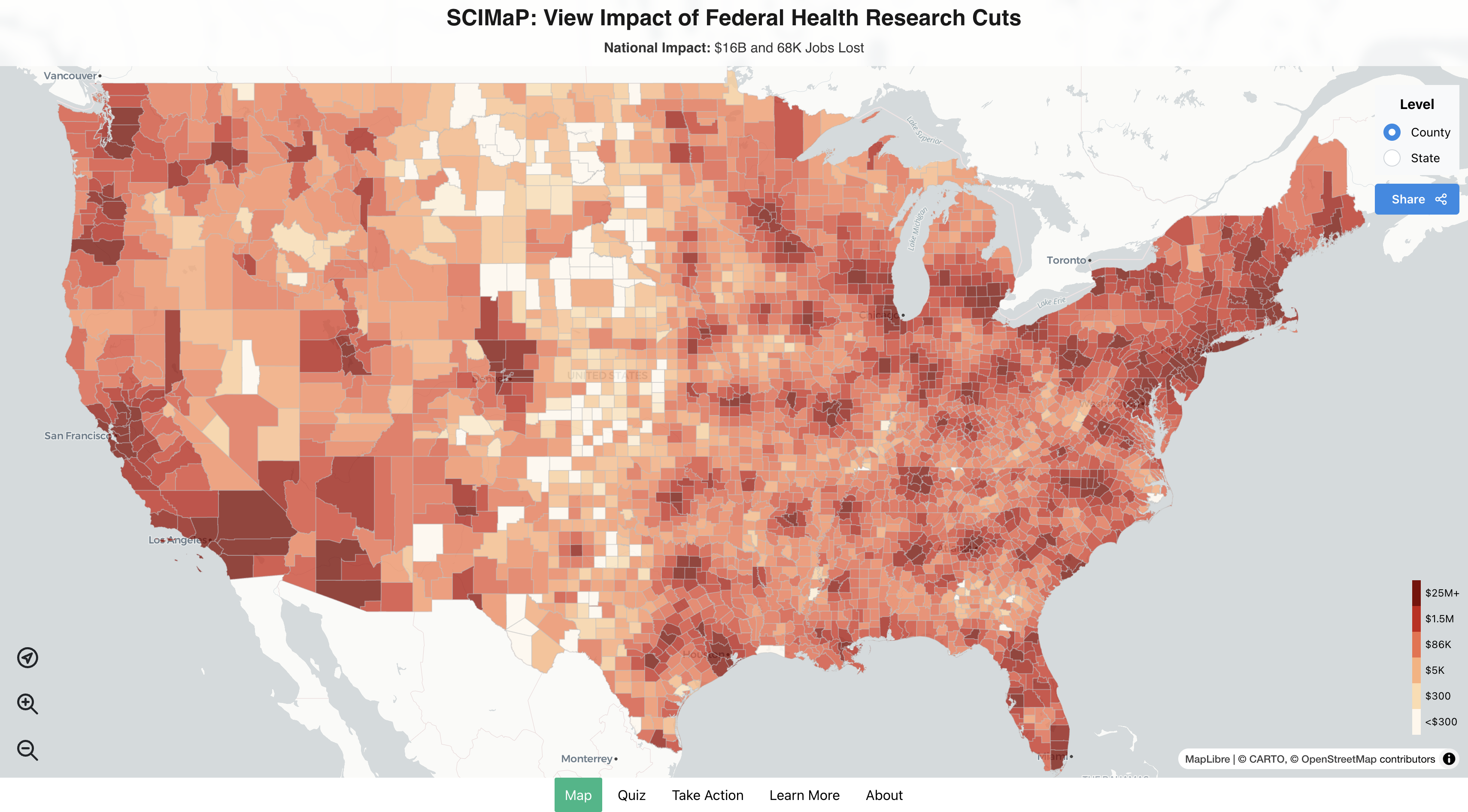
U.S. Science Talent Flees
Federal research cuts are doing more than shrinking lab budgets. They are pushing scientists to make a brutal calculation: stay in the United States and gamble on unstable funding, or leave for countries that are actively buying up talent. That shift matters far beyond academia. It affects drug discovery, climate modeling, national security, semiconductor research, and the basic pipeline that turns public investment into private-sector growth. The U.S. has long benefited from being the place where ambitious researchers come to build careers and launch breakthroughs. But when funding becomes unpredictable, the message to early-career scientists is loud and clear: your next move may need to be abroad. That is not just a brain drain. It is a strategic self-own.
- Research funding cuts are accelerating scientist departures from the U.S.
- Countries with stable support are positioning themselves as talent magnets.
- The loss hits universities, startups, and national competitiveness at once.
- Early-career researchers are the most exposed to this funding shock.
- Rebuilding trust in science requires long-term, predictable investment.
The real cost of science research cuts
The headline is not simply that budgets are tighter. The real story is that science research cuts create uncertainty that researchers cannot easily plan around. A lab can survive one lean year. It cannot thrive under a constant threat that grants may vanish, hiring may freeze, or key projects may stall halfway to publication. For scientists, especially postdocs and assistant professors, the career math is unforgiving. They need enough stability to generate results, publish papers, and keep funding flowing. Once that chain breaks, the pressure to move becomes immediate.
That is why these cuts hit harder than a simple spreadsheet might suggest. Science is a long-game business. A clinical trial, a materials project, or a climate dataset can take years to mature. When public support becomes erratic, the entire system slows down. And once a researcher leaves, the loss is cumulative: the lab loses expertise, students lose mentors, and institutions lose future grant competitiveness.
Why other countries are ready to pounce
Across Europe, Canada, and parts of Asia, governments have spent years trying to attract exactly this kind of talent. They understand something Washington often forgets: researchers are mobile, and prestige follows infrastructure. If a country offers stable funding, streamlined visas, strong facilities, and the chance to work without political whiplash, scientists notice.
When funding becomes unpredictable, the best researchers do not wait around forever. They start taking calls from universities, institutes, and startups that can offer what their current system cannot: certainty.
This is where science research cuts become a geopolitical problem. Talent migration does not stop at individual careers. It can reshape entire ecosystems. A researcher who relocates may bring a team, a network of collaborators, and future students with them. Over time, one departure can become a pipeline. The destination country gets the publication, the patent, and eventually the company.
How the brain drain actually happens
The popular image is dramatic: a scientist gets angry, packs a suitcase, and leaves. Real life is messier. The exodus usually unfolds through small decisions. A missed grant renewal leads to a search abroad. A fellowship offer arrives with better pay and less uncertainty. A partner finds a job in another country. A postdoc decides not to start a faculty race in a system that feels unstable.
The most vulnerable people are early-career researchers. They have the least institutional power and the most to lose from a gap in funding. They are also the most willing to move. That makes them the first to respond when science research cuts squeeze the system.
- Postdocs leave because they need continuity, not just prestige.
- Assistant professors leave because tenure-track risks are already high.
- Graduate students leave when advisors can no longer guarantee project support.
- Senior researchers leave when they can build larger, safer programs elsewhere.
Why this matters beyond academia
The damage from science research cuts does not stay inside universities. It spills into the private sector fast. Startups rely on university labs for discovery, hiring, and translation. Pharma companies depend on academic breakthroughs to seed new treatments. Defense contractors need researchers who understand advanced materials, artificial intelligence, and biosciences. When the public research base weakens, the commercial layer underneath it becomes thinner too.
There is also a slower, more dangerous effect: innovation confidence drops. Venture capital likes to follow dense clusters of talent. If the most ambitious scientists start assuming the U.S. is no longer the safest place to build a research career, investors eventually notice. That can influence where companies open labs, where founders recruit, and where breakthrough ideas get commercialized.
Public research is the front end of private innovation
This is the part policymakers often pretend is optional. It is not. Public funding does not just support abstract curiosity. It pays for the experiments that later become drugs, chips, batteries, agricultural tools, and clean energy systems. Cutting that pipeline is like removing the foundation and expecting the building to keep growing.
Pro tip: If a government wants to compete on innovation, it should measure success over a decade, not a news cycle. Stable appropriations matter more than patriotic slogans.
The U.S. is losing trust, not just people
The deeper issue here is trust. Researchers can adapt to bureaucracy. They cannot easily adapt to an environment where the rules seem to change with every budget fight or political swing. That uncertainty sends a signal that science is no longer being treated as a national asset, but as a partisan line item.
That perception matters. The U.S. has historically attracted global talent because it offered a rare combination: deep funding, elite institutions, and a sense that the system, while imperfect, was broadly committed to discovery. Once that confidence weakens, the value proposition changes. Scientists start asking whether they should build careers in places that view research as infrastructure rather than ideology.
Science moves slowly, but talent moves quickly when it feels disposable.
What institutions can do now
Universities and labs cannot fix federal policy alone, but they can reduce the damage. The strongest institutions are already trying to make research careers less brittle by diversifying funding sources, expanding international partnerships, and building bridge support for vulnerable researchers. Those are not glamorous moves. They are survival tactics.
Here are the practical steps that matter most:
- Protect early-career researchers with bridge funding when grants lapse.
- Create multi-year hiring commitments so teams are not rebuilt every cycle.
- Use international fellowships to keep collaboration alive, even if talent relocates.
- Invest in shared infrastructure so labs do not duplicate expensive equipment.
- Push policymakers with clear data on job creation, patents, and local economic impact.
Pro tip: Institutions should treat researcher retention like product retention. If the user experience is unstable, people churn. The fix is not branding. It is reliability.
The long-term risk of science research cuts
If the trend continues, the consequences will not arrive as a single crisis. They will show up as a series of small losses that compound over time. Fewer grant applications from top talent. Fewer international students deciding to stay. Fewer risky, high-reward projects getting launched. Fewer spinout companies. Slower progress in fields where the U.S. once led without question.
That is how national advantage erodes: not in one dramatic collapse, but in a steady migration of people who no longer believe the system supports their best work. By the time policymakers notice, the competitors have already built the next generation of labs, networks, and industries.
What happens next
The most likely near-term outcome is a broader competition for scientists. Countries with strong public investment will continue to market themselves as stable alternatives. U.S. institutions will try to patch the holes with philanthropy, state-level funding, and private partnerships. Some researchers will stay out of loyalty, family ties, or the sheer inertia of an established career. Others will go where the future looks easier to plan.
That is why this moment deserves more than hand-wringing. Science research cuts are not just an internal budget dispute. They are a signal to the rest of the world about whether the United States still intends to lead the innovation economy. If the answer is unclear, the talent will keep moving.
The country still has enormous advantages: world-class universities, deep capital markets, and a history of turning research into industry. But those strengths only matter if the foundation holds. Scientists need more than rhetoric. They need predictability, support, and a reason to believe their next breakthrough can happen at home.
The information provided in this article is for general informational purposes only. While we strive for accuracy, we make no guarantees about the completeness or reliability of the content. Always verify important information through official or multiple sources before making decisions.