US Strikes on Iran Escalate
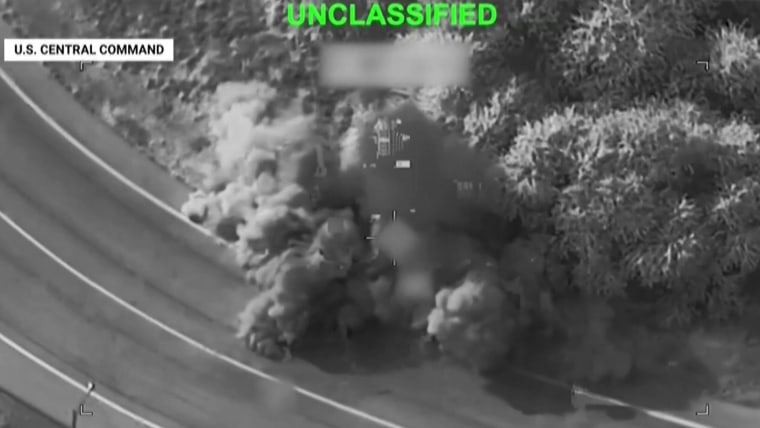
US Strikes on Iran Escalate a Fragile Regional Standoff
The US strikes on Iran are no longer a one-off warning shot. Seven straight nights of attacks point to something bigger: a conflict that is hardening into routine, and routine is exactly how crises become disasters. For allies, markets, and military planners, the message is blunt: the threshold for escalation in the Middle East is being rewritten in real time. Every additional strike increases the odds of miscalculation, retaliation, and spillover beyond the immediate battlefield. That matters because this is not just about a bilateral confrontation. It touches shipping lanes, energy prices, air defense posture, and the credibility of Washington’s deterrence strategy. The question now is not whether the situation is tense. It is whether pressure is still producing leverage, or simply creating a wider war with fewer off-ramps.
- The seventh straight night of strikes suggests a sustained campaign, not a symbolic response.
- The biggest risk is escalation by accident, not just by design.
- Regional actors now have to price in wider military, economic, and diplomatic fallout.
- The US strikes on Iran will likely shape oil markets, security planning, and negotiations.
- Diplomatic off-ramps are shrinking as both sides test limits.
Why the Seventh Night Matters
One night of strikes can be framed as retaliation. Seven nights become strategy. That distinction matters because persistence signals intent, and intent changes how Iran, its allies, and neighboring states respond. A sustained air or missile campaign tends to narrow the space for de-escalation. It can also force adversaries into a logic of symmetry: if attacks continue, response must continue.
That is where the risk multiplies. Military planners do not just worry about the headline target. They worry about the chain reaction: command centers harden, air defenses reposition, proxy networks receive new instructions, and maritime security becomes more volatile. Even if each individual strike is calibrated, the cumulative effect can be destabilizing.
“The most dangerous moment in any regional confrontation is often not the first strike. It is the seventh, when both sides start assuming the other one is committed.”
This is why the latest round matters far beyond the battlefield. It is a signal to investors watching energy flows, to governments relying on Gulf security, and to civilians who pay the price when strategic signaling collides with real-world geography.
US Strikes on Iran and the Logic of Deterrence
Deterrence works when the threat of punishment is credible and the costs are clear. But sustained US strikes on Iran raise a complicated question: are they preventing larger violence, or inviting it? The answer depends on whether the campaign is narrowing Iran’s options or simply raising the stakes for response.
In practice, deterrence in the Middle East is rarely clean. Tehran has long relied on a mix of direct posture and indirect pressure through aligned groups across the region. Washington, for its part, has preferred overwhelming signaling: the ability to strike, reposition assets, and warn of consequences. That can work in the short term. Over time, however, repeated force can normalize confrontation and make restraint look like weakness.
The risk of overreach
When military pressure becomes the dominant tool, it can crowd out diplomacy. The danger is not just a misread by Iran. It is a misread in Washington too. Policymakers may assume escalation control is still intact when the operational environment is already slipping. Once that happens, the choice set gets ugly fast: accept reputational damage, widen the campaign, or search for a negotiation after the damage is done.
Why allies are uneasy
Regional partners want protection, but they also want predictability. The longer the strikes continue, the more they have to prepare for retaliation on their territory, in their airspace, or near critical infrastructure. That means emergency military coordination, tighter missile defense integration, and harder political conversations about whether support for Washington is worth the local blowback.
What This Means for the Region
The Middle East is built on interlocking risks. A strike on one target can affect shipping routes, air traffic, border security, and domestic politics in several countries at once. That is why the phrase US strikes on Iran should not be read narrowly. It is a regional stress test.
Here is the practical fallout to watch:
- Maritime security: any disruption near strategic waterways can raise insurance costs and slow trade.
- Energy prices: traders often react before supply is disrupted, which can amplify volatility.
- Air defense readiness: nearby states may redeploy systems and raise alert levels.
- Proxy activity: affiliated groups may try to stretch the conflict through deniable attacks.
- Diplomatic pressure: third-party mediators will push harder to stop the cycle before it becomes irreversible.
For governments in the Gulf, the priority is not ideological alignment. It is damage control. They need to ensure trade keeps moving, domestic confidence holds, and their own cities do not become collateral targets in someone else’s escalation ladder.
Why This Matters for Markets and Security Planners
Markets hate uncertainty, and prolonged conflict is uncertainty with teeth. The immediate concern is not necessarily a full-blown supply shock. It is the layered premium that gets added to shipping, insurance, defense, and energy contracts whenever the region becomes harder to predict. That premium can linger long after the headlines fade.
Security planners face a similar problem. They cannot assume the next strike will look like the last one. The menu of possible responses is wide: cyber operations, drone attacks, proxy harassment, maritime disruption, or calibrated missile retaliation. That complexity makes defense planning more expensive and more political.
“A sustained strike campaign is never just about the target. It is about every actor forced to build a plan around the possibility that the next night is worse.”
For businesses with exposure to the region, the lesson is to stop thinking in binary terms. This is not a question of whether operations are interrupted. It is a question of how much cushion exists when the interruption arrives.
How the Situation Could Evolve
There are only a few broad paths from here, and none are clean.
1. Managed escalation
Both sides continue to signal resolve, but keep attacks measured enough to avoid a broader war. This is the best-case scenario, though still costly and unstable.
2. Retaliatory spiral
Iran or aligned groups respond in a way that forces a larger American reaction. Once that cycle begins, outside actors will struggle to contain it.
3. Pause and backchannel diplomacy
Pressure from allies, economic actors, and regional governments could force a temporary halt. That would not solve the conflict, but it could create room for negotiations.
None of these scenarios are guaranteed. The real issue is that each new strike makes the first and third paths harder, while making the second more plausible. That is the strategic trap at the center of the current moment.
What to Watch Next
If you want to understand whether this is slipping toward a broader conflict, watch these indicators closely:
- Changes in force posture, including new deployments or redeployments.
- Statements from Iranian leadership that signal broader retaliation options.
- Any movement on maritime restrictions or attacks near major shipping corridors.
- Signs that regional partners are raising alert levels or hardening critical sites.
- Diplomatic activity from intermediaries trying to create a ceasefire or pause.
These signals matter more than the press release cadence. Governments often talk tough long before they act decisively. The operational moves tell you where the crisis is headed.
The Bottom Line
The latest US strikes on Iran are a reminder that modern conflict rarely stays contained. What begins as a tactical decision can quickly become a strategic liability if it keeps repeating without a credible exit ramp. Seven straight nights of strikes suggest the US is betting that pressure will shape behavior. But the longer this goes on, the more likely it is that the region pays for the gamble.
That is why this moment deserves skepticism, not just attention. Power can deter, but it can also provoke. And in the Middle East, the difference between those two outcomes is often measured in days, not months.
The information provided in this article is for general informational purposes only. While we strive for accuracy, we make no guarantees about the completeness or reliability of the content. Always verify important information through official or multiple sources before making decisions.


