Vance and Carney Test Trump’s Trade Playbook
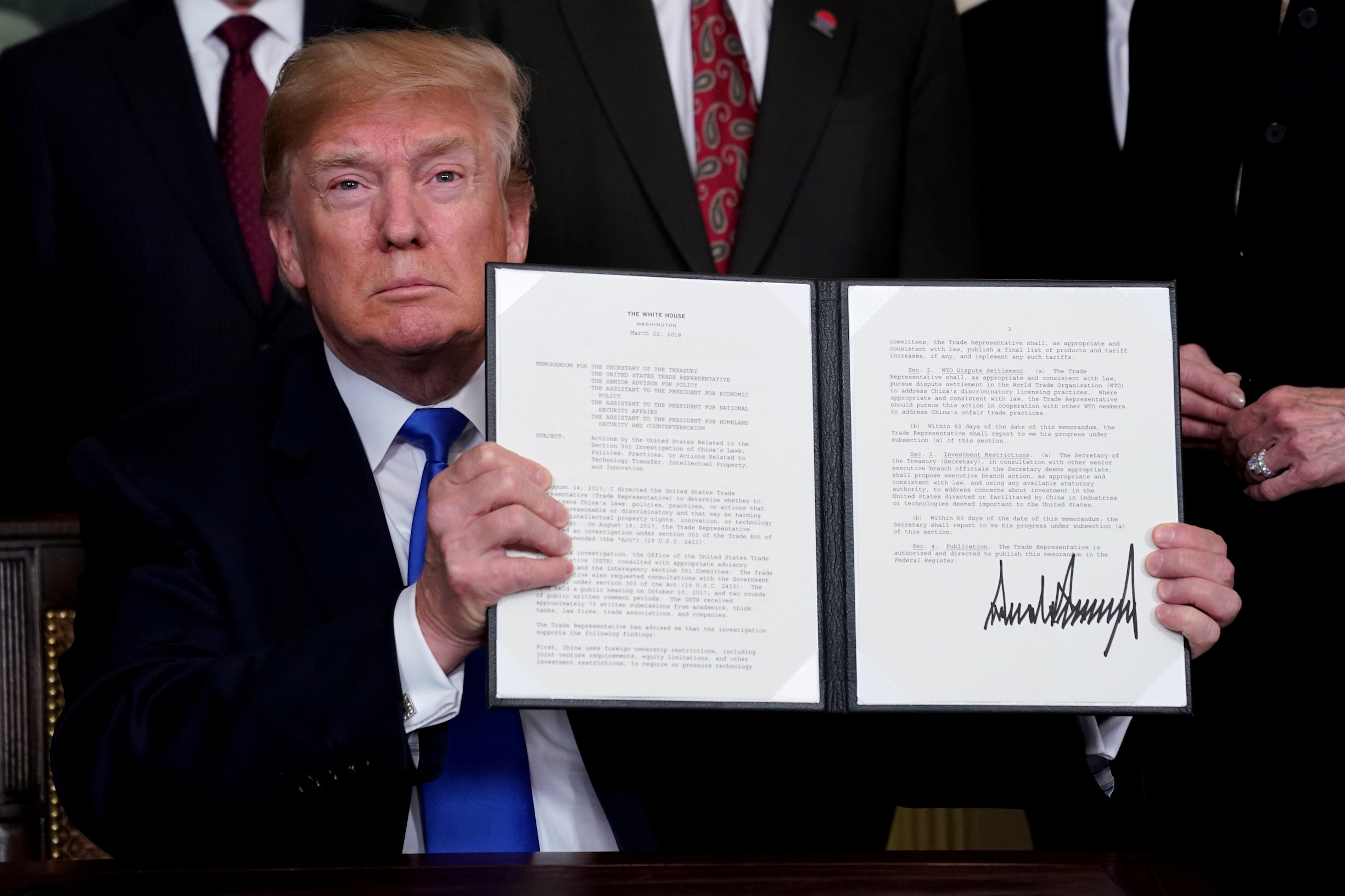
America’s trade fight has entered a sharper, stranger phase. JD Vance is leaning into the populist case for protection, while Mark Carney is pushing a more disciplined, technocratic response that treats tariffs as leverage, not theater. The result is a stress test for Trump trade policy, and it is arriving at the worst possible time for companies trying to plan inventory, pricing, and investment. The old assumption was simple: tariffs were a blunt instrument with predictable political upside. That looks far less certain now. What matters is not only whether tariffs raise costs, but whether they permanently change bargaining power across borders, supply chains, and election cycles. If this new clash hardens into policy, businesses will have to stop treating trade as background noise and start treating it as an operating constraint.
- JD Vance is reinforcing the political logic of tariffs, not just the policy.
- Mark Carney is challenging that logic with a more strategic, economic framing.
Trump trade policyis evolving from slogan to leverage test.- Businesses face higher uncertainty on pricing, sourcing, and cross-border investment.
- The next phase of trade politics will likely reward flexibility over ideology.
Why the Trump trade policy debate is heating up again
The debate over Trump trade policy is back because the political incentives have not gone away. Tariffs still poll well with voters who feel burned by deindustrialization, stagnant wages, and a global economy that often seems designed for everyone except them. That is why Vance matters here. He is not simply echoing Trump. He is helping modernize the message for a post-Trump Republican Party that wants to keep the economic nationalism without inheriting all the chaos.
Carney, by contrast, represents a very different instinct. He is the kind of figure who sees trade not as a culture-war prop but as a system of incentives. His approach implicitly asks a question many policymakers avoid: when does a tariff create leverage, and when does it just become a tax on domestic industry and consumers? That distinction is now central. A tariff can punish a foreign competitor, but it can also hit American manufacturers that rely on imported inputs. The political story is simple. The economic story is not.
Key insight: tariffs are no longer just about protection. They are becoming a test of who can absorb pain longer without losing political control.
What Vance is really signaling
Vance’s value in this fight is rhetorical and strategic. He helps translate trade policy into a language that feels muscular, nationalistic, and emotionally legible. That matters because modern trade debates rarely survive on spreadsheets alone. They survive when politicians can explain, in plain terms, why an economic sacrifice today might deliver industrial revival later.
But there is a catch. The more tariffs are sold as an identity marker, the harder it becomes to revise them when evidence turns messy. Businesses prefer predictable rules. Politicians prefer narratives. When those collide, companies end up carrying the cost. This is where Trump trade policy becomes less a set of measures than a political brand that other Republicans must either embrace or redefine.
Why this matters for business leaders
If Vance’s framing takes hold, companies should expect trade policy to remain volatile even when markets beg for stability. That means more pressure on sourcing teams, more stress on margin planning, and more incentive to diversify suppliers across regions. It also means executives should stop assuming tariffs are temporary election-year noise. In practice, they can become sticky, especially once they create beneficiaries in protected industries.
Pro tip: if your business depends on imported components, model three scenarios at once – current tariffs, expanded tariffs, and a partial rollback tied to political bargaining. The companies that survive trade whiplash are usually the ones that plan for policy to get worse before it gets better.
Why Carney’s response cuts differently
Carney brings a different kind of credibility to the argument. He is associated with financial discipline, macroeconomic thinking, and the kind of crisis management that forces tradeoffs into the open. Where Vance emphasizes political resolve, Carney emphasizes economic consequence. That makes him especially effective against tariff enthusiasm, because he can argue from system design rather than ideological opposition.
His critique is likely to land with investors, policy professionals, and manufacturing executives who know that global supply chains are not easily re-routed on command. You cannot simply declare a domestic substitute into existence. Factories, logistics networks, labor pipelines, and permitting regimes take years, not campaign cycles. That is the central tension in any serious Trump trade policy discussion: political urgency often outruns industrial capacity.
Expert read: the strongest critique of tariffs is not that they are always wrong. It is that they are often deployed before the country has the industrial depth to make them work.
The real economic stakes behind the rhetoric
Trade fights tend to be sold as battles between winners and losers, but the reality is more fractured. Some sectors benefit from protection. Others absorb higher costs. Consumers may see price increases, but not always immediately, which allows politicians to claim success even when the bill is just delayed. That lag is part of what makes tariff politics so durable.
There is also the question of retaliation. Once trade partners respond, the original tariff is no longer a single policy choice. It becomes a chain reaction. Exporters in agriculture, manufacturing, and services can all get caught in the crossfire. This is why the debate around Trump trade policy is bigger than one administration or one election. It is about whether the U.S. wants to use trade as an instrument of negotiation or as a permanent defensive posture.
Potential winners and losers
- Winners: domestic firms in protected categories, at least in the short term.
- Losers: import-heavy manufacturers, retailers, and consumers facing higher input costs.
- Wild card: companies that can shift production quickly across regions.
- Political winner: any candidate who can frame pain as patriotism.
How businesses should respond now
The smart response is not panic. It is preparation. Trade policy risk should now sit alongside interest-rate risk, cybersecurity risk, and labor risk in boardroom conversations. Companies do not need perfect foresight. They need operational flexibility.
Start with the basics. Map exposure to tariffs by product line, supplier, and country of origin. Then test where your margins break. If you are too dependent on a single geography, the problem is not only policy. It is concentration. And concentration is expensive even before politics gets involved.
Consider the following internal checklist:
Audit supplier exposureacross every major input.Reprice contractsto account for tariff volatility.Build inventory buffersfor the most exposed categories.Negotiate sourcing alternativesbefore a crisis forces your hand.Track election-linked policy signalsthe same way you track commodity prices.
That list may sound boring. It is not. It is the difference between absorbing a policy shock and getting blindsided by it. The companies that fare best during tariff cycles are rarely the most patriotic or the most cynical. They are the most adaptable.
What comes next for Trump trade policy
The next phase of trade politics will likely be defined by escalation and imitation. If Vance and his allies show that protectionism still has a strong audience, other politicians will borrow the language even if they soften the execution. That means the center of gravity in trade debates may shift further away from free-trade orthodoxy and toward managed competition, industrial policy, and strategic decoupling.
For businesses, that shift has long-term consequences. Supply chains may become shorter, but not necessarily cheaper. Domestic investment may rise, but only in sectors that can survive the transition. Consumers may accept higher prices if the political messaging is persuasive enough. None of this is guaranteed, which is exactly why the moment matters.
The deeper lesson is that Trump trade policy is no longer just about Trump. It has become a template others are trying to refine, defend, or exploit. Vance is proving that the politics still work. Carney is betting that the economics will eventually matter more. For now, both may be right in their own lanes. The market, however, has to live in the overlap.
If there is one takeaway for executives, investors, and policymakers alike, it is this: the trade debate is no longer a side story. It is part of the operating environment. And the companies that understand that earliest will have the clearest edge when the next tariff shock lands.
The information provided in this article is for general informational purposes only. While we strive for accuracy, we make no guarantees about the completeness or reliability of the content. Always verify important information through official or multiple sources before making decisions.
