Why Elon Musk Struggles to Disrupt Politics
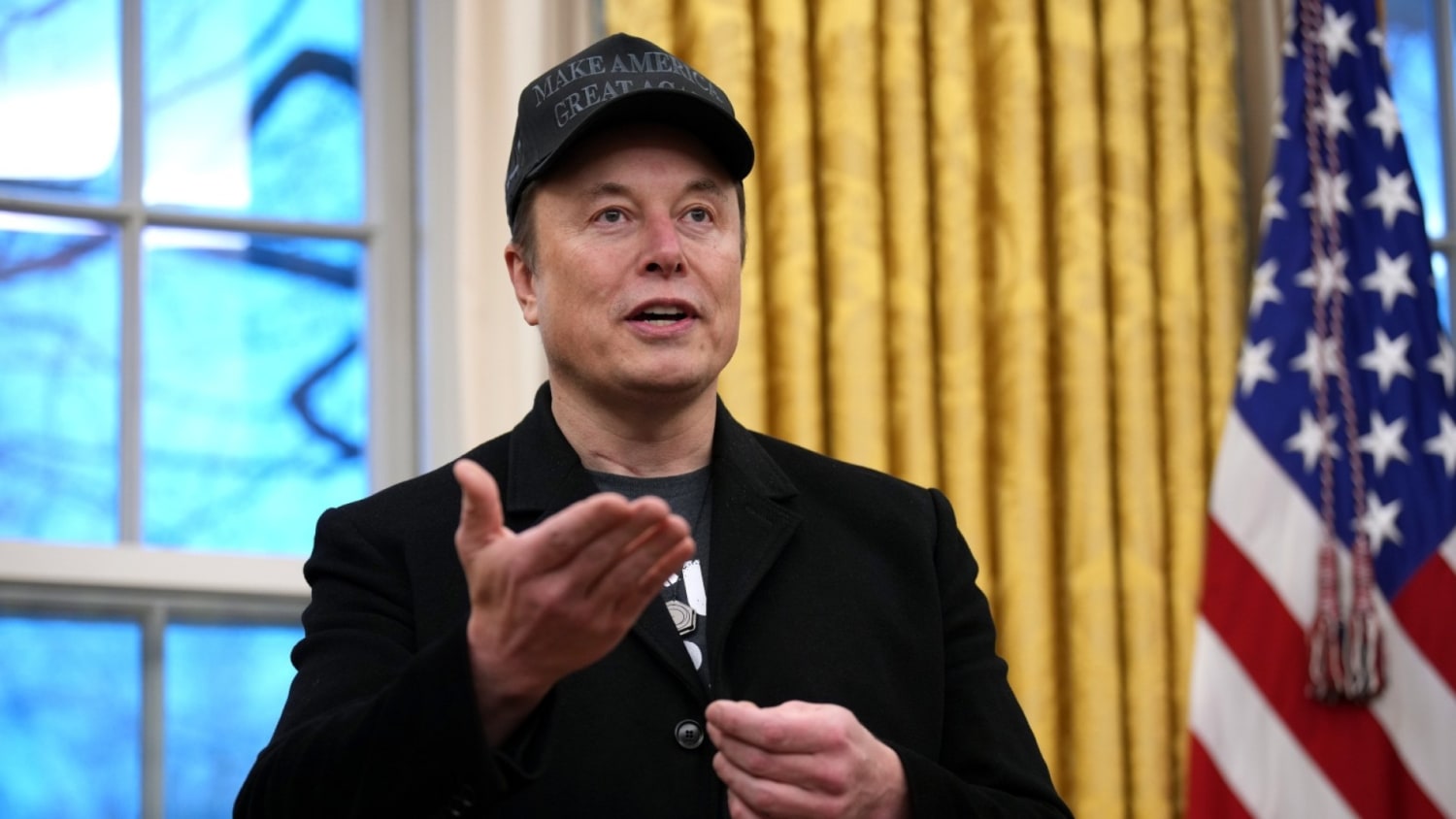
Why Elon Musk Struggles to Disrupt Politics
Elon Musk has spent two decades breaking industries that looked too entrenched to change. He pushed electric vehicles into the mainstream, made private rockets credible, and turned satellite internet into a geopolitical tool. That record created a seductive assumption: if Musk can bend manufacturing, energy, and aerospace to his will, surely he can do the same in Washington. But politics does not behave like a factory, a software stack, or a launch schedule. It is slower, messier, and built to absorb disruption rather than reward it. That matters well beyond one billionaire’s ambitions. The limits of Musk’s political influence reveal a bigger truth about modern power: money, reach, and audience scale can dominate markets, yet still stall when they collide with institutions, coalitions, and voters who refuse to act like customers.
- Elon Musk politics is hitting structural limits that do not exist in business or engineering.
- Companies can be run by command-and-control logic; democratic systems cannot.
- Musk’s brand strength creates attention, but attention is not the same as durable political power.
- His struggles show why institutional trust and coalition-building still matter in America.
The core problem with Elon Musk politics
Musk’s edge in industry has always come from a rare combination of capital intensity, technical ambition, and ruthless execution. In business, that formula can be enough. A company can move faster than its rivals, hire aggressively, vertically integrate supply chains, and force a market to catch up. Politics rejects that logic.
Governments are not startups. Voters are not product users. Legislators are not engineers taking direction from a founder with a deadline. Political systems are designed around friction: competing interests, constitutional limits, public scrutiny, party incentives, media narratives, and constant electoral pressure. Those constraints are not bugs. They are the operating system.
The same traits that help a founder dominate a company can weaken him in politics, where persuasion matters more than command.
This is where Elon Musk politics runs into reality. He can command employees, reprioritize projects, or scrap underperforming initiatives inside his firms. He cannot apply that model to a democratic coalition full of activists, donors, lawmakers, local organizers, and voters with contradictory demands.
Why industry rewards disruption and politics punishes it
Markets tolerate concentration
In industry, consumers often reward a better product even if they dislike the person selling it. If the car performs, the rocket lands, or the service works, results can outweigh style. Politics is different because legitimacy is part of the product. People are not just buying output. They are judging motive, identity, trust, and values.
A founder can win a market with a narrow but intense value proposition. A political movement usually needs a broad and unstable coalition. That means compromise, message discipline, and patience – three things that rarely fit Musk’s public style.
Engineering problems have cleaner feedback loops
Technical systems give clear signals. A battery improves or it does not. A launch succeeds or fails. A manufacturing line scales or bottlenecks. Political systems offer fuzzier feedback. A viral post may energize supporters while alienating swing constituencies. A bold statement may dominate the news cycle but weaken long-term alliances. A candidate can draw huge online engagement and still underperform at the ballot box.
That mismatch matters because Musk appears most comfortable in environments where data can be acted upon quickly. Politics is full of lagging indicators, symbolic fights, and second-order effects that punish overconfidence.
Institutions fight back
Incumbent industries can be disrupted because they often move slowly and protect outdated profit models. Political institutions survive precisely because they are built to resist sudden concentration of power. Courts, federalism, party structures, committee systems, and election law all act as buffers. That makes politics infuriating for anyone expecting a straight line between influence and outcome.
Musk’s biggest political asset is also his weakness
Musk commands something most political operatives would envy: direct access to mass attention. He can shape conversations instantly, frame issues in blunt language, and force journalists, rivals, and supporters to respond. That is real power. But it is also unstable power.
Attention scales fast. Credibility does not. The more a public figure comments on everything, the harder it becomes to persuade everyone on anything. Musk’s online persona thrives on speed, provocation, and cultural combat. That can energize a faction. It can also cap his ability to expand beyond it.
In business, polarizing charisma can strengthen brand loyalty. In politics, it can shrink the universe of people willing to join your side. A movement cannot live on virality alone.
Political capital is not measured only by how loudly people hear you. It is measured by how many different groups still trust you after hearing you.
Why Elon Musk politics faces a coalition problem
America’s political system rewards strange alliances. Winning requires stitching together constituencies that do not fully agree: business interests, ideological activists, suburban moderates, younger voters, older voters, regional blocs, and institutional insiders. This is where Musk’s transactional instincts may become a liability.
Coalitions are not assembled like product teams. They need symbolic concessions, shared rituals, and sometimes deliberate ambiguity. They also require a tolerance for incremental wins. Musk’s instinct is usually the opposite: define the mission, expose incompetence, move faster, and treat resistance as evidence the system is broken.
That approach can electrify supporters who are tired of stale politics. It is less effective when the goal is to hold together people who want different things from government. Political success often belongs not to the person with the sharpest critique, but to the operator who can keep incompatible allies in the room.
Brand transfer has limits
There is a common elite assumption that success in one arena can be imported into another. Sometimes it works. Often it does not. Musk’s industrial reputation gives him stature, but political legitimacy is not automatically transferable. Building rockets does not prove one can build consensus. Scaling EV manufacturing does not mean one can navigate party discipline or local machine politics.
That distinction is essential for understanding why highly visible business leaders often overestimate their ability to convert cultural influence into governing power.
The platform trap
Musk’s ownership of major communications infrastructure and digital platforms gives him unusual reach. On paper, that should make him harder to ignore politically. In practice, control over a platform creates a trap: every moderation choice, algorithmic shift, or public intervention becomes politically loaded.
That blurs the line between entrepreneur, publisher, political actor, and combatant. Once that line disappears, opponents stop treating the platform as neutral infrastructure and start viewing it as an instrument of factional power. The result is more scrutiny, more backlash, and fewer easy wins.
There is also a deeper issue. Platform logic rewards outrage, compression, and speed. Democratic persuasion often requires the opposite: trust-building, repetition, and credibility with people who do not already agree with you. A timeline can supercharge a movement’s energy while hollowing out its governing capacity.
What business leaders keep missing about democratic legitimacy
Founders are trained to believe constraints exist to be overcome. Regulators can be challenged. Legacy firms can be bypassed. Supply chains can be reimagined. Politics contains some of that, but democratic legitimacy imposes a different kind of limit. Not every obstacle is inefficiency. Sometimes the obstacle is pluralism itself.
That is the uncomfortable lesson here. Democracy is not optimized for founder speed. It is optimized, imperfectly, to prevent domination by any one actor, class, or institution. Even when the system performs badly, its slowness reflects competing claims to power.
Musk’s frustrations with politics are therefore not just personal. They expose a recurring Silicon Valley misconception: the belief that public life is mostly a technical problem waiting for superior operators. It is not. It is a conflict-management system full of history, identity, and compromise.
Politics is not a broken app. It is a contested arena where losing factions do not simply uninstall the update.
Why this matters beyond Musk
The fascination with Musk’s political ceiling says something important about this era. Tech leaders now control platforms, capital pools, infrastructure, and narratives at a scale that once seemed impossible. That creates understandable anxiety that they can simply route around democratic institutions. The evidence is more mixed.
Yes, billionaire influence is enormous. Yes, media ownership and digital distribution can reshape public debate. Yes, personal brands can distort party incentives. But none of that guarantees durable governing success. Political power still depends on organization, legitimacy, and coalition maintenance. Those are harder to brute-force than market share.
For voters, that is a guardedly optimistic signal. It suggests the system, however strained, still resists total capture by celebrity-industrial power. For business leaders, it is a warning: institutional complexity is not weakness by default, and public backlash arrives faster when corporate and political identities collapse into one another.
The real test for Elon Musk politics
If Musk wants lasting political impact, attention will not be enough. He would need to do what many disruptive founders hate most: delegate, build patient alliances, tolerate ideological impurity, and accept that progress may look incremental instead of revolutionary. He would also need to separate performance from persuasion.
That does not mean he cannot matter politically. He already does. The question is whether he can translate episodic influence into durable institutional outcomes. History suggests that is the hard part. Plenty of wealthy, famous, media-savvy figures have discovered that governing power is less about dominating the feed and more about enduring the grind.
Elon Musk politics remains compelling because it sits at the fault line between two American myths: the founder as savior and democracy as a system no single genius can master. So far, the second myth looks more durable. And that may be the healthiest takeaway of all.
The information provided in this article is for general informational purposes only. While we strive for accuracy, we make no guarantees about the completeness or reliability of the content. Always verify important information through official or multiple sources before making decisions.