Wimbledon 2026 Pressure Cooker
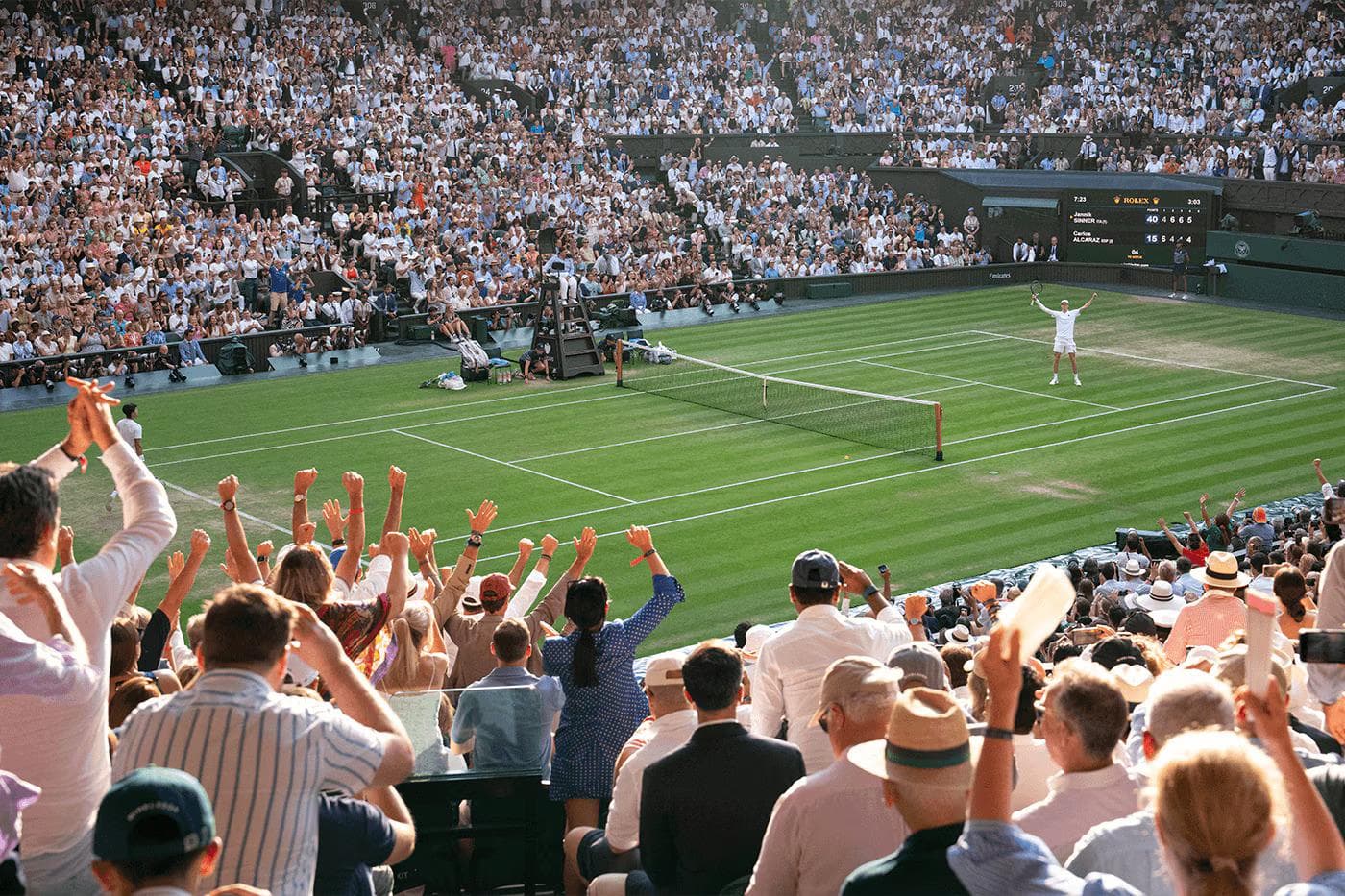
Wimbledon 2026 Pressure Cooker
Wimbledon 2026 is doing what the best tournaments always do: turning elite talent into a live stress test. The names at the top – Novak Djokovic, Jannik Sinner, Coco Gauff, Naomi Osaka – are not just chasing wins, they are carrying expectations that ripple across the entire sport. Every match becomes a referendum on form, fitness, and staying power. Every update changes the betting line on who can actually survive two weeks on grass. For fans, this is the fun part. For players, it is a brutal audit. And for tennis itself, Wimbledon 2026 is a reminder that prestige only matters when the court is merciless.
- Wimbledon 2026 is shaping up as a high-pressure proving ground for tennis’s biggest names.
- The grass court demands expose flaws fast, especially in movement, serve consistency, and recovery.
- Djokovic, Sinner, Gauff, and Osaka each bring different questions into the tournament.
- The live nature of the event means momentum can flip faster than rankings suggest.
- What happens here will likely influence the rest of the 2026 tennis season.
Wimbledon 2026 and the new margin for error
Grass has never been forgiving, but Wimbledon 2026 feels even tighter than usual. The sport’s current elite are technically superb, yet the surface still punishes hesitation. A half-step late on return. A second serve left hanging. A forehand that lands short instead of deep. On grass, those small mistakes become match-defining. That is why this tournament matters beyond the trophy ceremony. It is a live stress test for the modern game, where baseline power, defensive speed, and mental resilience collide with a surface that rewards aggression and discipline in equal measure.
The real story is not who enters as favorite. It is who can adapt fastest when the court starts dictating the terms.
Why Wimbledon 2026 matters now
This edition lands at a moment when the men’s and women’s tours are both crowded with contenders, but short on certainty. Jannik Sinner represents the new guard: clean mechanics, elite tempo, and the kind of composure that suggests a long run at the top. Novak Djokovic remains the standard-bearer for tactical intelligence and pressure management, even as each major becomes a fresh examination of longevity. Coco Gauff brings speed, intensity, and an improving all-court game that can overwhelm opponents when the forehand lands with conviction. Naomi Osaka, meanwhile, is one of the tour’s great variables – capable of overpowering anyone when timing and confidence align.
Wimbledon 2026 matters because it compresses all those storylines into a single stage. Unlike a hard-court swing, where repeatable power can carry players through patchy form, grass exposes whether a player has the right blend of instinct and discipline. That makes every result more revealing. A routine win can still look fragile. A three-set escape can look like a warning sign. The scoreboard matters, but the quality of movement and decision-making matters more.
Wimbledon 2026 live updates and the race for control
Live coverage changes how fans experience a major. Instead of waiting for the next morning’s recap, the tournament becomes a rolling narrative of momentum shifts, injury concerns, and tactical adjustments. That is especially important at Wimbledon, where the shortest match can still carry the biggest consequences for the draw. One upset on the wrong side of the bracket can open a path for a seed. One player finding rhythm on serve can suddenly look like a title threat.
For a tournament like Wimbledon 2026, live updates are not just reporting. They are context. They reveal whether a player is conserving energy, fighting through discomfort, or simply timing up after a rough start. They also expose how quickly narrative can overshoot reality. A star down a set on grass is not necessarily in trouble. A star up a break is not necessarily safe. The grass is too fast, the margins too thin, and the psychology too volatile.
On grass, the match is often decided before the final point. It is decided in how quickly a player recognizes the surface and stops fighting it.
Novak Djokovic and the burden of expectation
Djokovic arrives in any Wimbledon conversation with a strange kind of pressure: he is judged not just against the field, but against his own history. That is an almost impossible standard. Yet he has built a career on living inside it. His greatest edge at Wimbledon has always been less about raw power than problem-solving. He reads patterns early, absorbs momentum swings, and rarely gives away free points when it matters most. On grass, that skill set is devastating.
Still, the question around Djokovic in 2026 is not whether he understands grass. It is whether he can maintain the physical sharpness required to survive the tournament’s attrition. Deep runs at Wimbledon demand more than precision. They require repeated recovery, constant movement adjustments, and the ability to win ugly when the body is not perfectly synced. That is where the tournament becomes a deeper test than the rankings suggest.
What Djokovic still does better than almost anyone
He minimizes chaos. He rarely panics under scoreboard pressure. He can raise first-serve quality at the exact moment it matters. Those traits are still title-winning traits, especially on a surface where one bad service game can wreck an entire set. If Djokovic is moving well in the opening week, the rest of the draw has to notice.
Jannik Sinner and the case for the next era
Sinner is one of the clearest representatives of the sport’s future. His ball-striking is compact, efficient, and frighteningly repeatable. That matters everywhere, but particularly at Wimbledon, where players who can take time away from opponents often gain an immediate edge. The problem is that grass asks for subtle adjustments the hard-court season mostly forgives. Serve placement has to be sharper. Slice returns matter more. Transition points become critical.
If Sinner is to make a serious run at Wimbledon 2026, the key question is not power. It is adaptability. Can he convert baseline dominance into grass-court control? Can he win points at net when needed? Can he handle the weird, disruptive rhythm that grass creates when matches turn messy? His ceiling is obvious. His test is whether the surface can make him play a more complete version of himself.
Why Sinner could redefine the tournament
Players like Sinner change the way opponents prepare. They force rivals to serve better, defend longer, and take risks earlier. If he finds a groove on grass, Wimbledon 2026 could become the event that confirms his transition from contender to constant threat. That is how tennis eras shift: not all at once, but through one player making the old questions look outdated.
Coco Gauff and the power of controlled chaos
Gauff remains one of the most compelling players in the sport because she turns pressure into motion. Her athleticism can create points from nowhere, and her competitiveness makes it difficult for opponents to settle into a comfortable rhythm. On grass, that combination can be lethal. It also can be volatile. The surface rewards precision, and Gauff’s challenge is to keep aggression from spilling into error.
When her timing is right, Gauff can compress the court and attack openings that others never see. When it is off, the same ambition can produce unforced mistakes that hand control away. Wimbledon 2026 puts that tension on display. Her path is not about simply surviving the surface. It is about using her movement and reach to make grass play on her terms.
The key for Gauff
She does not need to out-grind everyone. She needs to own the middle part of points – the stretch after the return and before the opponent can reset. That is where her athletic edge can become a strategic weapon. If she does that consistently, she becomes much harder to stop.
Naomi Osaka and the search for timing
Osaka’s presence always raises the same question: how close is the timing? When her serve lands and her first strike is clean, she can overwhelm elite opposition in a way few players can match. Wimbledon, though, is not a place where timing can be faked. It has to be earned point by point. Grass surfaces magnify hesitation, and hesitation is the enemy of Osaka’s best tennis.
That does not make her an outsider. It makes her one of the tournament’s most interesting wild cards. If she gets through the early rounds with confidence, the event could suddenly become much more complicated for higher seeds. Her ceiling remains obvious. Her challenge is repetition, not raw ability.
The bigger lesson from Wimbledon 2026
The most revealing thing about Wimbledon 2026 is that it highlights the difference between talent and tournament-winning readiness. The modern game has no shortage of elite athletes with explosive groundstrokes and pristine fitness. What separates champions on grass is decision-making under instability. Who serves with purpose when the scoreboard tightens? Who returns with intent instead of hope? Who accepts that not every point can be built the same way?
Wimbledon is still the sport’s most elegant contradiction: it rewards perfection, but it often crowns the player who survives imperfection best.
That is why the live updates matter so much. They are not just a chronicle of scores. They are a record of adjustment under pressure. And in a tournament this unforgiving, adjustment is the story.
What to watch next
- Serve efficiency in early rounds: it usually predicts who can stay alive on grass.
- Movement recovery between points: a subtle indicator of physical sharpness.
- Return depth against top seeds: shallow returns invite immediate pressure.
- Net willingness: players who finish points at the front often gain the edge on grass.
- Mental reset after dropped sets: Wimbledon punishes players who carry frustration forward.
Why this tournament may define the season
Grand Slams do more than hand out trophies. They set the tone for how players are perceived for months afterward. If Djokovic extends another grass-court masterclass, it reinforces the idea that experience still beats raw momentum. If Sinner makes the expected leap, the next era looks even closer. If Gauff or Osaka strings together the right run, the women’s draw gets another layer of unpredictability. That is the business of Wimbledon: it does not merely reflect hierarchy. It can rewrite it.
For now, Wimbledon 2026 is exactly what the sport needs – a tournament with enough star power to dominate headlines and enough surface-driven uncertainty to stay genuinely interesting. The names are familiar. The stakes are not. That is where the drama lives.
The information provided in this article is for general informational purposes only. While we strive for accuracy, we make no guarantees about the completeness or reliability of the content. Always verify important information through official or multiple sources before making decisions.


