World Cup Launches a New US Spectacle
World Cup Launches a New US Spectacle
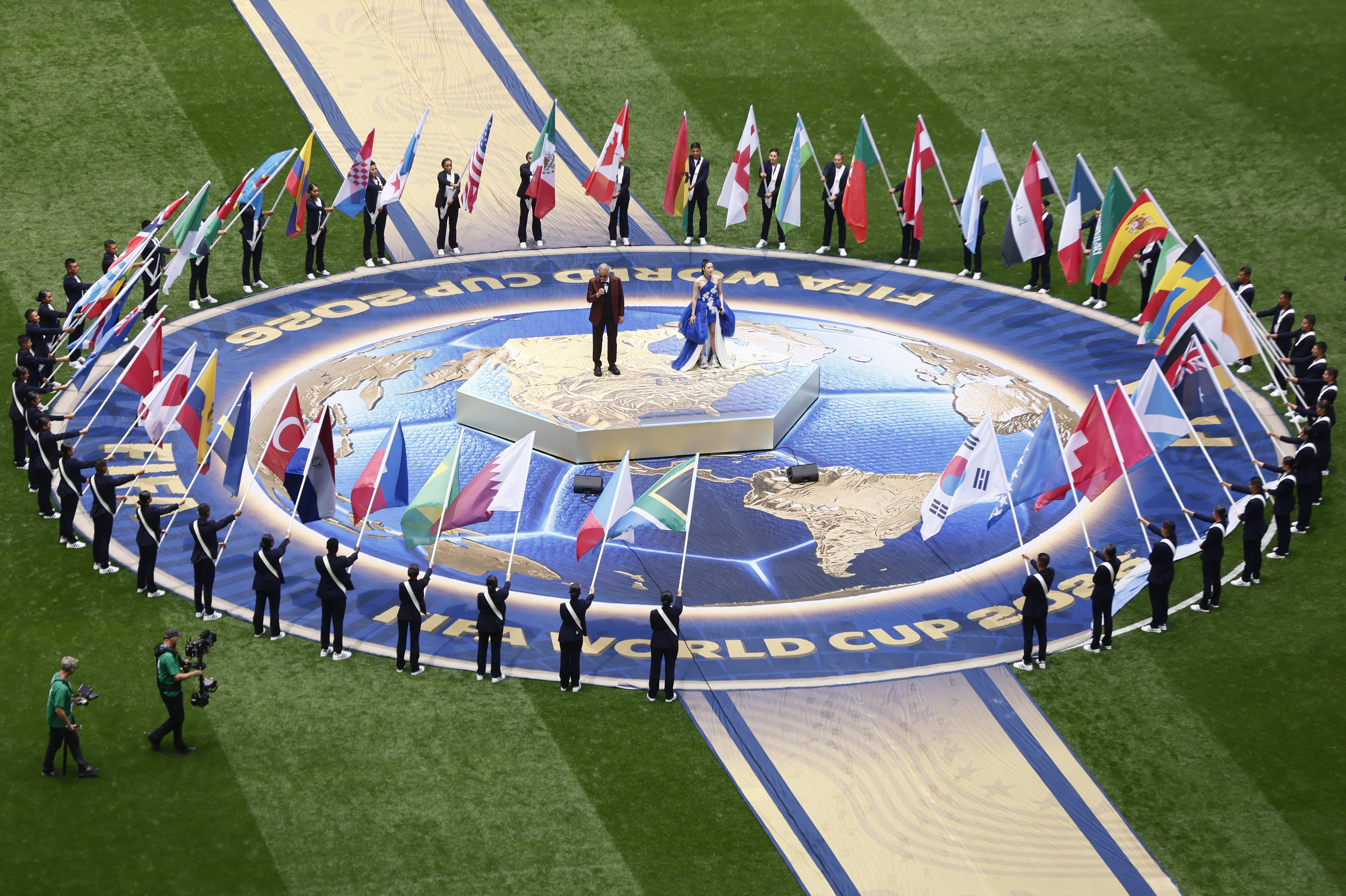
The World Cup opening ceremony is no longer just a pre-match warm-up. In the US, it has become a statement of scale: a global tournament, a stadium-sized production, and a cultural flex aimed at an audience that expects entertainment to arrive with pyrotechnics attached. That matters because the modern World Cup is not only about football. It is about broadcast value, sponsor gravity, celebrity reach, and whether the sport can keep its soul while packaging itself for a market that loves big moments and bigger margins. With a headline act like Katy Perry in the mix, the line between sporting tradition and pop-culture spectacle gets even thinner. For fans, that creates energy. For purists, it raises a familiar question: is the game being elevated, or just sold more efficiently?
- The
World Cupopening ceremony is now as much a media product as a sporting ritual. - Celebrity performance helps drive mainstream attention, especially in the US market.
- Commercial scale brings opportunity, but also risks flattening football’s identity.
- The tournament’s opening signal tells us a lot about how the sport will be marketed next.
The World Cup as a media event
The opening ceremony has evolved because the audience has evolved. A generation ago, a tournament launch mainly served the people already invested in football. Now it must compete with streaming feeds, social clips, second-screen commentary, and an entertainment economy that rewards instant shareability. That is especially true in the US, where the World Cup still sits in a crowded sports landscape and has to fight for cultural oxygen.
This is why a star-driven ceremony makes strategic sense. The organizers are not simply putting on a show. They are engineering a low-friction entry point for casual viewers who may not know the squads, the tactics, or even the bracket structure. A headline performer can do in three minutes what marketing teams struggle to do in three months: pull in attention from people who would not otherwise tune in.
“The opening ceremony is not a side note anymore. It is the first commercial proof that the tournament can command the biggest possible audience.”
Why the US market changes the script
The US has become the most important proving ground for football’s next phase of growth. It has the infrastructure, the broadcasting muscle, the sponsor ecosystem, and the appetite for large-scale live events. What it has not always had is a deeply inherited football culture at the same level as Europe or South America. That gap is exactly why the event format matters so much.
In markets where football is already religion, the game can speak for itself. In the US, it often has to be packaged with familiar cues: celebrity, spectacle, and production value. That is not necessarily a flaw. It is a commercial adaptation. But adaptation has consequences. Every extra layer of showmanship pushes the sport closer to the entertainment-industrial complex that already dominates American media.
For the World Cup, that means the opening ceremony becomes a test case. If the ceremony feels too thin, the tournament risks looking underpowered in a giant market. If it feels too glossy, it risks losing the authenticity that gives football its global credibility. The challenge is to balance both without making the whole thing feel like a halftime promo for itself.
Katy Perry and the celebrity equation
Bringing in a global pop star is not a random flourish. It is a deliberately chosen amplifier. Katy Perry brings name recognition beyond the football base, which is exactly the point. Celebrity performances at major sporting events have become a shorthand for event legitimacy, especially when organizers want to signal that the occasion belongs in the same conversation as the Super Bowl, the Olympics, or a major awards show.
There is a practical logic here. Celebrity-led performances generate press coverage, social chatter, and cross-demographic interest. They also create a bridge for sponsors, who want association with moments that travel far beyond the stadium. A star headline can turn a ceremony into a headline, and a headline into an algorithmic tailwind.
Still, the celebrity layer cuts both ways. Football has always been strongest when the sport itself is the star. If the ceremony overshadows the match, organizers risk turning a global competition into a brand activation with shin guards. The smartest version of this strategy is restraint: use the celebrity to open the door, then let the football take over.
What this opening says about the future of the tournament
The opening ceremony is a preview of the commercial logic that will shape the rest of the tournament. Expect more cross-platform promotion, more sponsor integration, more emphasis on short-form moments, and more pressure to make every visible element feel globally exportable. That is especially true in a tournament staged in the US, where live sports increasingly function as tentpole content rather than just matches.
The deeper question is whether this model can scale without cheapening the product. Football’s greatest advantage has always been its flexibility: it can thrive in packed stadiums, neighborhood pitches, and massive TV events alike. But the more the sport is wrapped in spectacle, the more it risks becoming dependent on spectacle to justify itself.
That is not a future problem only. It is already here. The opening ceremony is where organizers reveal their assumptions about attention, audience behavior, and monetization. If the ceremony is built like a launch event for a consumer product, the tournament is being marketed as one too. And that should make fans, broadcasters, and sponsors equally alert.
Why this matters beyond one night
The real significance of the World Cup opening is not whether the performance lands perfectly. It is what the performance says about the economics of modern sport. The biggest tournaments now operate in a world where cultural relevance is inseparable from audience capture. That means music, celebrity, and social-first production are no longer decorative. They are infrastructure.
For the sport, that brings real upside. A more accessible opening can expand the audience, grow interest in new markets, and turn casual viewers into repeat fans. That matters for participation, sponsorship, and long-term global growth. But there is also a cost. The more football is shaped to satisfy event logic, the more its identity is influenced by the needs of media companies and commercial partners.
“The danger is not that football becomes popular. The danger is that popularity starts to dictate what football is allowed to be.”
That is why the opening ceremony deserves scrutiny. It is not just the appetizer before kickoff. It is a signal of editorial intent from the people running the tournament. And in this case, the intent is clear: make the World Cup impossible to ignore in the market that can do the most to expand it.
The business play behind the spectacle
There is a harder-edged reading of all this: the opening ceremony is part entertainment, part acquisition funnel. Huge sporting events are no longer sold only on national pride or competition. They are sold on attention economics. Every camera angle, every performance choice, and every social clip is designed to extend the event’s value across platforms and demographics.
For broadcasters, the payoff is obvious: more tune-in, more impressions, more ad inventory. For sponsors, it is about proximity to a rare global moment. For organizers, it is about proving that football can command the same level of cultural real estate as the biggest US-led entertainment properties. That is not trivial. It is a power move.
But power moves come with scrutiny. If the ceremony feels too engineered, audiences can sense it immediately. That is especially true now, when viewers are fluent in brand language and highly sensitive to anything that feels manufactured. The best opening ceremonies do not just advertise the tournament. They make the tournament feel inevitable.
What organizers need to get right
- Keep football central: the ceremony should frame the tournament, not compete with it.
- Use celebrity strategically: a headline act should widen the audience, not dominate the narrative.
- Design for clips: the modern audience experiences live events through highlights and reactions.
- Protect authenticity: the event must still feel like football, not a generic mega-show.
The editorial verdict
The World Cup opening ceremony in the US is a smart, highly commercial piece of event design. It recognizes that football is now fighting for attention in a hyper-competitive entertainment market, and it uses celebrity power to make the tournament feel immediate to a broader audience. That is a legitimate strategy, and arguably an unavoidable one.
But there is a fine line between expansion and dilution. If the ceremony is handled well, it becomes a gateway: a way to invite new viewers into the sport without asking them to already be insiders. If it is handled badly, it becomes proof that football has started to confuse spectacle with substance.
Either way, the opening tells us something important. The modern World Cup is not just a competition for a trophy. It is a contest for attention, identity, and global relevance. And in the US, that contest is being staged under brighter lights than ever.
The information provided in this article is for general informational purposes only. While we strive for accuracy, we make no guarantees about the completeness or reliability of the content. Always verify important information through official or multiple sources before making decisions.