Zambia Mineral Deal Sparks a Hard Global Reckoning
Zambia Mineral Deal Sparks a Hard Global Reckoning
The Zambia mineral deal debate cuts straight to one of the ugliest questions in global politics: when a country is in crisis, where does humanitarian support end and strategic extraction begin? That tension is no longer theoretical. Zambia sits on minerals the world increasingly treats as mission-critical, while Western powers are scrambling to secure supply chains for batteries, grids, and defense systems. When reports and commentary suggest that lifesaving support could be entangled with access to those resources, the story stops being a regional controversy and becomes a warning flare for the entire international system. For policymakers, investors, and ordinary citizens alike, this is the uncomfortable reality of a new resource race: aid, diplomacy, and industrial policy are starting to look less separate than they once did.
- Zambia mineral deal concerns reflect a wider global contest over copper and other strategic resources.
- The core issue is not just trade – it is whether desperate nations are negotiating from a position of real consent.
- Resource diplomacy now sits at the intersection of humanitarian aid, national security, and supply-chain resilience.
- Any agreement that lacks transparency risks backlash from citizens, investors, and international partners.
- Zambia’s case matters because it previews how future mineral negotiations could unfold across Africa and beyond.
Why the Zambia mineral deal matters far beyond Zambia
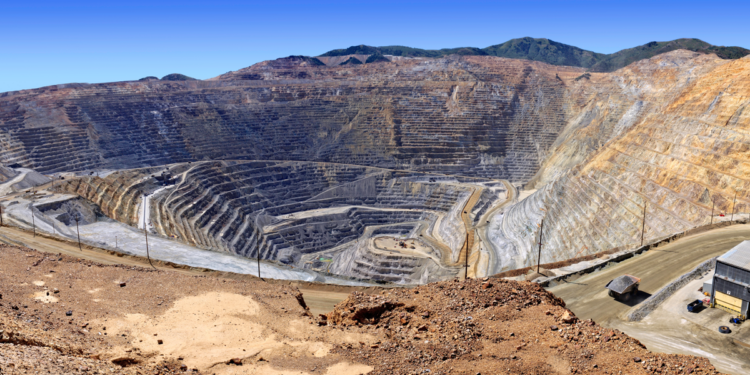
Zambia is not just another commodity producer. It is one of Africa’s most important sources of copper, a metal that underpins electrification, renewable infrastructure, electric vehicles, data centers, and industrial manufacturing. If oil defined the geopolitics of the 20th century, minerals like copper, cobalt, and lithium are defining the competitive map of the 21st.
That is why any suggestion that access to medicine, debt relief, aid, or broader diplomatic support could be linked to mineral concessions feels so explosive. The optics are bad. The strategic implications are even bigger. If governments begin treating health emergencies or economic distress as leverage points for securing extraction deals, trust in international partnerships erodes fast.
The real scandal is not that major powers want minerals. Of course they do. The scandal is what happens when vulnerable states are left negotiating with a gun to their fiscal or humanitarian head.
This is where the story becomes less about one bilateral relationship and more about a global pattern. The United States, China, the European Union, Gulf investors, and multinational mining firms all want secure access to the same limited pool of high-value mineral assets. As competition intensifies, every agreement is scrutinized not just for economics, but for power.
The strategic guide to reading a mineral-for-aid controversy
When a story like this breaks, the first wave of reactions is usually moral outrage or geopolitical point-scoring. Both are understandable, but neither is enough. To understand whether a disputed arrangement crosses a line, it helps to break it into a few practical questions.
1. What is actually being exchanged?
There is a major difference between a standard commercial mining agreement and an implicit quid pro quo where support in one domain appears conditional on access in another. If aid or public health support is bundled with mineral access, the concern is not simply transactional politics. It is whether basic rights and sovereign assets are being folded into a single coercive bargain.
Watch for language around:
offtake agreementsconcession rightsroyalty restructuringdebt-for-resource swapsdevelopment assistance packages
These terms are not inherently suspicious. But combined in opaque ways, they can obscure who benefits, who assumes risk, and who loses bargaining power.
2. Is Zambia negotiating under pressure?
Context matters. A country facing disease outbreaks, debt stress, budget shortfalls, or urgent import needs is not negotiating from a neutral baseline. In theory, a sovereign government can say yes or no to any deal. In practice, financial desperation can turn that choice into a constrained calculation.
That does not automatically invalidate a deal, but it should shape how outsiders evaluate fairness. Markets love the rhetoric of voluntary exchange. Reality is messier when one party has deep capital reserves and strategic patience, and the other needs immediate relief.
3. Who controls the long-term upside?
The headline value of a resource agreement often masks the deeper issue: who captures future gains? A government may secure near-term cash or support, while giving away decades of revenue, infrastructure influence, or policy flexibility. That is especially dangerous in sectors where mineral prices can rise sharply as demand accelerates.
For Zambia, this is critical. Copper is not a fading industrial input. It is becoming more central to the energy transition. Any concession signed in a moment of weakness could look dramatically more expensive ten years from now.
4. Is the public being told the full story?
Transparency is the stress test. If contract terms, revenue-sharing formulas, environmental obligations, labor commitments, and dispute mechanisms remain hidden, suspicion will grow. Governments may defend secrecy as commercially necessary, but citizens have a legitimate stake in how national resources are managed.
Opaque contracts do not just create ethical problems. They create pricing problems, governance problems, and eventually political problems.
Zambia mineral deal politics and the new resource nationalism
The Zambia mineral deal controversy lands at a moment when resource nationalism is resurging worldwide. Governments are tightening export controls, demanding local processing, revising royalties, and trying to capture more value from their natural wealth. This is not unique to Africa. It is happening across Latin America, Asia, and parts of Europe.
The underlying logic is simple: if strategic minerals are becoming more valuable, why should producer countries settle for the old model of shipping raw materials abroad while others keep the profits from refining, manufacturing, and technology? Zambia has every reason to ask that question.
But resource nationalism has its own trap. Push too hard and investors hesitate. Concede too much and the public sees a sellout. The most successful governments are the ones that avoid both extremes by building clear rules, credible institutions, and competitive bidding structures.
What smart mineral strategy should look like
- Separate humanitarian cooperation from extraction negotiations wherever possible.
- Publish core contract terms and beneficial ownership information.
- Use competitive tenders instead of opaque side deals.
- Tie concessions to local jobs, training, and processing capacity.
- Build fiscal safeguards so short-term emergencies do not force long-term giveaways.
That sounds basic. In practice, it is politically difficult, especially when outside powers frame access to capital or support as a strategic favor rather than a transparent transaction.
Why Washington and the West are under pressure
There is a broader reputational problem here for the United States and its allies. Western officials often present their engagement in Africa as values-driven, rules-based, and distinct from more extractive or coercive models. If local populations begin to see little difference between that rhetoric and hard-edged resource bargaining, the soft-power damage could be significant.
This is especially sensitive because Washington is trying to reduce dependence on rival supply chains. Strategic minerals are now discussed in the same breath as semiconductors, shipping lanes, and advanced manufacturing. That pressure can produce more aggressive dealmaking, even when diplomats would prefer cleaner optics.
The contradiction is obvious. Rich countries want secure and ethical supply chains, but securing them often means competing in environments where power imbalances are unavoidable. That is precisely why process matters so much. A transparent, development-focused agreement can still be tough-minded. A secretive one will be viewed as predatory even if officials insist otherwise.
Pro tip for reading official statements
When governments deny coercion, pay attention to what they are not saying. Do they deny any linkage at all between aid and minerals? Or do they simply restate that the partnership is mutually beneficial? Those are not the same claim.
Look for whether the language separates:
health assistancetrade facilitationmining concessionsdevelopment finance
If these categories blur together, the political risk rises.
The business stakes nobody can ignore
For investors and mining operators, controversy is not just a public relations problem. It can alter project economics. Political backlash can trigger permit delays, tax disputes, contract reviews, labor disruptions, and litigation. A deal that looked attractive on a spreadsheet can become far less compelling once governance risk is priced in.
There is also the supply-chain angle. Manufacturers increasingly face pressure to prove that upstream sourcing meets environmental, social, and governance expectations. If a key mineral supply deal becomes associated with coercion or crisis exploitation, downstream brands may decide the reputational cost is too high.
That creates a new commercial reality: ethics is no longer separate from procurement. It is part of procurement. The cleaner the contract structure, the stronger the long-term bankability of the project.
A simple due diligence checklist
Decision-makers evaluating politically sensitive mineral partnerships should ask:
- Was the agreement competitively sourced?
- Are fiscal terms publicly disclosed?
- Is there a community benefit framework?
- Are environmental liabilities assigned clearly?
- Is any form of humanitarian or emergency support linked to extraction access?
If the answer to the last question is yes, the reputational hazard is immediate.
What this could mean for Africa’s next bargaining era
Africa’s mineral producers are entering a stronger strategic position, at least on paper. The energy transition, AI infrastructure buildout, and industrial electrification boom all raise demand for metals that many African countries can supply. That creates opportunity, but opportunity alone does not guarantee leverage.
Leverage comes from institutional capacity: legal expertise, contract negotiation skill, geological data ownership, infrastructure planning, and fiscal discipline. Countries that invest in those capabilities can turn mineral wealth into broader industrial development. Countries that do not may remain stuck in high-stakes cycles of dependency.
The next chapter of African resource politics will not be decided by geology alone. It will be decided by who can negotiate, disclose, and enforce terms in the face of global pressure.
Zambia’s situation therefore matters as a case study. If allegations or perceptions of pressure gain traction, leaders across the continent will take note. Some may use that lesson to demand better terms. Others may diversify partners faster, betting that competitive tension between major powers is their strongest asset.
The bottom line on the Zambia mineral deal
The fight over the Zambia mineral deal is really a fight over the rules of the coming resource order. Strategic minerals are too important, and producer nations are too politically exposed, for old habits of opaque bargaining to survive without resistance. Whether or not every accusation around this case holds up, the underlying concern is legitimate: vulnerable countries should not have to barter sovereignty or public welfare for a seat at the economic table.
That is why this story resonates. It is not just about Zambia. It is about what kind of mineral economy the world is building: one based on partnership, transparency, and shared upside, or one that treats crises as buying opportunities. As the scramble for copper and other critical inputs intensifies, that choice will define not only who wins access, but who earns trust.
The information provided in this article is for general informational purposes only. While we strive for accuracy, we make no guarantees about the completeness or reliability of the content. Always verify important information through official or multiple sources before making decisions.