Zucker Bets Big on UAE Finance
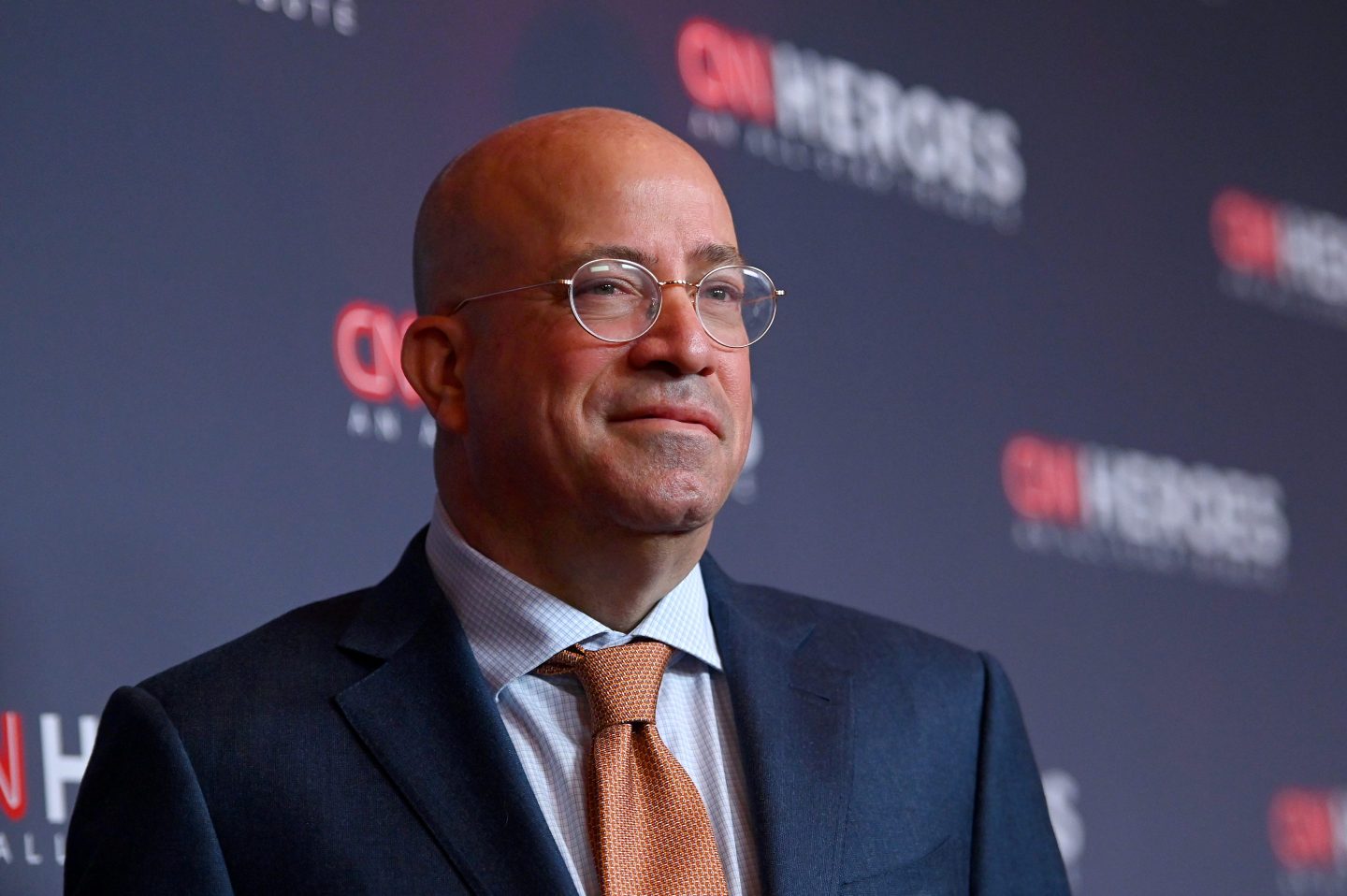
Zucker Bets Big on UAE Finance
Jeff Zucker is making a familiar executive move with unfamiliar stakes: he is chasing money where the old rules of media finance no longer apply. If the reported plan to tap banking in the UAE to help build an $8 billion entertainment empire holds, it signals something bigger than one producer’s ambition. It suggests the next era of media consolidation may be financed less by Hollywood institutions and more by Gulf capital, cross-border dealmaking, and a willingness to blur the line between entertainment, geopolitics, and private influence. For an industry still recovering from streaming losses, ad-market soft spots, and expensive content wars, that is not just interesting. It is a warning shot.
- Jeff Zucker’s UAE banking strategy points to a new funding model for entertainment.
- The move highlights how Gulf capital is reshaping media dealmaking and ownership.
- An
$8 billionentertainment empire would need scale, patience, and political savvy. - The biggest risk is not just financial – it is regulatory, reputational, and strategic.
- If successful, the playbook could influence the next wave of global media consolidation.
Jeff Zucker and the UAE banking play
The headline here is not simply that a veteran media executive is raising money. It is where he is going to do it. The UAE has become one of the most powerful financial hubs for global dealmaking, with sovereign wealth, private capital, and strategic ambition converging in a way that Hollywood has increasingly noticed. For Jeff Zucker, that creates an opening: access to deep pools of capital, fewer of the legacy assumptions that slow Western lenders, and investors who may see entertainment as both a financial asset and a geopolitical soft-power tool.
That matters because media has become brutally expensive. Building a modern entertainment company means competing across film, TV, sports, digital distribution, and creator-driven content, all while absorbing rising talent costs and unpredictable consumer demand. Traditional lenders often want cleaner balance sheets and more stable returns. The UAE banking channel, by contrast, can be more flexible, more strategic, and more willing to underwrite long-horizon bets.
What looks like a financing story is really a control story. Whoever funds the empire often influences what the empire becomes.
Why an $8 billion entertainment empire needs new capital
An $8 billion entertainment empire is not a boutique production company. It is a platform-scale business that would need acquisition firepower, operational discipline, and a pipeline large enough to justify the valuation. That kind of ambition comes with a simple truth: legacy media money is no longer enough.
Streaming has changed the math. The old studio model depended on licensing windows, predictable pay-TV revenue, and theatrical runs that could be modeled with relative confidence. Now companies are fighting for subscribers, ad tiers, sports rights, and franchise IP while facing intense pressure to spend less and prove faster returns. If Zucker is trying to assemble a new empire, the funding structure has to support a world where content, distribution, and global reach are all intertwined.
What the capital stack likely needs
A deal of this size would likely require a mix of debt, equity, and strategic backing. In plain terms, that means investors who can tolerate volatility and a leadership team willing to trade some autonomy for scale. The UAE banking route could help on all three fronts:
- Flexible financing: faster decision cycles than large Western institutions.
- Strategic alignment: investors who value influence and diversification, not just quarterly yield.
- Geographic reach: access to international markets and partners that can help a media brand expand beyond the U.S.
That flexibility is seductive. It is also where the risk begins.
Why this UAE banking strategy matters now
Media finance is undergoing a quiet but profound geographic shift. For decades, Los Angeles, New York, and London set the terms of entertainment capital. That power center is no longer absolute. The UAE, along with other Gulf states, has been steadily building financial infrastructure capable of backing infrastructure, technology, sports, and media at scale. Entertainment fits neatly into that portfolio because it is global, prestige-heavy, and politically useful.
This is why Zucker’s reported approach should be read as part of a broader pattern. Media executives are increasingly looking outside traditional banking circles because the old system has become too cautious for the ambitions they still want to finance. The result is a new kind of deal ecosystem where sovereign-linked money, private capital, and brand strategy overlap.
For Gulf financiers, entertainment is not just content. It is access, soft power, and an entry point into global culture.
That reality changes the bargaining table. A financier in Abu Dhabi or Dubai may not just be evaluating ROI. They may also be evaluating prestige, diplomatic optionality, and the ability to shape global narratives. For a media operator, that can be a huge advantage. It can also create pressure that does not show up in a standard term sheet.
The strategic upside of going international
There is a reason dealmakers keep circling the Gulf. The upside is hard to ignore. Entertainment is increasingly global by default, and capital now follows audiences rather than the other way around. A company with the right financing can move faster on acquisitions, bid for premium assets, and build cross-border partnerships that smaller competitors cannot match.
For Zucker, the strategic case likely includes three benefits:
- Speed: the ability to act quickly in a market where assets come and go fast.
- Scale: enough capital to compete for meaningful IP and talent.
- Optionality: room to test business models across film, TV, live events, and streaming.
But scale is not the same as success. Plenty of media companies have raised impressive sums and still failed to build durable businesses. Entertainment is littered with examples of expensive expansions that looked smart on a pitch deck and disastrous a year later.
The real risks behind the glamour
The biggest mistake would be to romanticize this as just another bold founder-style bet. A financing plan built around UAE banking introduces a few serious complications.
Regulatory and political scrutiny
Any major cross-border media deal invites scrutiny from U.S. regulators, foreign investment watchdogs, and industry rivals. The larger the role of overseas capital, the more questions emerge about influence, ownership, and editorial independence. For a business tied to culture and public perception, that can become a reputational drag very quickly.
Execution risk
Money alone does not create an empire. It only buys the chance to build one. The operational challenge is assembling the right assets, integrating them cleanly, and generating returns before market conditions shift again. Entertainment acquisitions are especially tricky because creative businesses resist spreadsheet logic. Talent can leave, franchises can stall, and audience tastes can move overnight.
Brand risk
Consumers and partners increasingly care about who owns what and where the money comes from. That does not automatically kill a deal, but it can complicate marketing, talent negotiations, and partnerships. If the financing story becomes the headline, the business story gets harder to control.
How this could reshape entertainment dealmaking
If Zucker succeeds, the precedent could matter more than the company itself. The entertainment sector loves a template. Once one veteran executive proves that Gulf-linked financing can support a serious media buildout, others will try to replicate it. That could accelerate a wave of capital formation that favors global operators over domestic-only players.
Here is the practical implication: the next generation of entertainment companies may be assembled less like studios and more like holding companies. Instead of one monolithic brand, expect portfolios of IP, distribution rights, sports properties, and creator businesses stitched together by financiers who care about optionality and international access.
- More hybrid companies: part media brand, part investment vehicle.
- More international ownership: fewer companies anchored solely in U.S. capital markets.
- More strategic alliances: media assets paired with sports, luxury, and tech.
That structure could make the industry more resilient. It could also make it more opaque.
Pro tips for reading the next move
For investors, operators, and media watchers, the details matter more than the headline. Watch the financing structure, the governance rights, and the asset mix. Those are the signals that reveal whether this is a genuine empire-building effort or an ambitious but fragile capital raise.
Look for these markers:
- Does the funding come with board control or veto rights?
- Are the assets focused on content, distribution, or both?
- Is the company built for cash flow or for long-term strategic positioning?
- Does the deal depend on a narrow set of investors or a broader syndicate?
Those questions tell you whether the venture can survive a soft advertising market, a production slowdown, or a shift in investor appetite.
The bottom line on Zucker’s UAE banking bet
Jeff Zucker’s reported move toward UAE banking is more than a financing tactic. It is a sign that the old center of gravity in entertainment is moving. Hollywood still matters, but it no longer controls the purse strings the way it once did. The new game is global, capital-intensive, and deeply strategic.
If the reported $8 billion entertainment empire comes together, it could show that media still rewards boldness – but only when boldness is paired with patient capital and geopolitical fluency. If it fails, it will be because the industry’s hardest problem remains unchanged: building something that is not only big, but durable.
Either way, the message is clear. The next entertainment empire may not be born on a studio lot. It may be negotiated in a banking room halfway around the world.
The information provided in this article is for general informational purposes only. While we strive for accuracy, we make no guarantees about the completeness or reliability of the content. Always verify important information through official or multiple sources before making decisions.