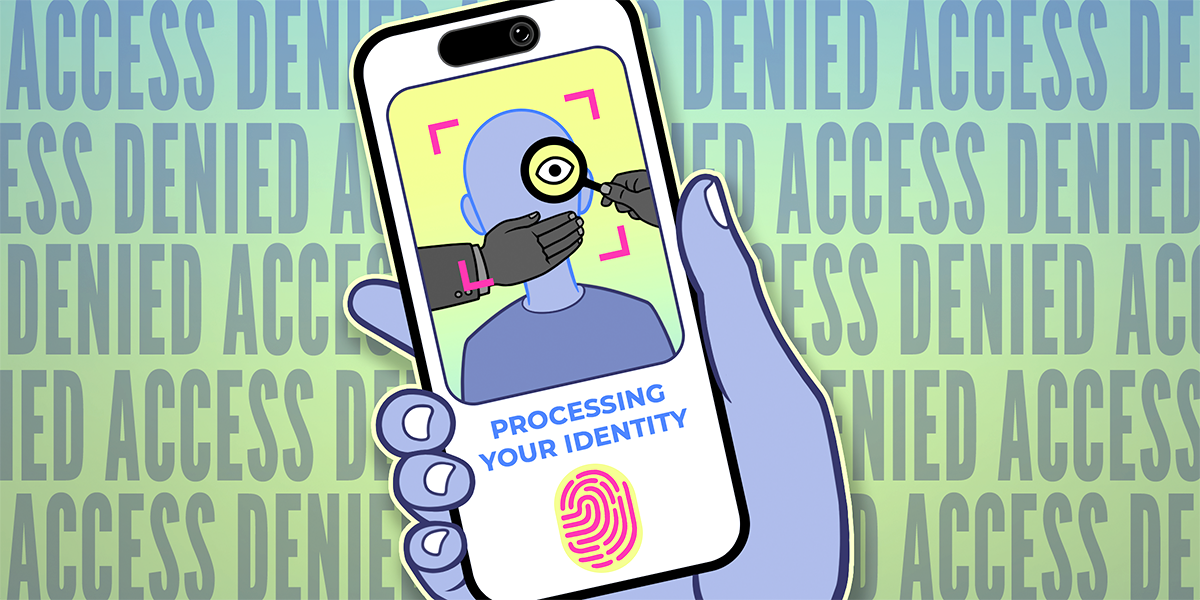
Age Verification Hits the Web
Age verification is no longer optional
Age verification has moved from a niche compliance checkbox to a front-line fight over how the internet should work. The pressure is coming from every direction: lawmakers want stricter safeguards, platforms want to avoid massive fines, and users want fewer invasive checks that feel like digital ID checkpoints. That collision is forcing a hard question: how do you prove someone is old enough without turning the web into a surveillance machine?
That tension is exactly why age verification matters now. It is no longer just about keeping children away from restricted content. It is about identity, privacy, liability, and the architecture of online services themselves. The companies that get this wrong risk public backlash and regulatory trouble. The ones that get it right may shape the next era of consumer trust.
- Age verification is becoming a default requirement for more online services.
- Platforms are under pressure to protect minors without collecting too much personal data.
- Privacy-preserving tools are emerging, but adoption remains uneven.
- The policy fight is really about who bears responsibility: users, platforms, or governments.
Why age verification is suddenly everywhere
The push for age verification reflects a broader shift in digital regulation. Governments are no longer satisfied with broad promises that platforms will “do better”. They want systems that can enforce age-based restrictions in practice. That means websites, apps, and social platforms must increasingly verify that users are adults before they can access certain content, features, or communities.
The reasons are easy to understand. Regulators are responding to concerns about children encountering harmful material, being targeted by strangers, or making purchases without meaningful oversight. At the same time, public expectations around online safety have hardened. What once sounded like parental responsibility is now treated as a platform responsibility.
But the mandate is messy. Age verification can be simple on paper and invasive in reality. Asking for a birthdate is easy to fake. Asking for government ID is more effective but far more intrusive. The result is an arms race between compliance and convenience.
The privacy problem at the center of age verification
The biggest weakness in age verification is not technical, it is philosophical. The more accurate the system, the more personal data it tends to require. That creates a paradox: services meant to protect people can end up collecting sensitive data that exposes them to new risks.
That is why privacy advocates keep pushing back. They argue that many current systems over-collect information, store it too long, and leave users with little visibility into how the data is handled. Once an identity document is uploaded, the stakes are no longer abstract. A breach can expose names, dates of birth, addresses, and other details that should never have been necessary for a simple age check.
“The real challenge is not proving age. It is proving age while revealing as little as possible about the person behind it.”
That idea is driving interest in privacy-preserving approaches such as token-based verification, third-party attestations, and selective disclosure systems. The promise is appealing: confirm adulthood without handing over your entire identity. The problem is that these tools are still unevenly deployed and often confusing for the average user.
What the better systems try to do
Modern age verification systems are increasingly trying to separate proof of age from identity disclosure. Instead of storing a full scan of an ID, a platform may rely on a trusted verifier that only returns a yes or no answer. In theory, that dramatically reduces the amount of data shared.
Some systems also use age tokens or credential wallets, which let a person confirm they are over a threshold without repeatedly uploading the same information. These methods are more elegant and more privacy-friendly, but they require coordination across providers, standards, and regulators. That coordination is still catching up.
How platforms are responding to age verification pressure
For platforms, age verification is as much an operational problem as a policy one. They have to decide where in the user journey to place the check, which verification method to accept, how to store records, and how to handle users who cannot or will not comply.
The simplest implementation is a gate: ask the question before access is granted. But that approach is often weak because it is easy to bypass. More advanced systems may require document uploads, facial age estimation, or third-party verification. Each path comes with tradeoffs in friction, cost, and accuracy.
That is why many companies are moving toward layered solutions. A basic self-declaration may screen out casual users, while stronger checks are reserved for higher-risk features. This reduces user friction but does not eliminate the core issue: platforms are now being asked to make age assurance part of product design.
Why this is a product decision, not just a legal one
Age verification affects onboarding, retention, conversion, and trust. If a platform makes the process too annoying, users will abandon signup. If it makes the process too weak, regulators may come knocking. The sweet spot is hard to find and even harder to defend.
That is especially true for consumer services with broad audiences. A platform that works across multiple countries may need different verification flows depending on local law. That means product teams cannot treat age checks as a bolt-on feature. They have to think about them as part of the core experience.
Age verification and the new compliance economy
There is another layer here that is easy to miss: age verification is creating a new market. Identity vendors, compliance startups, biometric providers, and privacy-tech firms are all competing to become the middle layer between platforms and users. If the last decade belonged to login buttons and single sign-on, this one may belong to verification infrastructure.
That shift matters because it concentrates trust. Users are not just trusting the app they visit. They are trusting whatever vendor sits behind the verification flow. If that vendor mishandles data or fails to build robust safeguards, the reputational damage spreads across the entire chain.
For businesses, this creates a strategic dilemma. Build verification in-house and take on complexity, or outsource it and inherit another dependency. Neither option is perfect. The in-house route demands engineering and legal resources. The outsourced route adds vendor risk and less control over user experience.
“Age verification is turning into infrastructure: once that happens, the companies that own the trust layer gain real leverage.”
Why age verification matters for the future of the internet
The bigger story is not just about restricted content. It is about whether the internet keeps its current low-friction design or becomes a more segmented environment where access depends on proving who you are and how old you are. That is a fundamental change.
If age verification expands without careful limits, the web could drift toward a model where anonymity becomes harder, access becomes conditional, and data collection becomes normalized. That would be a major cultural shift, not just a regulatory one. It could make some spaces safer, but it could also make the internet less open and less private.
On the other hand, doing nothing is not a real option either. The harms regulators are trying to address are not imaginary. The challenge is to design systems that reduce risk without creating new abuse vectors.
What to watch next
- More platforms will likely introduce
age verificationflows for specific content and features. - Privacy-preserving standards will gain attention, especially where regulators accept minimal disclosure.
- Biometric checks may expand, but they will remain controversial because they raise sensitivity around consent and storage.
- Cross-border compliance will become harder as different regions define “adequate” verification in different ways.
The verdict on age verification
Age verification is becoming one of the defining design problems of the modern web. It sits at the intersection of child safety, privacy, regulation, and platform power. That makes it more than a compliance story. It is a referendum on how much proof the internet should demand before letting people through the door.
The best outcome is not a world where every user hands over more data. It is one where verification is narrow, proportionate, and technically boring in the best possible way. The system should answer one question and only one question: is this user old enough? Anything beyond that starts to look like overreach.
Until the industry settles on better defaults, age verification will remain a messy compromise. But the direction is clear. The days of pretending a birthday field is enough are over. The next phase of the web will be built around trust signals, risk controls, and the uncomfortable reality that access now comes with proof.
The information provided in this article is for general informational purposes only. While we strive for accuracy, we make no guarantees about the completeness or reliability of the content. Always verify important information through official or multiple sources before making decisions.