Europe Pushes Harder on Digital Sovereignty
Europe Pushes Harder on Digital Sovereignty
Europe is no longer content to be the continent that buys the tools and inherits the rules. The pressure is now coming from every direction: governments want more control over data, companies want clearer compliance paths, and users are increasingly aware that the platforms they rely on can be shaped by politics as much as engineering. That tension is turning digital sovereignty from policy jargon into a real business battleground. If you build, sell, or depend on cloud infrastructure, AI systems, or cross-border services, the stakes are rising fast. What used to be a regulatory side story is becoming a core strategic issue, and the consequences could reshape how tech is designed, hosted, and governed across Europe.
- Europe is treating digital sovereignty as infrastructure, not symbolism.
- Cloud, AI, and data governance are the biggest pressure points.
- Companies will need stronger compliance, resilience, and localization strategies.
- The shift could create new opportunities for regional tech providers.
- Expect more fragmentation before the market settles into a new normal.
Why digital sovereignty is suddenly unavoidable
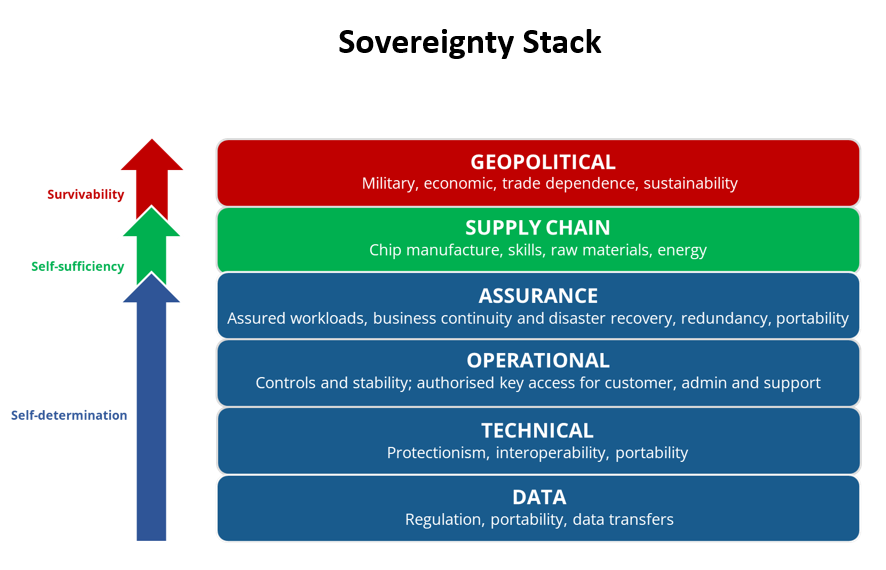
For years, the idea of digital sovereignty sounded like a conference-panel slogan. Now it is turning into procurement policy, industrial strategy, and geopolitical leverage. Europe has watched its digital stack become heavily dependent on non-European cloud giants, chipmakers, platform operators, and AI suppliers. That dependency is not just theoretical. It affects everything from public-sector resilience to the bargaining power of local startups.
The post-pandemic era, trade friction, and growing concerns about data access have forced a reckoning. Europe wants to reduce exposure to foreign jurisdictions that can reach into its digital systems through law, supply chains, or infrastructure control. That does not mean total decoupling. It means building more room to maneuver when the next crisis hits.
Digital sovereignty is not about closing the door. It is about making sure Europe still has a key.
The digital sovereignty problem Europe cannot ignore
The core challenge is structural. Europe has world-class software talent, strong research institutions, and a dense base of regulated industries. But it remains dependent on platforms and services that are often built, governed, and monetized elsewhere. That creates a mismatch between where value is created and where control sits.
This matters most in three areas: cloud infrastructure, data governance, and artificial intelligence. Each one is becoming a policy flashpoint. Cloud concentration makes resilience harder to guarantee. Data rules determine who can use sensitive information and under what conditions. AI adds a new layer because model training, compute access, and deployment can all be controlled by a handful of powerful vendors.
Cloud dependency is the loudest warning sign
Cloud services have become the default operating layer for modern business, but Europe’s reliance on a small number of hyperscalers leaves little room for strategic independence. If one vendor changes pricing, terms, or data-handling policies, the ripple effects can hit governments, enterprises, and startups at once.
That is why the conversation is shifting toward multi-cloud, sovereign cloud offerings, and regionally controlled infrastructure. The goal is not to reject scale. It is to avoid a single point of failure in the digital economy.
AI makes the sovereignty debate more urgent
AI amplifies the problem because it is both a technology layer and a power layer. The organizations that control the models, the training data, and the compute ecosystem gain huge influence over downstream industries. Europe knows this. It also knows that if it waits too long, it may end up regulating a market it does not meaningfully shape.
That is why sovereignty discussions increasingly include access to compute, model transparency, and regional AI capacity. The question is no longer just who can build the best system. It is who gets to decide how it is deployed, audited, and governed.
What businesses need to do now
For companies, the rising pressure around digital sovereignty is not an abstract policy trend. It is a planning problem. Businesses that depend on European customers, public contracts, or regulated sectors need to rethink where their data lives, which providers they trust, and how easily they can move workloads if rules change.
That does not mean every company needs to rip out its infrastructure stack. It does mean every company needs a clearer answer to three questions: Where is sensitive data stored? Who can access it? What happens if a vendor relationship becomes politically or legally complicated?
- Map all critical workloads and identify any cross-border data exposure.
- Review vendor contracts for portability, exit rights, and jurisdiction terms.
- Separate sensitive workloads from general-purpose systems where possible.
- Test backup and recovery plans under a vendor-switch scenario.
- Document compliance controls so procurement and legal teams are not guessing later.
A practical approach is better than a dramatic one. Most organizations will not become fully sovereign, and that is fine. But they can become more resilient, more transparent, and less locked in.
Europe Pushes Harder on Digital Sovereignty and the politics behind it
There is a reason the phrase keeps appearing in speeches, strategy papers, and boardroom briefings. Digital sovereignty is one of the few concepts that bridges national security, economic competitiveness, and consumer trust. It lets politicians talk about autonomy without sounding anti-technology, and it gives businesses a framework for asking harder questions about dependency.
The politics are not subtle. Europe wants leverage in a digital economy dominated by a relatively small group of global companies. It also wants to protect its regulatory model, which tends to emphasize privacy, accountability, and consumer rights. Those goals can clash with the operational realities of the modern internet, where scale and speed often favor centralized platforms.
Expect more sovereignty language, but less clean separation in practice. The real shift will be in procurement, architecture, and control, not slogans.
Policy will keep moving from principle to enforcement
One of the most important changes is that sovereignty is no longer just about aspiration. It is moving into the mechanics of how public institutions buy technology and how regulated industries manage risk. That means requirements around data residency, encryption, auditability, and operational control are likely to become more common, not less.
For tech vendors, this is both threat and opportunity. The ones that can prove local control, transparent governance, and interoperable systems may win business. The ones that rely on vague trust claims will struggle.
Why this matters for the broader tech industry
The ripple effects extend far beyond Europe. If the region succeeds in forcing a more distributed, accountable digital stack, other markets may copy parts of the model. If it fails, companies may still adopt some of the compliance patterns, but with less confidence and more fragmentation. Either way, the industry is moving toward a world where localization, sovereignty, and resilience are commercial requirements, not niche features.
That has implications for product design, infrastructure planning, and even fundraising. Startups that can offer sovereign-by-design architecture may find a faster route into enterprise and government deals. Large incumbents, meanwhile, will need to prove they can offer meaningful control without sacrificing performance or simplicity.
Pro tips for teams navigating the shift
If your company operates in Europe or sells into it, the smartest move is to treat digital sovereignty like an ongoing architecture review, not a one-time legal check.
- Build services so data location can be configured by region.
- Keep encryption keys under policies you can explain to auditors.
- Avoid hidden dependencies that make migration expensive.
- Use modular systems so regulators do not force a full-stack rewrite.
- Train product, legal, and engineering teams together, not in silos.
Those steps may sound basic, but they are exactly the kind of boring discipline that separates companies that adapt from companies that get surprised.
The likely future of Europe’s digital sovereignty push
The next phase is likely to be messy. Europe will keep pushing for more control, but it will still depend on global suppliers in many areas. That tension may produce a hybrid model: more local control in sensitive sectors, more cross-border flexibility in consumer tech, and a stronger set of rules for major platform and infrastructure providers.
That hybrid model may be the only realistic outcome. Total independence is too expensive, too slow, and in some cases technically impractical. But strategic dependency reduction is achievable, and that is the more interesting story. Europe does not need to invent a parallel internet. It needs leverage, fallback options, and more bargaining power than it has had before.
For the tech sector, the message is clear: the age of invisible dependence is ending. If Europe keeps pressing, the next era of digital infrastructure will be built around control, portability, and policy-aware engineering. That will not make tech simpler. It will make it more honest about who really holds the keys.
And that, ultimately, is the point.
The information provided in this article is for general informational purposes only. While we strive for accuracy, we make no guarantees about the completeness or reliability of the content. Always verify important information through official or multiple sources before making decisions.