AI Chip Export Curbs Tighten
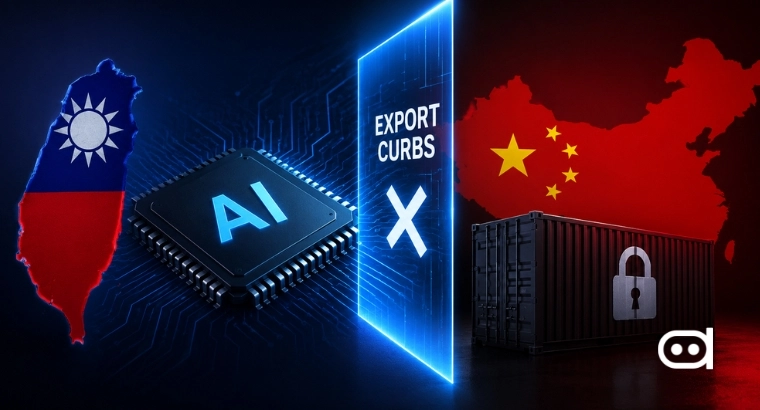
Artificial intelligence is no longer just a software story. It is a hardware race, a supply chain battle, and a geopolitical pressure test all at once. The latest US AI chip export curbs show how quickly access to advanced compute has become a lever of power, not just a procurement issue. For chipmakers, cloud providers, and governments, the message is blunt: if you do not control the silicon, you do not fully control the future of AI.
That matters because the modern AI stack is built on scarce, expensive accelerators that are in demand everywhere and available nowhere in unlimited supply. Tighter export rules can slow rivals, but they can also reroute billions in revenue, accelerate domestic chip projects, and force companies to redesign product roadmaps around compliance. The result is a new kind of tech fragmentation. And while the headlines focus on restrictions, the deeper story is about who gets to scale AI first, who gets boxed out, and who can adapt fastest.
- US
AI chip export curbsare becoming a strategic tool, not a narrow trade policy. - Chipmakers and cloud firms may see demand shift, but revenue risk rises too.
- Global AI development could splinter into faster and slower lanes.
- Compliance, not just innovation, is now a core competitive skill.
- The biggest winners may be companies that can diversify supply and geography.
Why the US AI chip export curbs matter now
The timing is the point. AI models keep getting larger, more capable, and more computationally hungry. That makes advanced chips essential infrastructure, closer to energy or telecommunications than to consumer electronics. When the US tightens exports, it is not merely saying no to a sale. It is attempting to shape where frontier AI gets built, trained, and deployed.
This is especially consequential because the AI market has matured into a three-layer contest: chip design, cloud scale, and model development. Restrictions on high-end accelerators ripple through all three. A cloud provider that cannot secure enough top-tier GPUs cannot offer the same training capacity. A startup with a great model idea may hit a ceiling if compute becomes too expensive or too difficult to source. A government pursuing AI sovereignty may suddenly need to accelerate domestic procurement or accept slower progress.
The strategic implication is simple: compute is now policy. And policy is now part of the AI product stack.
Who feels the impact first
Chipmakers
Semiconductor vendors are trapped between opportunity and exposure. On one hand, scarcity keeps demand high in markets that remain accessible. On the other, export restrictions can cut off major growth channels and create a compliance burden that slows sales cycles. The market may reward resilience, but it punishes uncertainty.
Companies that depend on global volume cannot treat restricted regions as a footnote. They have to redesign forecasting, inventory planning, and customer segmentation. That is not a small adjustment. It can reshape quarterly guidance and long-term capital allocation.
Cloud providers
Cloud infrastructure giants sit at the center of the squeeze. They need access to the best accelerators to stay competitive, but they also need to keep customers happy across regions with different legal constraints. That means more compliance reviews, more localized infrastructure planning, and in some cases, more product tiering.
For enterprise customers, this may show up as availability gaps, longer lead times, or restricted access to certain machine learning clusters. For the cloud platforms, the challenge is less about marketing and more about maintaining trust while navigating policy landmines.
AI startups
Startups are the most vulnerable to compute shocks. Large companies can absorb delays, pay premiums, or reroute orders. Smaller teams often cannot. When access to premium chips tightens, the fastest path to prototype can become the slowest path to scale.
When compute becomes restricted, startup strategy changes overnight. The winners are no longer just the best builders. They are the best planners.
The business logic behind tighter controls
The US case for export curbs usually comes down to national security, strategic competition, and technology leadership. The logic is straightforward: if advanced chips help train powerful AI systems, then limiting access can slow adversaries from building comparable capability. That sounds clean on paper. In practice, it is messy.
Policy makers have to decide what counts as cutting-edge, how to define thresholds, and how to prevent loopholes. Chip performance evolves quickly. Product lines get repackaged. Workarounds emerge. The result is a moving target that forces regulators to keep updating the rulebook while the industry keeps shipping.
That tension creates friction for everyone involved. Too much restriction can chill legitimate commerce and encourage supply chain workarounds. Too little restriction and the policy loses credibility. The middle ground is hard to maintain, which is why these controls often trigger constant revisions and lobbying battles.
How companies adapt to AI chip export curbs
The smartest players are not waiting for the policy environment to settle. They are building around it now.
- Diversify suppliers: Reduce dependence on a single chip family or region.
- Rework procurement: Build longer planning windows and keep buffer inventory where possible.
- Localize infrastructure: Place restricted workloads in approved regions and separate sensitive deployments.
- Invest in efficiency: Optimize training runs, inference pipelines, and model architecture to do more with less compute.
- Strengthen compliance: Treat export controls as an engineering and legal workflow, not just a back-office issue.
There is also a quieter shift happening: more firms are trying to squeeze better performance out of existing hardware. That means model distillation, quantization, smarter batching, and more careful workload scheduling. In plain terms, AI teams are learning that raw scale is not the only path forward. Efficiency is becoming a competitive feature.
Pro tip: If your AI roadmap assumes unlimited access to frontier chips, it is already outdated. Stress-test it against shortage scenarios now, not after procurement stalls.
What this means for global AI competition
The long-term effect of the AI chip export curbs may be a more uneven AI landscape. Some regions will keep moving quickly because they can secure supply, partner with domestic chip efforts, or build enough in-house capacity to stay ahead. Others will face slower deployment, higher costs, and more dependence on second-tier hardware.
That does not mean innovation stops in restricted markets. History suggests the opposite: constraints often drive improvisation. Companies may prioritize specialized models, narrow use cases, or efficiency-first research. But there is a difference between adapting and leading at the frontier. The companies that set the pace of AI progress usually have abundant compute. Restrictions make abundance harder to guarantee.
For the US, this is a delicate balancing act. Export controls may protect strategic interests, but they also risk pushing some customers toward alternative suppliers, alternative ecosystems, and alternative alliances. Once that happens, market share can be difficult to win back. In technology, access today often determines dependency tomorrow.
The hidden cost is fragmentation
One of the less discussed consequences of tighter chip controls is fragmentation. The global internet once sold the dream of one integrated technology market. AI is breaking that dream apart. Different rules, different hardware availability, and different national priorities are creating a patchwork of capabilities.
That fragmentation has costs beyond sales lost and products delayed. It complicates research collaboration. It slows cross-border deployment. It makes standards harder to align. It also increases the importance of corporate strategy teams, legal teams, and government relations teams inside tech companies that once treated hardware sourcing as a solved problem.
For enterprise buyers, fragmentation means more vendor complexity and less certainty. For developers, it means the best model may not always be the one you can actually run at scale. And for the broader market, it means AI may evolve along separate tracks depending on where the compute lives.
What to watch next
The next phase will likely hinge on a few signals. First, whether the rules expand further or settle into a stable framework. Second, how quickly chipmakers adjust their product segmentation to stay within policy boundaries. Third, whether cloud providers can keep enough inventory flowing to avoid service disruptions. And fourth, whether rivals accelerate domestic chip investments in response.
There is also the question of enforcement. Export policy is only as strong as its monitoring. If controls are easy to bypass, they lose force. If they are too rigid, they can choke legitimate business and innovation. That tension means the real story is not just the announcement itself, but the operational machinery that follows.
The companies that treat export controls as a temporary headline will get caught out. The companies that build for policy volatility will keep moving.
The bottom line on AI chip export curbs
These curbs are not just about chips. They are about leverage, speed, and the future map of artificial intelligence. The immediate effect is to tighten access and complicate business decisions. The bigger effect is to redefine what competitive advantage looks like in AI. It is no longer enough to have a great model or a deep-pocketed customer base. You need supply chain resilience, regulatory fluency, and a plan for a world where compute is contested territory.
That is the uncomfortable truth behind the policy shift. The AI boom is still growing, but it is growing inside constraints. And the companies that understand those constraints first will be the ones that shape the next phase of the market.
The information provided in this article is for general informational purposes only. While we strive for accuracy, we make no guarantees about the completeness or reliability of the content. Always verify important information through official or multiple sources before making decisions.