AI Jobs Rule, Hybrid Work Rises

AI Jobs Rule, Hybrid Work Rises
The labor market is entering a harsher, smarter phase. Employers are hiring with one eye on automation and the other on cost control, while workers are trying to decode which skills still matter when AI can draft, summarize, analyze, and even code at machine speed. The result is not just a tech trend – it is a power shift. AI jobs are no longer niche roles tucked inside research labs or startups. They are becoming the filter through which companies decide who gets hired, promoted, and replaced. That makes this moment feel less like a software upgrade and more like a redesign of the workplace itself. For anyone trying to stay employable, or anyone responsible for building teams, the stakes are rising fast.
- AI is moving from specialist teams into mainstream hiring decisions.
- Companies are prioritizing workers who can pair domain knowledge with AI fluency.
- Hybrid work remains attractive because it supports both productivity and retention.
- Routine tasks are being compressed, which raises expectations across most roles.
- The winners will be people and organizations that adapt faster than the market shifts.
Why AI jobs are now the hiring filter
For years, companies talked about digital transformation as if it were a long-term project. That language now feels outdated. AI tools have become cheap, embedded, and fast enough to affect everyday workflows, which means employers are no longer asking whether they should use them. They are asking who can use them best. This is where AI jobs gain their leverage. They are not just positions for model builders or data scientists. They include product managers, operations leads, marketers, analysts, and customer teams that know how to translate machine output into business value.
The shift is subtle but important. A candidate who can prompt an assistant well, validate output, and turn it into a decision can be more useful than someone with a longer résumé but less adaptability. That is especially true in lean organizations, where headcount is under pressure and managers want people who can do more without adding layers of supervision.
AI is not simply automating tasks. It is changing the definition of what looks like a productive worker.
The new baseline is AI fluency
AI fluency is becoming the new minimum expectation, much like spreadsheet skills or email once did. Employers do not need every worker to become a machine learning engineer. They do need people who understand how to ask better questions, spot hallucinations, protect sensitive data, and use tools without blindly trusting them. That is a very different skill set from the one most training programs have traditionally rewarded.
For workers, that means the old strategy of staying competent in a narrow lane is riskier than it used to be. The more repetitive a job is, the more likely it is to be compressed by software. The safest roles are often those that combine judgment, creativity, relationship management, and technical judgment in equal measure.
What hybrid work still gets right
Despite the loud return-to-office debate, hybrid work has not faded because it solves a real problem. It gives employers access to talent beyond a single commute radius and gives workers the flexibility to focus on deep work without sacrificing collaboration entirely. In a market where retention is expensive and recruitment is slower than it looks on paper, that matters.
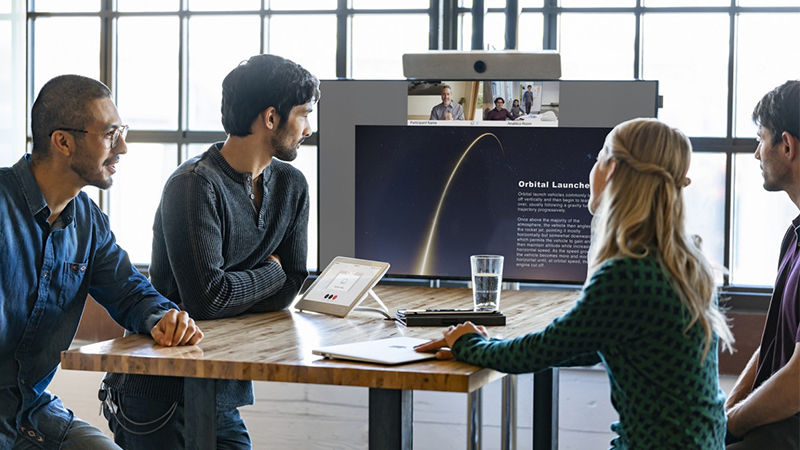
Hybrid models also pair surprisingly well with AI adoption. Remote and distributed teams often move faster on tooling because they are already comfortable with asynchronous communication, documented processes, and digital collaboration. When AI enters that environment, it can automate meeting notes, summarize project threads, and reduce the friction of handoffs. The office is not disappearing. It is becoming one node in a broader operating system.
Why managers keep drifting back to hybrid
Many leaders still like the visibility of office culture, but they also know that rigid attendance policies can backfire. If the goal is better performance, then forcing people into a building is a blunt instrument. Hybrid work gives managers a middle path: enough in-person time for alignment, enough flexibility for focus. That compromise is imperfect, yet it reflects the reality that knowledge work is no longer tied to a desk in the same way.
There is also a financial angle. Real estate is expensive, churn is expensive, and replacing experienced staff is even more expensive. Hybrid work can help companies hold onto people who would otherwise leave for better balance or lower commuting stress. For many businesses, that alone is a compelling reason to keep it.
How workers can adapt without chasing every trend
The temptation in a fast-moving market is to panic and collect certifications like trading cards. That is usually a mistake. What matters most is building a durable combination of skills that make AI more useful rather than more threatening. The goal is not to compete with automation on speed. The goal is to manage it better than your peers.
- Learn the tools your team actually uses rather than chasing every new platform.
- Pair AI output with human judgment so your work becomes faster and more reliable.
- Document your process to show that you can work well in hybrid and asynchronous environments.
- Strengthen domain expertise because AI is most valuable when it sits on top of real knowledge.
- Build trust skills such as communication, coaching, and cross-functional coordination.
A practical way to think about this is simple: if a tool can produce a first draft, your advantage shifts to editing, verifying, and deciding. If a tool can summarize meetings, your advantage shifts to asking sharper questions and moving projects forward. If a tool can classify data, your advantage shifts to identifying what the data actually means for the business.
A simple workflow to stay relevant
Workers do not need a massive reinvention. They need a repeatable routine that keeps them visible and useful:
Identify repetitive tasksthat can be accelerated with AI assistance.Test one tool at a timeinstead of rebuilding your whole workflow.Review the output manuallybefore using it in any decision or deliverable.Track time savedso you can prove the value of the change.Use the extra timeto improve quality, strategy, or client relationships.
This approach matters because the market rewards people who can convert efficiency into better outcomes, not just faster output. The most employable workers will not necessarily be the ones who know the most tools. They will be the ones who know when to use them, when to override them, and when to ignore them.
What companies are getting wrong about the shift
Many organizations still treat AI as a procurement problem. They buy licenses, run a workshop, and assume the transformation is complete. It is not. Without process changes, role clarity, and accountability, AI becomes another underused enterprise tool. Worse, it can create a false sense of productivity while the quality of decisions quietly degrades.
There is also a cultural trap. Some executives frame AI adoption as a reason to demand more from staff without changing expectations or staffing levels. That is a short-term tactic, not a strategy. If employees are expected to move faster, they need clearer priorities, stronger coordination, and guardrails around quality and security.
Companies that treat AI as a pressure multiplier will get short-term gains and long-term burnout.
Better organizations will use AI to remove low-value work, not to pile more work onto the same people. They will also invest in managers who understand how to measure outcomes in a hybrid environment, where visibility is not the same as impact.
The leadership test
The best leaders will ask hard questions: Which tasks should be automated? Which decisions still require human review? How do we train people without overwhelming them? How do we keep hybrid workers connected to company goals? Those questions matter because AI adoption is not just technical. It is organizational design.
That is why the next wave of winners will likely come from companies that combine disciplined AI use with flexible work models. They will hire for adaptability, evaluate performance by results, and use technology to reduce friction instead of disguising poor management.
Why this shift matters now
The combination of AI and hybrid work is rewriting the contract between employers and employees. For workers, the message is clear: routine alone is no longer enough. For employers, the message is equally clear: control is not the same as productivity. The businesses that thrive will be the ones that understand how AI changes the value of human labor, and how hybrid work can support the kind of focus and flexibility modern teams need.
This is not a temporary cycle. The tools are improving too quickly, and the organizational habits around them are hardening into norms. That makes the current moment especially important. People who learn how to operate in this new environment will have an edge. People who assume things will snap back to the old model may find themselves surprised by how quickly the floor moves under them.
The future of work is not one big breakthrough. It is a series of small decisions about tools, habits, and expectations. AI jobs and hybrid work are simply the clearest signs that the decision-making center has moved.
Pro tips for navigating the new market
- Audit your weekly tasks and mark which ones are repeatable, reviewable, or strategic.
- Use AI for acceleration, not authority: let it draft, but never let it decide alone.
- If you manage people, measure output quality, response times, and collaboration health.
- If you are job hunting, showcase specific examples of AI-assisted work and the business result.
- Keep your skills stack broad enough to move between tools, but deep enough to remain credible.
The big lesson is not that AI is taking over work. It is that the bar for what counts as valuable work is rising. That is uncomfortable, but it is also clarifying. Companies can see more, do more, and expect more. Workers can, too. The gap between those who adapt and those who do not is likely to widen quickly.
If you want a definition of modern employability, it may be this: can you use AI without becoming dependent on it, and can you thrive in a hybrid setup without disappearing from view? That is the test now. And it is only getting harder.
The information provided in this article is for general informational purposes only. While we strive for accuracy, we make no guarantees about the completeness or reliability of the content. Always verify important information through official or multiple sources before making decisions.