Argentina Turns a Win Into a Warning

Argentina Turns a Win Into a Warning
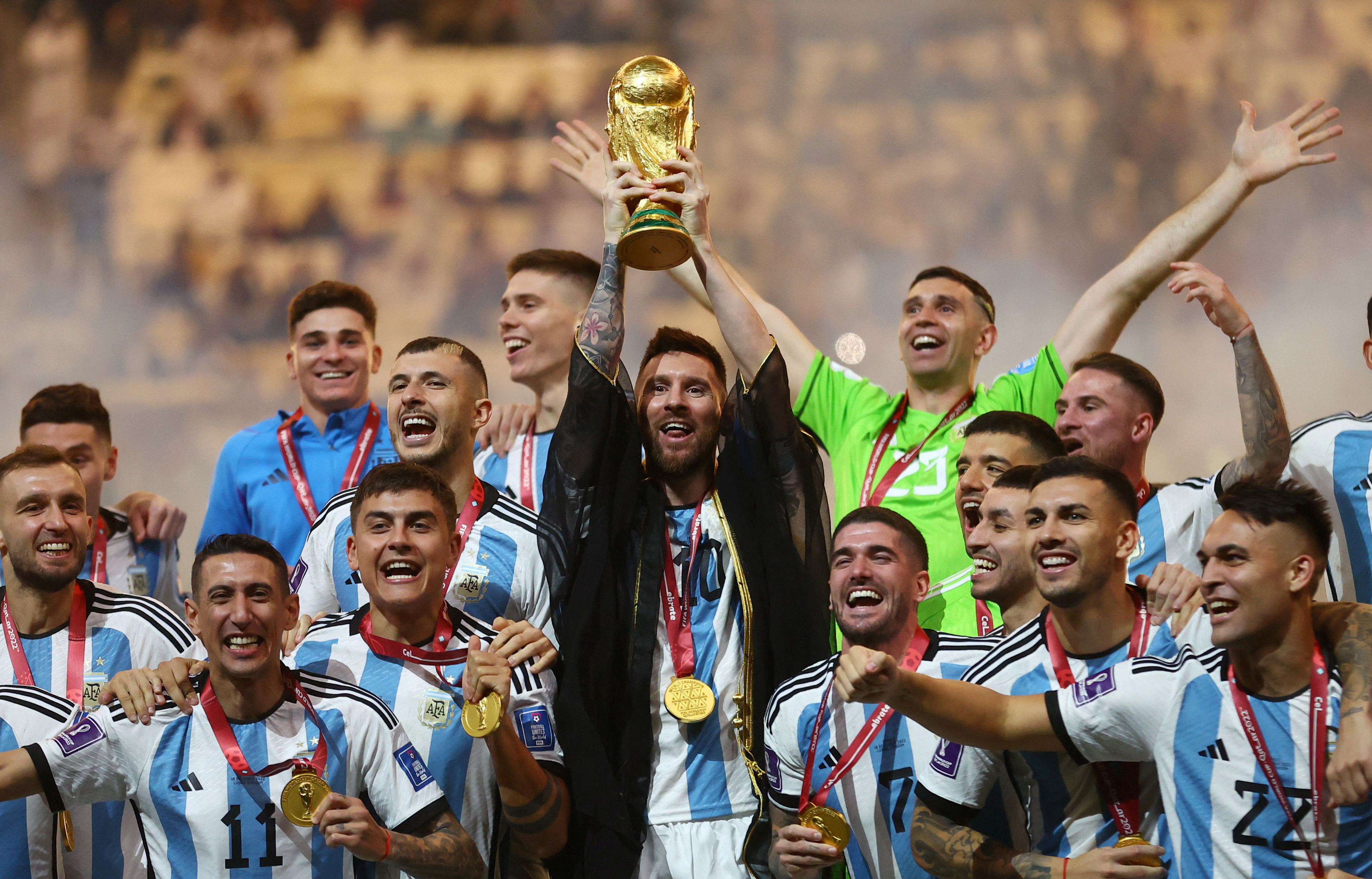
Argentina’s latest celebration did more than mark a football victory. It turned a routine post-match moment into a reminder that the sport still carries political weight far beyond the pitch. When World Cup holders celebrated a win over England with a banner referencing the Malvinas, they did what football has always done at its most combustible: it transformed a result into a statement. For fans, this is catharsis. For governing bodies, it is a headache. For everyone else, it is a snapshot of how sport can still ignite history, identity, and grievance in a single image. The banner was not subtle, and that is exactly why it matters. In an era when federations try to package football as neutral entertainment, moments like this expose the fiction. Football is never just football when national memory is on the line.
- The banner turned a celebration into a geopolitical message.
- The Malvinas issue remains emotionally charged in Argentina.
- Football governing bodies face a recurring challenge: where to draw the line.
- These moments amplify national identity far beyond the scoreline.
- The real story is not the banner alone, but the tension it reveals.
Why the Malvinas message still lands
The word Malvinas is not a throwaway slogan in Argentina. It is part of a long-running national narrative tied to sovereignty, war memory, and public identity. That makes any public reference, especially one paired with a victory over England, instantly loaded. The football context matters because England and Argentina have one of the sport’s most politically charged rivalries, shaped by the 1982 Falklands War and decades of emotional residue. A banner in that setting is not merely decorative. It is strategic symbolism, aimed at an audience that understands the message without needing it explained.
This is where football becomes larger than sport. Stadiums are one of the few places where mass emotion, national identity, and global attention converge in real time. A banner can travel farther than a post-match interview, and faster too. That is why the image resonated so widely. It gave Argentina’s supporters a visual shorthand for a historical claim, while also forcing neutral observers to confront the fact that international football remains deeply entangled with politics.
Key insight: the most powerful football symbols are rarely about the match itself. They are about what the match lets people say without having to explain themselves.
The politics of winning with the Malvinas banner
There is a reason this kind of gesture keeps happening in football. Victory changes the tone. When a team wins, its supporters feel licensed to frame the result as evidence of cultural superiority, historical vindication, or collective endurance. That is not unique to Argentina, but the country’s relationship with the Malvinas issue makes the symbolism especially sharp. A celebration after beating England becomes more than a celebration. It becomes a message delivered from a position of confidence.
From a strategic standpoint, the banner did three things at once. First, it asserted identity. Second, it inserted a territorial claim into a global media cycle. Third, it tested the tolerance of football authorities for political expression in emotionally charged settings. That last point matters because governing bodies often prefer to treat such incidents as isolated provocations. They are not. They are symptoms of a broader contradiction: football markets itself as universal, but its most memorable moments are often intensely local, historical, and political.
Why this keeps happening in football
The sport rewards drama. It also rewards symbolism that is instantly legible on television and social platforms. A banner can achieve more reach than a speech, more ambiguity than a chant, and more impact than a formal statement. That makes it a tempting tool for supporters and athletes alike. The downside is that it collapses nuance. A long-standing dispute becomes a slogan. A painful national memory becomes a celebration prop. And once that happens, the wider audience is forced to process the politics whether it wants to or not.
For football organizations, the challenge is not just disciplinary. It is interpretive. How do you distinguish between national expression and inflammatory messaging when both can look similar from the stands? That gray area is exactly where the modern football ecosystem struggles. Global tournaments want atmosphere, but not controversy. Federations want passion, but not escalation. The problem is that the two are often inseparable.
What the reaction says about modern football
If this feels familiar, it should. Football has spent decades trying to separate itself from political conflict, only to be pulled back in by the same forces it cannot fully control. National teams, unlike clubs, are built around identity. They carry flags, anthems, and collective memory into every match. That makes them uniquely vulnerable to political interpretation. A club banner may express local pride. A national team banner can sound like diplomacy gone rogue.
The reaction to Argentina’s banner also reflects how much the sport now depends on image management. In the social media era, a single frame can define a game’s legacy. The match result may be archived in statistics, but the banner lives in feeds, headlines, and political commentary. That changes incentives. Supporters know the visual will travel. Players know their gestures will be dissected. Administrators know silence can look like complicity. The result is a constant game of message control, with football as the medium and national feeling as the payload.
The governing body dilemma
Football authorities are stuck between two bad options. Penalize too aggressively, and they look like they are policing identity. Ignore the incident, and they appear to tolerate politicized provocation. That tension is not new, but it is becoming harder to manage because the audience is more global and the feedback cycle is immediate. Every decision is now read through multiple lenses: sport, politics, media, and diplomacy.
What makes the Malvinas banner especially significant is that it lands in a category that is difficult to sanitize. It is not random abuse, and it is not a casual joke. It is a deliberate historical reference attached to a high-profile football moment. That kind of messaging is harder for regulators to dismiss because it is clearly intentional, yet harder to punish cleanly because it is wrapped in national sentiment. That ambiguity is the core problem for modern football governance.
Why this matters beyond one match
This incident matters because it reveals how football still functions as a public square for unresolved history. The pitch is a stage, but the crowd is never just a crowd. It is a political audience, a cultural echo chamber, and sometimes a pressure valve. When Argentina’s supporters lifted that banner, they did more than celebrate. They reminded everyone that sport can be a vehicle for claims that governments would prefer to handle elsewhere.
There is also a broader lesson for brands, broadcasters, and tournament organizers. The more international football becomes, the more it attracts narratives that are impossible to fully control. Neutrality is often a branding goal, not a lived reality. The premium product may be cleanly packaged, but the emotional core remains messy. That messiness is part of the appeal. It is also the risk.
Pro tip: if an international football moment can be summarized in one image, assume that image will outlive the match and shape the conversation far longer than the scoreline.
The future of football and political symbolism
Expect more of this, not less. As football becomes more commercially global, the pressure to express local identity will intensify. Supporters will keep using flags, banners, and chants to make their views visible. Players, meanwhile, will continue to operate in a world where every gesture can be read as political, even when it is not intended that way. The line between celebration and statement will keep thinning.
That does not mean football is doomed to become a permanent culture war. It does mean the sport will have to get more honest about what it is. International football is not a sterile entertainment product. It is a high-stakes collision of identity, memory, and ambition. The Argentina banner over England did not create that reality. It simply exposed it with unnerving clarity.
And that is why the image matters. Not because it was shocking in the abstract, but because it was so effective. It took a win, attached it to a historical claim, and sent it into the world in one glance. That is football at its most powerful and its most dangerous: a game where the scoreboard matters, but the symbols can matter more.
Bottom line: Argentina’s celebration was not just about victory. It was a reminder that in football, the past is always one banner away from the present.
The information provided in this article is for general informational purposes only. While we strive for accuracy, we make no guarantees about the completeness or reliability of the content. Always verify important information through official or multiple sources before making decisions.