Artemis II astronauts land to rewrite NASA’s risk calculus
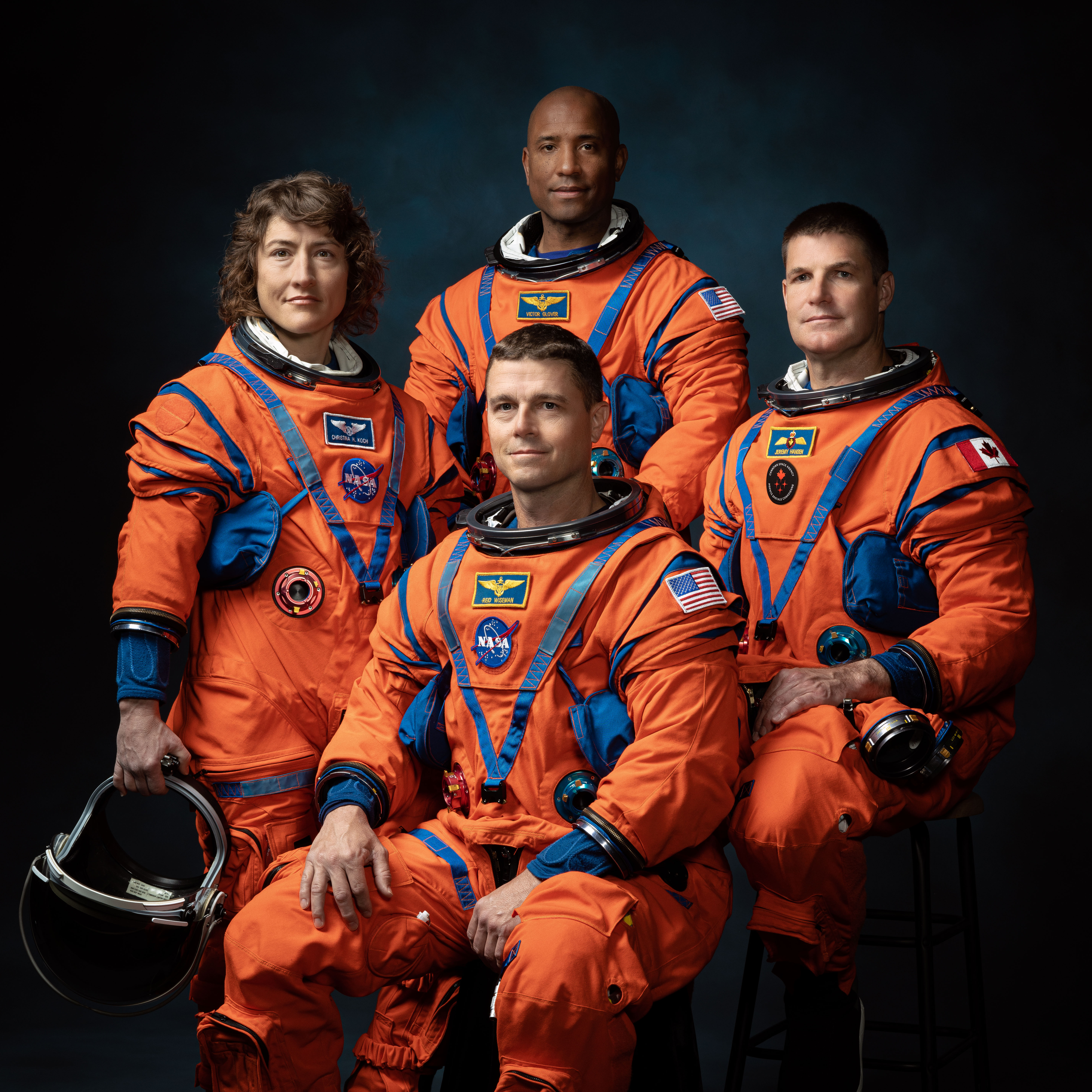
The return of the Artemis II astronauts is not just another splashdown; it is a referendum on whether NASA’s Moon-to-Mars ambition can scale beyond nostalgia. With the four-person crew proving that Artemis II astronauts can survive a record-distance shakedown of the Orion system and its life-support stack, the agency now holds a fresh blueprint for deep-space operations in a geopolitical and commercial landscape that is far less patient than Apollo’s. This moment tests whether lunar exploration can mature into a sustainable, multi-partner supply chain before Mars deadlines harden and budgets wobble.
- Artemis II validated critical
Orionsystems for crewed lunar trajectories and reentry. - The mission’s record distance stresses NASA’s thermal and comms envelopes ahead of Artemis III.
- Training, autonomy, and partner integration moved from theory to practice under real risk.
- Timelines now hinge on hardware readiness for landing systems and lunar infrastructure.
Artemis II astronauts prove the architecture is flight-ready
The mission’s 10-day figure-eight around the Moon transformed the Orion capsule from a CAD hero into a flight-qualified crew vehicle. Life-support performance, ranging from CO2 scrubbing to cabin humidity, tracked within predicted bounds, while reentry loads validated the heat shield repair process that haunted earlier tests. The crew’s communications handoffs between NASA’s Deep Space Network and partner relays checked out, giving mission control confidence in bandwidth for future surface operations. Just as importantly, the astronauts operated in crew autonomy mode during segments of the loop, proving procedures for time-delayed decision-making that will be mandatory as lunar distances stretch comms latency.
Stressing thermal and reentry margins
Thermal engineers framed the flight as a high-stakes bake-off for the Orion heat shield. After a prior uncrewed mission revealed charred gouges, Artemis II’s controlled reentry at a slightly steeper angle offered hard data for refining TPS ablator models. Early readouts show the material recession matched expectations, giving NASA confidence to greenlight a similar profile for Artemis III. The crew reported manageable cabin temperatures even as the exterior absorbed multi-thousand-degree peaks, underscoring improved insulation and airflow design.
Proving comms resilience at lunar distances
With the spacecraft pushing past prior crewed distance records, link stability was a make-or-break metric. Engineers toggled between Ka-band and S-band to simulate antenna issues, and the crew used pre-scripted data drops to test buffering. The outcome: degraded modes still preserved critical telemetry, a prerequisite for any surface sortie where dust or terrain could shadow antennas.
Artemis II astronauts redefine crew workload and training
Beyond hardware, the mission rebalanced the human factors equation. The crew ran a dense slate of manual burns, navigation cross-checks, and maintenance tasks to pressure-test schedule margins. NASA has historically overstuffed timelines; this mission flipped the script by inserting recovery buffers to watch how quickly astronauts could regain cognitive sharpness after sleep disruptions. The experiment showed that micro-rest windows and nutrition adjustments improved task accuracy, a data point now feeding directly into the Artemis III EVA plan.
Autonomy as a mission asset, not a backup
Autonomy moved from insurance policy to operational standard. The crew used onboard guidance to adjust attitude when ground uplinks intentionally paused, proving that manual-and-machine blended navigation can handle minor anomalies without delaying burns. This is crucial when coordinating with commercial landers that may run on different clocks or suffer telemetry outages.
Key insight: Treating the crew as active systems engineers rather than passengers shaved minutes off anomaly responses, tightening the feedback loop between humans and software.
Training implications for commercial partners
Because future landers from commercial teams will dock or rendezvous with Orion, Artemis II’s procedural logs become the template for joint sims. The mission added cross-vehicle checklists that can be handed to partners, reducing integration friction. That is a strategic win: every standardized checklist accelerates certification for the next wave of spacecraft.
Why this matters: Moon-to-Mars credibility on the line
NASA’s stakeholders – from Congress to international partners – needed proof that the lunar architecture is not a single-point failure. Artemis II provided it by showing that life-support, navigation, and comms can endure the distances that a Mars shakedown will demand. It also refreshed public and political enthusiasm just as funding cycles hit critical debates. A successful crewed loop buys NASA narrative capital to defend budgets for landers, surface suits, and the Gateway station.
Budget leverage and industry signaling
Every validated subsystem is now evidence in procurement battles. For contractors, Artemis II is a green light to scale production. For startups building lunar comms relays or power systems, the mission proves a market is forming. Failure would have chilled investment; success invites it.
International coordination
Partner agencies supplying hardware for later missions gained confidence from seeing crew procedures executed cleanly. Shared telemetry standards tested during the flight will underpin docking and logistics for the Gateway. The mission therefore acts as a diplomatic accelerant, aligning schedules across agencies that must deliver components on tight windows.
Artemis II astronauts highlight risks still looming
Success does not erase risk. The heat shield passed, but sample returns and post-flight inspections will decide whether any microcracking lurks. The Service Module engine margins need more flight hours before crews can lean on aggressive abort options. Lunar lander readiness remains the wild card – without a certified human-rated lander, Artemis III timelines slip.
Schedule pressure and supply chain
Hardware cadence is the Achilles’ heel. The mission consumed spare parts that must be replenished before the next flight, and avionics suppliers are already juggling commercial satellite backlogs. Any delay cascades into training, since crews rehearse on mission-specific hardware configs.
Radiation and long-duration unknowns
The record distance offered partial radiation exposure data, but a true Mars profile would demand months of measurements. Artemis II logged dosimeter results that will refine shielding for the Gateway and deep-space transits, yet biological effects over longer arcs remain a research frontier.
Pro tips from the mission for future crews
NASA quietly inserted operational experiments to harvest best practices:
- Use modular
checkliststied to vehicle states rather than fixed timelines to cut mental load. - Pre-stage
contingency toolsnear hatches to shave seconds off emergency drills. - Rotate comms roles to keep every astronaut fluent in degraded-mode protocols.
- Adopt micro-rest cycles before precision burns to reduce reaction time variability.
These pragmatic tweaks can be copied by commercial and international crews preparing for rendezvous or docking with Orion.
Future implications: from lunar sorties to Mars rehearsals
Artemis II’s data set becomes the backbone for a phased expansion. The immediate next step is integrating crew timelines with commercial lander demos, ensuring handoffs during lunar orbit are clean. Longer term, the mission’s autonomy experiments inform how Gateway can operate semi-crewless, a requirement for sustaining a lunar economy. Most ambitiously, the radiation and life-support learnings will feed into Mars transfer habitat design, making Artemis II a dress rehearsal for interplanetary ambitions.
What to watch next
Keep an eye on post-flight inspections for the heat shield and Service Module engines, contract awards for lander flight readiness reviews, and DSN upgrades that could further reduce latency. Each milestone either compresses or stretches the timeline to a lunar surface walk.
Verdict: Artemis II astronauts reset expectations
Artemis II is the clearest signal yet that lunar exploration has matured into a systems-level endeavor, not a stunt. The crew’s record-breaking trip answered lingering questions about Orion durability, comms resilience, and human performance. It also exposed the remaining gaps: lander certification, supply chain stability, and long-duration radiation strategy. Still, the mission hands NASA and its partners something priceless – proof that the architecture works under crewed stress. That proof is the leverage needed to keep budgets intact, contractors motivated, and international partners aligned. The Moon is no longer a distant nostalgia play; it is a staging ground for Mars, and Artemis II just made that path feel real.
The information provided in this article is for general informational purposes only. While we strive for accuracy, we make no guarantees about the completeness or reliability of the content. Always verify important information through official or multiple sources before making decisions.