Blue Origin Explosion Shakes the Rocket Race
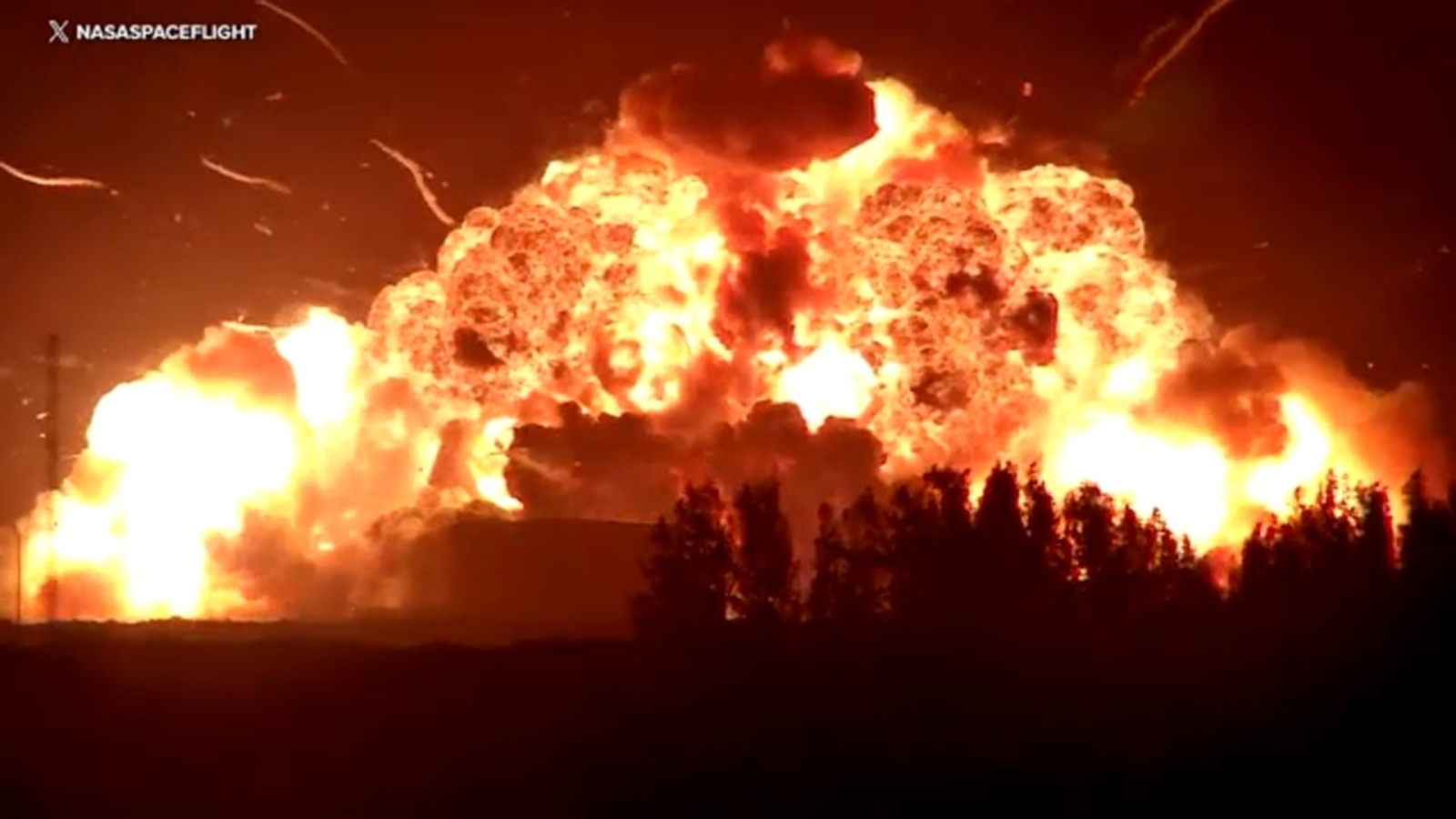
Blue Origin Explosion Shakes the Rocket Race
The modern space business sells spectacle, speed, and billionaire ambition. But a Blue Origin explosion cuts through the marketing in seconds. When a rocket fails violently, the damage is not limited to hardware on a pad or debris in the sky. It rattles launch schedules, investor confidence, engineering assumptions, regulatory timelines, and the broader narrative that commercial space can scale on demand. For an industry trying to prove it can make access to orbit routine, a major anomaly is a reminder that rockets remain unforgiving machines operating at the edge of physics. That is why this moment matters beyond one company. It lands at a time when the private space sector is under pressure to deliver reliability, lower costs, and justify years of hype with real operational maturity.
- The Blue Origin explosion is a technical setback with business and regulatory consequences.
- Rocket failures often reveal deeper issues in testing culture, system integration, or production tempo.
- The incident could reshape timelines for future launches, certification efforts, and customer confidence.
- Commercial space is advancing fast, but reliability still decides who wins long term.
Why the Blue Origin explosion matters far beyond one launch site
Rocket failures are uniquely public. A software outage can be patched quietly. A supply chain delay can be buried in quarterly language. A rocket explosion becomes an instant symbol of risk. For Blue Origin, that symbolism is amplified because the company sits at the intersection of prestige, heavy investment, and a long-running contest for relevance in the commercial launch market.
Space companies do not just compete on engineering. They compete on credibility. Customers want assurance that payloads will fly on time. Governments want confidence that safety and mission assurance standards are solid. Investors want to know that large capital burns eventually produce repeatable operations. A visible failure tests all three.
In rocketry, the hard part is not proving a vehicle can fly once. The hard part is proving it can fly reliably, repeatedly, and under schedule pressure.
That is the brutal standard facing every serious launch provider. One explosion does not define a company forever, but it can reset the conversation around its readiness, internal discipline, and strategic position.
What a rocket explosion usually reveals
Without overreaching beyond the reported event, it is useful to understand how the industry interprets a failure like this. Explosions rarely stem from a single dramatic mistake. More often, they emerge from a chain of smaller factors across design, manufacturing, testing, operations, and decision-making.
Propulsion systems are unforgiving
Rocket engines operate under extreme temperature, pressure, and vibration. A tiny defect in a turbopump, injector, valve, seal, or feed line can cascade quickly. When propellants are involved, milliseconds matter. Engineers will likely examine telemetry around chamber pressure, engine start sequences, mixture ratios, thermal signatures, and structural loads.
Even mature systems can fail when one variable drifts outside expected tolerances. That is why every anomaly review goes deep into data logs, simulation comparisons, and hardware inspection.
Ground systems matter as much as the rocket
Launch vehicles do not operate alone. Fueling infrastructure, pressurization equipment, software controls, sensor calibration, and countdown procedures all shape outcomes. A failure on or near the pad can involve interactions between vehicle and ground support systems that seem minor until they line up in the worst possible way.
In practical terms, investigators will likely ask whether automated abort logic worked as intended, whether instrumentation detected issues early enough, and whether the sequence of events points to hardware failure, operational fault, or both.
Production tempo can create hidden stress
One of the least glamorous realities in aerospace is that speed can be expensive in invisible ways. As commercial space companies scale, they push for faster manufacturing, tighter deadlines, and more integrated supply chains. That can expose weaknesses in quality control, part traceability, and testing consistency.
A Blue Origin explosion will inevitably trigger scrutiny around whether any schedule pressure, program complexity, or organizational bottlenecks contributed to risk. That does not mean haste caused the event. It means modern launch companies are always balancing innovation against discipline.
Blue Origin and the burden of expectation
Blue Origin has spent years cultivating an image of long-term seriousness. It is not a startup running on improvisation. It is a deeply funded space company with major ambitions across suborbital tourism, orbital launch, engines, and broader infrastructure. That scale creates a different kind of pressure.
When a company positions itself as a foundational player in the next era of spaceflight, each technical stumble becomes a referendum on execution. Critics see delay. Supporters see the normal pain of hard engineering. The truth usually sits in between.
Blue Origin has often framed its work around patience and stepwise development. That philosophy can produce robust systems, but it also raises the stakes when something goes wrong. If you promise rigor, outsiders expect fewer visible failures. If one happens, they ask sharper questions about process, readiness, and leadership alignment.
Space history is full of companies that were underestimated early. It is also full of programs that learned too slowly while competitors built momentum.
That is the strategic tension now. Blue Origin does not just need a technical fix. It needs to show that its response is fast, transparent enough for stakeholders, and grounded in real engineering accountability.
The business fallout after a Blue Origin explosion
The commercial launch sector runs on calendars as much as combustion. A major anomaly can trigger cascading delays that touch customers, insurers, suppliers, and government partners.
Launch manifests can unravel quickly
Every delayed mission affects the one behind it. Payload operators may need to rebook windows, renegotiate timelines, or reassess which launch provider offers the least risk. If the affected vehicle serves strategic missions, the consequences can move beyond business inconvenience into national capability concerns.
This is where reliability becomes a sales feature, not just an engineering metric. One high-profile failure can shift procurement conversations for months.
Insurance and risk models may tighten
Space insurance already prices in uncertainty, but explosions force underwriters to revisit assumptions. Premiums can rise. Contract terms can harden. Customers may demand more technical disclosure before committing to future flights. These changes are rarely dramatic in public, but they are deeply felt in deal-making.
Supply chains feel the shock
Large aerospace programs depend on specialized suppliers for avionics, structures, valves, composites, software, and propulsion components. An investigation pause can create inventory issues, contract strain, and production inefficiencies. Even companies not directly responsible for the anomaly may feel the slowdown.
That is the hidden cost of a launch failure: the blast radius extends into boardrooms and factory floors far from the launch pad.
How investigations typically unfold
A serious launch anomaly usually triggers a structured review that blends internal engineering analysis with regulatory oversight. The exact process depends on the vehicle, mission profile, and failure context, but the logic is similar across the industry.
- Data preservation: teams secure telemetry, video, sensor logs, and command histories.
- Hardware review: debris, damaged systems, and recovered components are cataloged and examined.
- Fault tree analysis: engineers map plausible causes and eliminate them through evidence.
- Corrective actions: design changes, procedural updates, or testing requirements are defined before flight return.
In technical organizations, this often means tracing a timeline from ignition through anomaly with precision down to milliseconds. A simplified analytical mindset might look like this:
if pressure_drop > threshold and valve_state == "open": investigate_feed_system()
That line is obviously not a literal flight conclusion, but it captures the method: isolate variables, test hypotheses, and verify against real telemetry.
The hardest part is not finding a possible cause. It is proving the root cause well enough that the next launch is safer.
What Blue Origin must do next
The next phase matters as much as the event itself. Space companies earn long-term trust by how they respond under pressure.
Show technical seriousness, not PR reflexes
Stakeholders can tell the difference between disciplined investigation language and reputation management theater. Blue Origin will need to demonstrate that decisions are being driven by evidence, not by the desire to restore headlines quickly.
Pro tip: In aerospace, vague reassurance often backfires. Specific process milestones build more confidence than broad promises.
Protect safety culture
One underappreciated risk after a failure is overcorrection in the wrong direction. Teams can become excessively cautious in ways that slow learning, or they can feel pressure to move too quickly to prove resilience. Healthy safety culture is neither timid nor reckless. It is evidence-led.
Translate the fix into operational credibility
Customers will eventually ask a practical question: what changed? Blue Origin does not need to expose proprietary details publicly, but it does need a convincing narrative around corrective action, verification, and return-to-flight confidence.
That narrative is essential because commercial space is now mature enough that good intentions no longer count for much. Execution does.
Why this matters for the broader rocket industry
A Blue Origin explosion is also a stress test for the industry story itself. For years, private space companies have argued that they can iterate faster than traditional aerospace while still achieving elite reliability. That claim is not false, but incidents like this reveal how hard the second half of that equation really is.
The sector is entering a phase where ambition alone is not a differentiator. Reusability, launch cadence, manufacturing scale, and mission diversity all matter. But they only matter if systems stay dependable enough to support them. The winners will be the companies that turn every painful lesson into institutional strength.
The commercial space race is no longer about who can launch. It is about who can recover from failure without losing strategic momentum.
That distinction is important. Failures are common in aerospace history. Fatal stagnation is not caused by one explosion. It is caused by slow learning, fragmented accountability, and the inability to convert failure data into better systems.
The bigger lesson behind the blast
Rocket launches still carry a paradox that tech culture often underestimates. They are powered by software, automation, and advanced manufacturing, but they remain governed by chemistry, pressure, heat, and mechanical complexity. You cannot growth-hack your way past combustion physics.
That is why the Blue Origin moment deserves sober attention rather than easy mockery or blind defense. It is a reminder that progress in space is real, but fragile. Every successful launch rests on countless decisions that most people never see. Every failure exposes just how narrow the margins can be.
If Blue Origin handles this with engineering rigor and organizational honesty, the company can still turn a damaging event into a proof point for maturity. If it does not, competitors will not wait. In the modern rocket market, memory is long, schedules are brutal, and credibility is earned one launch at a time.
The information provided in this article is for general informational purposes only. While we strive for accuracy, we make no guarantees about the completeness or reliability of the content. Always verify important information through official or multiple sources before making decisions.