Artemis II astronauts push lunar return into a new era
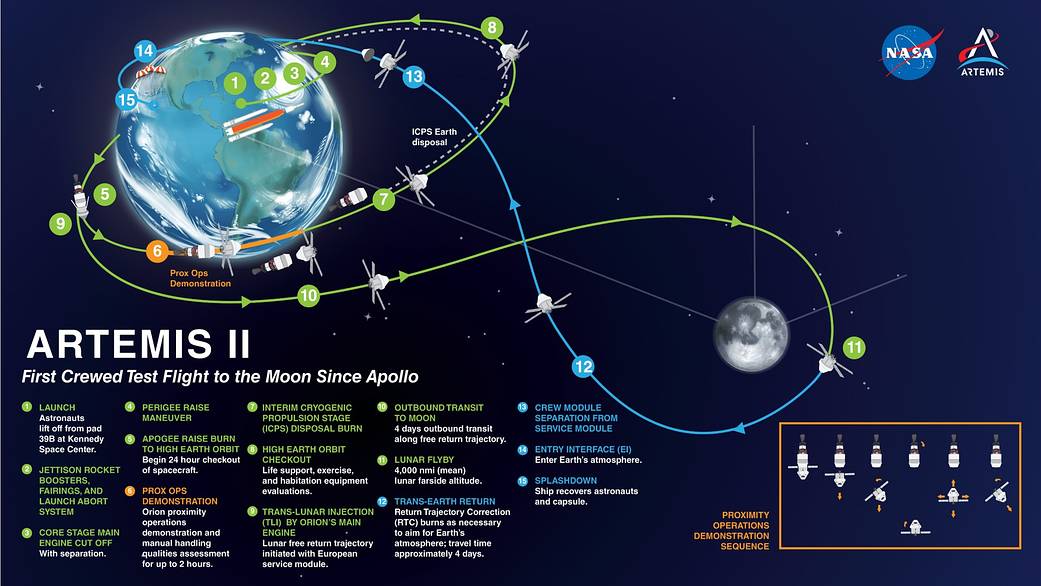
The NASA Artemis II mission has shifted from a symbolic flag-planting to a systems-heavy rehearsal that could decide how humanity returns to the Moon for good. Four astronauts are preparing to ride the upgraded Orion capsule atop a refined Space Launch System, carrying new environmental controls, faster avionics, and a live test of laser-based optical comms. Their brief lunar flyaround will probe every subsystem meant to support future landings, while commercial partners and international modules wait in the wings. The stakes are blunt: get Artemis II right and the pathway to sustained lunar presence accelerates; stumble, and the entire deep space cadence slips.
- Artemis II stress-tests
Orionlife support, communications, and reentry heat shielding in crewed conditions. - New laser comms, predictive thermal algorithms, and upgraded avionics aim to cut risk and add bandwidth.
- Crew drills, contingency modes, and flight-rule updates harden the mission after Artemis I data.
- Commercial partners, international hardware, and lunar infrastructure timelines hinge on Artemis II results.
How NASA Artemis II mission reshapes crewed lunar flight
Artemis II is more than a lap around the Moon: it is the first time the full SLS Block 1 and crewed Orion fly together with upgraded life support, regenerative carbon dioxide scrubbing, and hardened heat shield tiles redesigned after Artemis I ablation patterns. NASA is folding in lessons from uncrewed telemetry to tune reentry guidance, adding additional abort-once-around decision points, and codifying revised flight rules to reflect higher-fidelity models of plasma blackout during skip reentry.
Hardware upgrades anchored in Artemis I data
The composite crew module now hosts redundant ECLSS loops, a recalibrated Orion main engine controller, and thicker backshell coatings where hot spots emerged. Engineers swapped several Avcoat panels and introduced predictive thermal algorithms that adjust attitude to distribute heating. Inside, crew stations integrate improved vibration damping and refreshed displays driven by faster flight computers to reduce pilot workload.
Laser comms and bandwidth-first design
Artemis II adds an optical communications demonstration that turns Orion into a bandwidth hub, sending HD medical data and situational video back to Mission Control. The laser terminal rides alongside Ka-band, offering fallback paths and on-the-fly link switching if weather or pointing jitter interfere. That redundancy informs later missions where lunar base construction will demand high-throughput links for robotic teleoperations.
Risk posture and contingency choreography
After Artemis I’s uneven heat shield char patterns, NASA rewrote portions of the contingency handbook. The crew will rehearse Mode 1a ocean aborts, R-11 free-return pivots, and manual attitude hold if Reaction Control System clusters degrade. Flight Dynamics Officers receive expanded decision trees that blend real-time sensor fusion with precomputed entry windows to avoid steep g-load spikes.
Why Artemis II results will gate lunar surface ambitions
Every successful burn and comms check during Artemis II sets confidence for Artemis III’s crewed landing architecture. Human-rating the trajectory – including Trans-Lunar Injection dispersions and skip-entry envelopes – determines whether future crews can safely rendezvous with the planned Lunar Gateway. Any anomalies could cascade into slips for lander readiness or force requalification of service modules supplied by ESA.
Gateway docking practice without the station
Although Gateway hardware won’t fly with Artemis II, the crew will simulate proximity operations through software-in-the-loop targets, testing guidance code that will later govern Orion’s approach to the HALO module. The mission timeline includes mock hold points, translation burns, and attitude keep-alives to verify the docking nav stack before actual hardware is in orbit.
Commercial cadence and shared risk
SpaceX’s Human Landing System timeline, Blue Origin cargo missions, and Intuitive Machines surface payloads all ride on Artemis II data. A clean Artemis II reentry validates heat shield assumptions for derivative designs, while solid laser comms performance informs how commercial landers aim their own optical links. If issues surface, partners may need to retune avionics or delay payload integration.
Training the crew for a mission that is part sprint, part systems audit
The four-astronaut team is balancing classic piloting drills with deep systems engineering walk-throughs. They are rehearsing manual star tracker alignments in case inertial sensors glitch, practicing cabin depress scenarios with rapid O2 reroute, and running timelines that overlay sleep shifts with high-workload burns to mirror circadian stress expected on longer missions. Crew members are also embedded with ground sim teams to refine callouts, turning lessons from ISS ingress/egress into Artemis-specific checklists.
Human factors under lunar mission constraints
Cabin ergonomics in Orion are tight compared to ISS modules, so NASA is testing stowage layouts that keep critical panels reachable during high-g events. Wearable sensors will collect real-time biometrics to validate medical uplink protocols over the laser channel, providing baseline data for future missions where lunar surface EVAs add fatigue and dust risks.
Pro tips for following the mission like a systems engineer
- Track
Trajectory Consumables: Watch propellant margins at each burn; they reveal guidance efficiency and model fidelity. - Monitor
Comm Handovers: Ka-to-laser switches will showcase redundancy logic; dropouts hint at pointing or weather constraints. - Heat Shield Telemetry: Look for live updates on
backshelltemperatures during skip reentry to gauge material performance. - Life Support Stability:
CO2partial pressure trends will show how well the regenerative scrubbers handle real crew metabolism.
Future implications: building a sustainable lunar economy
If Artemis II nails its objectives, NASA can shift focus to scaling logistics: pre-positioned cargo via commercial landers, power beaming tests, and robotic construction scouts. A reliable Orion comms backbone would allow teleoperated rovers to map resources before boots touch regolith, reducing risk for Artemis III and beyond. Conversely, any major retrofit could freeze the schedule, forcing partners to warehouse hardware and increasing costs across the ecosystem.
Science payloads riding the wave
Radiation dosimeters, deep-space biomedical studies, and avionics experiments tucked into Artemis II will benchmark human exposure beyond low Earth orbit. These readings will shape habitat shielding thickness for Gateway and set protocols for crew rotation lengths, directly influencing how quickly a semi-permanent lunar presence becomes viable.
What to watch on launch week
Weather remains a variable for the Cape, but the larger watch items are ground systems: rapid propellant load on ML-1, swing arm retraction timing, and health of the Core Stage engines after chilldown. A clean countdown feeds into a tight Trans-Lunar Injection window; any scrub ripples into downstream orbital mechanics, potentially shifting splashdown zones and recovery ship positioning.
Reentry: the mission’s make-or-break moment
The skip-entry profile splits heating across two atmospheric dips, demanding precise GNC performance. Engineers will study plasma blackout duration to confirm comms blackout models, while the crew readies manual backup in case Guidance, Navigation, and Control auto modes deviate. Successful reentry with minimal scorching validates the redesigned heat shield and paves the way for faster turnaround on future capsules.
Bottom line: Artemis II as the hinge point
The NASA Artemis II mission is the hinge between lunar ambition and lunar reality. It is simultaneously a technology stress test, a human factors trial, and a signal to partners that the cadence toward a sustainable Moon presence is real. Nail the flight, and hardware already in the pipeline can press forward; stumble, and the domino effect could pause an entire decade of exploration plans. For readers tracking the mission, watch the data threads – comms stability, life support margins, thermal performance – because they will write the script for every crewed deep space flight that follows.
The information provided in this article is for general informational purposes only. While we strive for accuracy, we make no guarantees about the completeness or reliability of the content. Always verify important information through official or multiple sources before making decisions.