Australia Budget 2026 Reshapes the Economic Fight
Australia Budget 2026 Reshapes the Economic Fight
Australia Budget 2026 is not just another fiscal document. It is a stress test for a government trying to convince households, markets, and voters that it can lower pressure without lighting another inflation fire. That is a brutal balancing act. Families want relief now. Business wants certainty. Economists want discipline. Political opponents want any sign that the numbers do not hold up.
The stakes are unusually high because this budget arrives at the intersection of cost-of-living fatigue, slowing confidence, and a wider global economy that still feels one external shock away from fresh instability. Treasurer Jim Chalmers has to sell support without looking reckless, and restraint without looking detached. That tension is the real story. The line items matter, but the strategy behind them matters more because budgets now function as economic policy, political messaging, and market signal all at once.
- Australia Budget 2026 is fundamentally about whether targeted relief can coexist with inflation control.
- The budget doubles as a political document aimed at proving economic competence under pressure.
- Households, small businesses, and investors will judge it by execution, not headline promises.
- The deeper question is whether this budget buys time or genuinely changes Australia’s economic trajectory.
Why Australia Budget 2026 matters beyond budget night
Budget nights tend to generate a flood of quick takes: winners, losers, tax tweaks, spending packages, and forecast revisions. But that surface-level coverage often misses the bigger issue. A modern federal budget is a narrative about what a government thinks the next 12 to 24 months will feel like.
This year, that narrative appears tightly focused on one central challenge: how to respond to persistent household strain while avoiding a broader credibility problem on inflation, debt, and productivity. That is harder than it sounds. If relief is too broad, policymakers risk adding demand back into an economy still sensitive to price growth. If relief is too narrow, the government risks looking blind to real financial pain.
The best budgets are not the ones with the loudest announcements. They are the ones that understand the mood of the country and still survive contact with the numbers.
That is why the framing matters. A budget can be politically popular for 24 hours and still fail strategically if it worsens the structural problems underneath. Markets, central banks, business groups, and voters increasingly look past the applause lines. They want to know whether spending is temporary or locked in, whether savings are credible, and whether productivity gets more than a ceremonial mention.
The opinionated read on the government’s strategy
The government’s likely playbook is clear enough: targeted support, disciplined rhetoric, and a promise that relief is calibrated rather than reckless. On paper, that is the right instinct. Broad stimulus in a still-fragile inflation environment would be politically tempting but economically clumsy.
Still, skepticism is warranted. Governments love the language of precision. The reality is that budgets often become a patchwork of compromises designed to satisfy multiple constituencies at once. That can make them look balanced while pushing difficult reforms further out.
If the government leans heavily on near-term household measures without a convincing medium-term growth story, the budget may feel responsive but not transformative. That is the key distinction. Voters may welcome immediate relief, but long-term confidence comes from signs that the economy can grow more efficiently, wages can rise sustainably, and public finances can absorb future shocks.
Cost-of-living relief is necessary but not sufficient
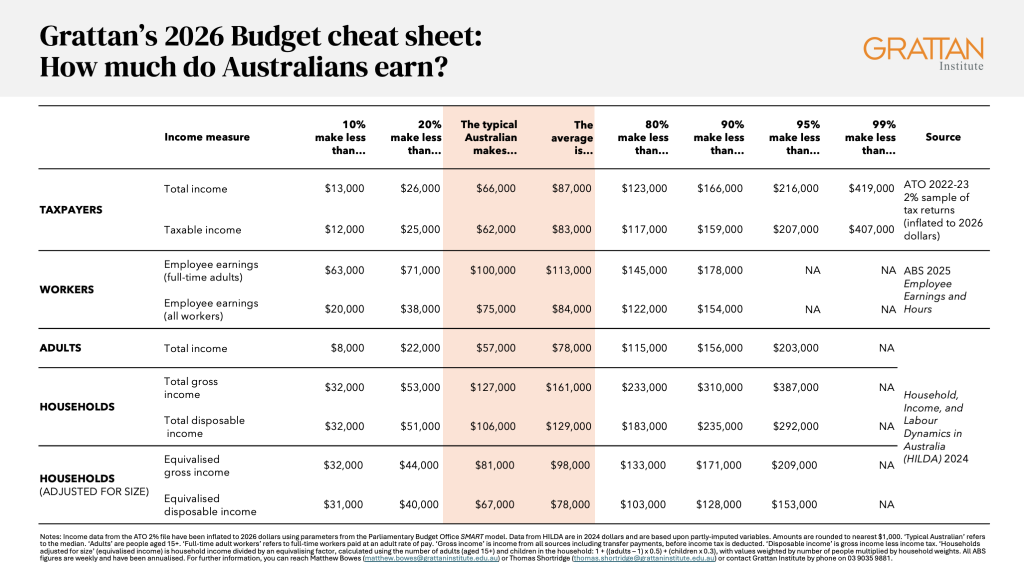
There is no serious argument that governments should ignore cost-of-living stress. Energy bills, housing pressure, grocery inflation, insurance costs, and interest-rate fatigue have all reshaped household behavior. Consumers are more selective. Savings buffers are thinner. Sentiment is weaker than headline employment data alone might suggest.
But relief packages work best when they are temporary, targeted, and easy to administer. If they are too diffuse, the impact gets diluted. If they are too complex, the politics may be stronger than the policy. If they become permanent spending by stealth, the fiscal trade-offs get uglier later.
That is where smart budget design matters. Programs should answer three questions:
- Who actually needs support most?
- How quickly can the support reach them?
- What happens when the support ends?
Those questions sound technical, but they are deeply political. A government that cannot answer them clearly risks being accused of using the budget as a headline engine rather than an economic instrument.
Inflation discipline is the subtext everyone is watching
Even when budget speeches focus on relief, inflation is usually the silent co-author. If the fiscal stance is seen as expansionary at the wrong time, it complicates the broader macroeconomic picture. That matters because households do not experience policy in neat categories. They feel the combined effect of tax, wages, rates, rent, and prices.
For that reason, every new spending promise faces a credibility filter. Is it offset elsewhere? Is it designed to reduce pressure in bottleneck sectors? Or is it simply adding money into the system and hoping the optics hold?
Budgets no longer get judged only by compassion or caution. They get judged by whether they force the central bank to clean up after them.
This is where Treasurer Jim Chalmers faces a familiar but unforgiving test. He has to persuade the public that the government can help without overheating. That means the language around restraint is not filler. It is the architecture of the entire pitch.
What business will be looking for in Australia Budget 2026
Business audiences read budgets differently from voters watching the speech highlights. They are less interested in rhetorical momentum and more interested in operational signal. What gets funded? What gets delayed? Which sectors are being nudged, protected, or deprioritized?
For employers and investors, the core question is whether the budget improves decision-making confidence. That can come from several places:
- Tax stability that makes planning less speculative.
- Infrastructure clarity that helps assess regional and sector opportunities.
- Workforce investment in skills, training, and labor participation.
- Energy and industry policy that lowers uncertainty around transition costs.
If the budget offers immediate relief to households but leaves business with a foggy investment environment, it only solves half the problem. Australia needs demand support, but it also needs a stronger productivity story. That usually means less attention-grabbing measures: workforce capability, digital modernization, planning efficiency, and regulatory consistency.
These areas rarely dominate the next-morning headlines, yet they are often the difference between a budget that cushions and a budget that compounds.
The political stakes are almost as important as the economics
No government presents a budget in a political vacuum. Every spending measure, savings line, and forecast assumption gets interpreted through an electoral lens. That is not cynical. It is simply how budgets function in parliamentary democracies.
Australia Budget 2026 arrives with a credibility contest baked in. The government wants to project steadiness and empathy. The opposition will search for waste, fragility, and overreach. Crossbench and interest groups will ask whether the budget is fair, future-ready, and honest about trade-offs.
This is where budget storytelling matters. A coherent budget has a thesis: here is the pressure, here is the response, here is how we pay for it, and here is why it does not make the larger problem worse. A weak budget often feels like a sequence of disconnected announcements held together by branding.
Why the public may judge outcomes differently this year
There is a growing gap between policy intent and lived experience. Governments can point to moderating inflation, resilient employment, or strong aggregate numbers, but households may still feel stuck. Mortgage holders may not care that inflation is off its peak if repayments remain punishing. Renters may not feel reassured by fiscal prudence if housing remains scarce and expensive.
That disconnect is dangerous for any government relying on macroeconomic improvement as proof of competence. Voters often trust what they feel before what they are told. So even a technically sound budget can struggle politically if relief is not visible enough.
The real audience for budget night is not the bond market or the press gallery. It is the household that wants to know whether next month gets any easier.
That does not mean substance is irrelevant. It means communication and implementation have become part of substance. A measure that exists on paper but feels inaccessible can become politically worthless very quickly.
Where the real risks sit after budget night
The immediate reaction to a budget often overstates certainty. The more useful approach is to track the fault lines likely to matter over the year ahead.
Forecast risk
Budgets depend on assumptions about growth, inflation, wages, unemployment, and commodity prices. Those assumptions may be reasonable and still go wrong fast. If the external environment deteriorates, even disciplined fiscal planning can come under pressure.
Execution risk
Announcing support is easier than delivering it cleanly. Programs can stall in bureaucracy, underperform, or miss intended recipients. When that happens, the political value collapses faster than the policy can recover.
Structural risk
The deepest danger is relying on temporary fixes while the long-term drivers of strain remain unresolved. Housing supply, productivity growth, energy transition costs, and service capacity are not solved by one budget cycle. If the budget treats them as side issues, the relief may prove shallow.
What smart readers should watch next
After the speech and the spin, focus on a few practical indicators. First, watch whether the government can explain the trade-offs in plain language. Second, look for whether independent economic commentary focuses on targeting and credibility rather than just generosity. Third, pay attention to whether business and consumer sentiment improve in the weeks that follow.
A useful mental model is to separate headline measures from system effects. Headline measures get the attention. System effects determine whether the budget actually changes behavior across households, firms, and institutions.
- If households spend the relief immediately, short-term pressure may ease but inflation questions may return.
- If households save the relief, the political benefit may be weaker even if balance-sheet stress declines.
- If businesses see policy stability, investment confidence may improve over time.
- If structural reforms are vague, the budget may age badly once the headlines fade.
The bottom line on Australia Budget 2026
Australia Budget 2026 looks set to be judged on a standard that is both fair and unforgiving: can the government deliver visible relief without sacrificing economic credibility? That is the central test. Everything else is secondary.
The most persuasive version of this budget is one that acknowledges voter pain without pretending cash support alone will solve it. The weakest version is one that confuses tactical relief with strategic repair. Australia does not just need a budget that lands well on the night. It needs one that still makes sense six months later, when households are checking bills, businesses are updating forecasts, and political patience is thinner.
If this budget succeeds, it will be because it understands a tough truth: confidence is now built less by big promises than by measured, believable choices. And in the current climate, believability may be the most valuable economic asset any government has.
The information provided in this article is for general informational purposes only. While we strive for accuracy, we make no guarantees about the completeness or reliability of the content. Always verify important information through official or multiple sources before making decisions.