Bahamas Election Tests a Fragile Caribbean Future
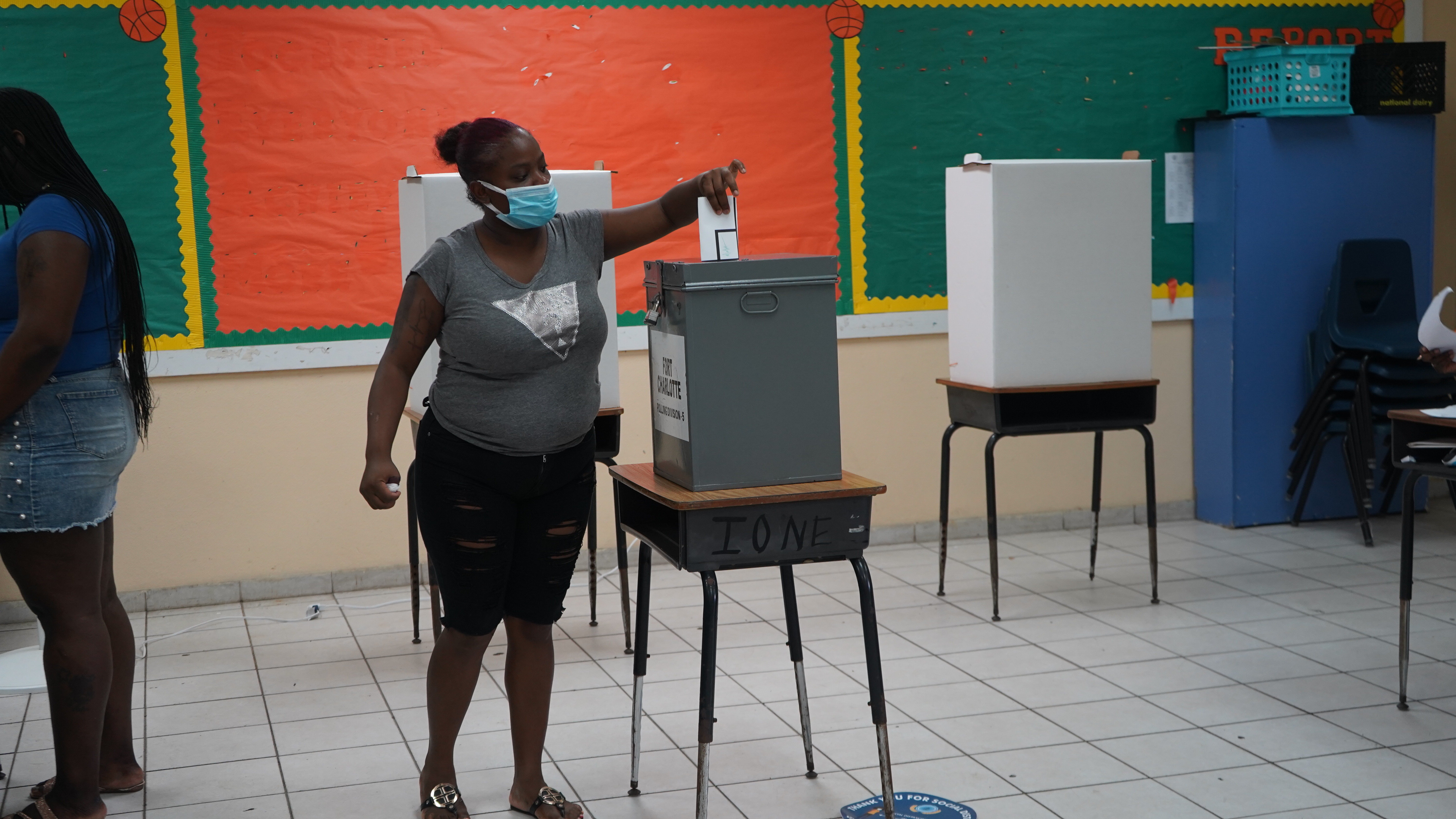
Bahamas Election Tests a Fragile Caribbean Future
The Bahamas election is not just another trip to the ballot box. It is a high-pressure referendum on whether a small island nation can balance tourism wealth, public frustration, and the hard math of governance in a volatile region. For voters, the stakes are immediate: jobs, prices, crime, infrastructure, and trust in political leadership. For observers beyond Nassau, the result matters because the Bahamas sits at the intersection of climate risk, offshore finance scrutiny, migration pressure, and a tourism-dependent economy that has little room for policy failure.
That is what makes this vote unusually consequential. Elections in the Caribbean can look deceptively local from a distance, but they often reveal much bigger forces underneath. In the Bahamas, those forces include economic inequality, generational impatience, and a battle over who gets to define stability in a country where stability has become both a selling point and a political vulnerability.
- The Bahamas election is shaping into a referendum on economic management, public trust, and everyday affordability.
- Tourism remains the economy’s engine, but dependence on a single sector leaves the country exposed.
- Crime, corruption concerns, and uneven development are likely to weigh heavily on voter sentiment.
- The result could influence how the wider Caribbean thinks about resilience, governance, and political credibility.
Why the Bahamas election matters beyond one island nation
The Bahamas is often framed through postcards and balance sheets: luxury resorts, cruise traffic, financial services, and high-end real estate. That image is not entirely wrong, but it is incomplete. The country also faces the classic pressure points of many middle-income democracies: wage strain, public service expectations, external shocks, and a political class that must promise reassurance while confronting structural limits.
The current contest matters because the gap between headline growth and lived reality has become harder to ignore. A tourism recovery can look strong in aggregate while still feeling thin at the household level. That disconnect is politically dangerous. Voters do not experience gross domestic product. They experience rent, electricity bills, access to healthcare, school quality, road conditions, and whether neighborhoods feel safe after dark.
Elections like this are won or lost on whether governments can translate macroeconomic talking points into visible improvements in daily life.
That is the central test. Not whether leaders can claim momentum, but whether citizens believe that momentum includes them.
The real fault lines behind the Bahamas election
Tourism is powerful, but it is also a trap
The Bahamas has long benefited from one of the most recognizable tourism brands in the Caribbean. That creates jobs, attracts foreign capital, and supports state revenue. It also produces a familiar vulnerability: when one sector dominates, every global shock hits harder. A downturn in travel demand, a hurricane season, geopolitical tension, or a recession in the United States can quickly turn confidence into fiscal stress.
This is where the political argument gets sharper. Any party can celebrate visitor numbers. The harder question is whether the country has diversified enough to protect workers and small businesses when tourism softens. If the answer is no, then campaign promises about prosperity can start to sound cosmetic.
Affordability is political dynamite
Cost-of-living pressure has become a defining issue across democracies, and the Bahamas is no exception. Imported goods, energy costs, housing strain, and uneven wage growth can erode public patience even when top-line economic indicators look respectable. In island economies, import dependence makes inflation especially painful because governments have fewer easy levers to pull.
That means the Bahamas election is likely to turn on a simple but brutal voter question: am I better off, or just being told I should feel better off?
Incumbents usually struggle when that question hangs in the air. Opposition parties, meanwhile, benefit from voter frustration but still need to explain how they would govern differently under the same structural constraints.
Crime and governance still cut deepest
Economic anxiety often overlaps with fears about safety and institutional decline. Concerns about crime can shape campaign narratives far beyond raw statistics because they influence routine behavior, business confidence, and national mood. If voters feel that the state is not providing basic security, broader messages about progress lose force.
Governance concerns matter just as much. In many parliamentary democracies, elections become shorthand judgments about transparency, competence, and whether leaders appear close to citizens or insulated from them. Even when allegations do not produce dramatic legal outcomes, they can still corrode trust. And once trust weakens, every policy failure feels larger.
How parties frame the battle for the Bahamas election
Most modern election campaigns are really contests between two emotional narratives. The first says: stay the course, the system is stabilizing, disruption would be risky. The second says: the status quo is not working for enough people, and change is overdue.
That framework fits the Bahamas especially well.
For any governing party, the safest pitch is competence. It can point to recovery, continuity, international credibility, and the dangers of political whiplash in a fragile economic environment. That message is often strongest among voters who prioritize predictability, investor confidence, and avoiding policy experiments.
For the opposition, the more effective line is usually fairness. It can argue that growth has been too concentrated, promises have underdelivered, and daily life remains too expensive and too insecure. That message resonates when citizens believe the economy may be functioning, but not for them.
The winner is often the party that best converts public frustration into a believable governing story, not simply the loudest criticism.
Believability is the key word. Voters are rarely looking for perfection. They are looking for coherence, seriousness, and signs that leaders understand the texture of ordinary life.
What makes Caribbean elections uniquely high stakes
Small states have less margin for error
In large economies, policy mistakes can sometimes be absorbed slowly. In small island states, they compound faster. Fiscal missteps, reputational damage, or a drop in foreign inflows can have outsized consequences. That is one reason elections in the Caribbean often carry an intensity that outsiders underestimate. The wrong call on taxes, subsidies, debt, or public investment can rapidly reshape the national mood.
The Bahamas also operates under pressures that many advanced economies do not feel in the same way. Climate vulnerability is not an abstract future issue. It is a budget issue, an insurance issue, an infrastructure issue, and ultimately a legitimacy issue. If citizens do not see preparation, they assume exposure.
Global perception matters more than usual
Countries like the Bahamas are judged not only by domestic voters but by international markets, tourism operators, regulators, and foreign governments. Political transitions are therefore read on two levels at once: as democratic outcomes and as signals about continuity. A peaceful, credible, disciplined vote reinforces confidence. A chaotic or bitterly disputed process raises questions that can bleed into economics.
This does not mean external perception should dominate domestic politics. But it does mean leaders cannot treat campaign rhetoric as if it exists in a sealed environment. Every promise has a second audience.
What voters are really deciding in the Bahamas election
Strip away the slogans and the Bahamas election comes down to four choices.
- Stability versus reset: Do voters trust continuity more than disruption?
- Growth versus distribution: Is the economy improving broadly enough to justify patience?
- Brand versus lived experience: Does the country’s success story match daily reality?
- Leadership versus fatigue: Are current political figures still persuasive, or simply familiar?
Those are not uniquely Bahamian questions. They are now common across democracies. But in the Bahamas, they are compressed into a smaller, more exposed system where consequences arrive faster.
Why this vote could reshape the regional conversation
The wider Caribbean is watching because many of the same themes are playing out across the region: dependency on tourism, inflation pressure, youth frustration, governance skepticism, and adaptation to climate and financial scrutiny. The Bahamas may not be the largest country in the region, but it remains symbolically important. Its politics can influence how neighboring states think about electability, messaging, and economic credibility.
If voters reward continuity, other governments may conclude that disciplined stability still beats anger. If voters choose change, opposition parties across the region will see a blueprint: lean into affordability, fairness, and institutional frustration. Either outcome sends a message.
There is also a generational subplot here. Younger voters across the Caribbean often bring less loyalty to party identity and more impatience with inherited political language. They are more likely to ask transactional questions: what improved, who benefited, and why should we keep believing this model works? A result shaped by that demographic pressure would matter far beyond one election cycle.
The smartest way to read the Bahamas election result
Do not focus only on who wins
The margin will matter. So will turnout, regional voting patterns, and whether the result reflects enthusiasm or resignation. A narrow victory can be politically weaker than it looks. A loss with strong opposition gains in key constituencies can signal a durable realignment. In parliamentary systems, the shape of the mandate often tells a deeper story than the headline.
Watch the post-election tone
A mature result is not just one that produces a winner. It is one that produces legitimacy. The public reaction, concession language, and governing posture after the vote will reveal whether the country is heading into consolidation or friction. That matters because trust, once damaged, is harder to restore than campaign momentum is to manufacture.
Look for policy seriousness fast
The next government, whether returned or newly elected, will have limited time to prove that campaign themes can become operational policy. Voters will expect visible movement on affordability, public safety, and service delivery. Symbolic gestures will not be enough.
A useful way to think about the next phase is this:
political mandate + fiscal reality + external risk = governing difficulty
That equation explains why electoral wins in small states can feel short-lived. Victory creates expectation. Structural reality imposes restraint. Good governments survive by managing both honestly.
The bottom line on the Bahamas election
The Bahamas election is a test of whether democratic credibility can still outperform public fatigue. It is also a test of whether a nation built on global appeal can deliver local confidence. The campaign may be fought through familiar party machinery, but the underlying argument is bigger: can the Bahamas update its social contract without sacrificing the stability that made it successful in the first place?
That is why this vote deserves close attention. Not because it offers easy drama, but because it captures a pattern now visible across the Caribbean and beyond. Citizens want competence, but they also want proof. They want growth, but they want inclusion. They want reassurance, but they no longer accept branding as a substitute for results.
Whoever wins inherits that demand immediately. And if they fail to meet it, the next election will not be a correction. It will be a reckoning.
The information provided in this article is for general informational purposes only. While we strive for accuracy, we make no guarantees about the completeness or reliability of the content. Always verify important information through official or multiple sources before making decisions.