Australia Tightens Gambling Ads But Lets Influencers Slip
Australia Tightens Gambling Ads But Lets Influencers Slip
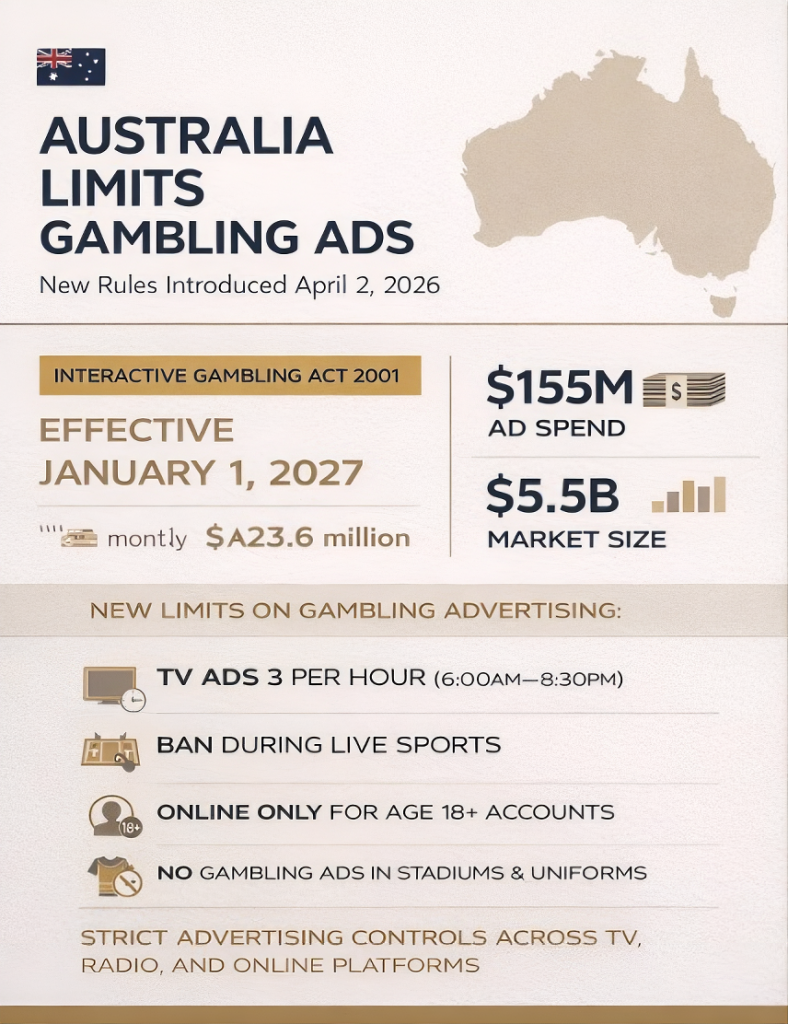
Australian gambling advertising limits are finally gaining political traction, and the stakes could not be higher: families battered by gambling harm want relief, broadcasters fear revenue shocks, and platforms hope to dodge tougher rules. Yet the fine print is already fraying. The proposed bans chase traditional TV spots while leaving creators and live-streamers in a grey zone, inviting a new wave of stealth promos. That tension sets up a fight between policymakers betting on partial fixes and an influencer economy ready to pivot faster than any regulator can write guidance.
- Influencer and live-stream promotions sit outside the proposed guardrails.
- Platforms, not just broadcasters, will shape whether the limits have teeth.
- Compliance tech and clear definitions of
affiliatedcontent are still missing. - Revenue gaps may push media and clubs toward more covert deals.
- Future-proofing demands rules that follow creators, not channels.
Australian gambling advertising limits ignore influencer reality
The headline reform targets prime-time ad blocks, yet it leaves the creator economy almost untouched. TikTok, Twitch, and YouTube Shorts are where gambling brands now seed loyalty through charismatic micro-influencers who stream games, host watch-alongs, and flash bonus codes. Without explicit wording that classifies influencer promotions as advertising under the ban, these deals can keep flowing as “organic” shout-outs. The risk: a displacement effect that moves spend from broadcast to creators, preserving exposure while giving lawmakers a false win.
Regulation that only chases legacy channels is regulation designed to be gamed.
Consumer protection experts warn that the sharpest harm occurs when advertising is woven into parasocial relationships. Viewers trust hosts; they mimic their bets; they click affiliate links. A policy that bans the 30-second spot but ignores the 30-minute stream misunderstands where young audiences actually live.
How Australian gambling advertising limits collide with creator culture
The creator economy thrives on blurred lines between content and commerce. A streamer can spend two hours discussing odds, display a promo banner, and technically claim it is editorial commentary. Without a bright-line test, enforcement bodies such as ACMA and the proposed independent regulator will face whack-a-mole disputes about what counts as sponsored content. The industry knows this. Expect rapid experimentation with code words, on-screen QR flashes, and “fan club” subscription perks that bundle gambling bonuses.
Every loophole is a product feature waiting to be monetized.
Regulatory grey zones on livestreams
Live chat promotions are almost invisible to auditors. A creator can pin a betting link for minutes, then remove it. Clips can be edited post-stream. Unlike TV logs, there is no standardized archive of what audiences actually saw. That makes retrospective enforcement nearly impossible unless platforms are compelled to retain and supply ad metadata.
Pro tip: define affiliate early
Lawmakers should codify that any revenue share, referral, or bonus-code arrangement constitutes advertising. This reduces the wriggle room for creators claiming they were just “sharing a personal discount.” It also clarifies liability for gambling firms that rely on affiliate networks.
Economic fallout and the race for replacement revenue
Broadcasters and sports leagues rely on gambling money to prop up rights deals. Strip that cash and someone absorbs the shock. The danger is a pivot toward more subtle on-air integrations: studio segments framed as “odds insight,” jerseys co-branded with “responsible play” logos that hide a betting link on the team app, or data partnerships that surface odds inside match trackers. Without parallel rules for embedded data and in-app placements, the ban may simply reshape the ad product instead of reducing exposure.
Clubs and codes in the squeeze
Community clubs with pokies face an identity crisis. If above-the-line advertising shrinks, they may lean harder on loyalty schemes and direct messaging, channels that regulators rarely monitor. Support packages for diversification should accompany the ad limits, otherwise the financial incentive to skirt the rules remains intact.
Enforcement tech: the missing layer
Successful reform requires tooling, not just fines. Automated detection of gambling logos, spoken brand names, and on-screen overlays in livestreams is feasible with existing computer vision and audio models. Mandating that platforms run these scans – and report results – would create a measurable deterrent. Right now, the proposal reads like a policy memo with no operational backbone.
If you cannot measure exposure in real time, you cannot claim you reduced it.
Moreover, an appeals process should be transparent. Creators wrongly flagged need a fast path to reinstate income, while repeat offenders should see escalating penalties tied to revenue, not flat fees.
What happens to political timelines
Election calendars can derail bold regulation. Lobbyists will argue that sports fans hate overreach and that regional media jobs are at risk. The counterpoint is public sentiment: polls show rising frustration with gambling saturation. A delayed or watered-down bill could signal that Canberra prioritizes advertising dollars over health outcomes. Swift, well-specified rules would demonstrate resolve and leave less room for carve-outs.
Future-proofing with sunset and review clauses
Embedding a two-year review forces the regulator to revisit emergent platforms and creator behaviors. It also lets lawmakers tighten definitions as new ad formats appear, from VR watch parties to in-game influencer skins that carry betting brands.
Why this matters beyond gambling
Australian gambling advertising limits are a template for broader platform accountability. If the country can define advertising in a creator-first era, it sets a precedent for alcohol, crypto, and fast-food promotions that similarly target youth. Failure, however, will teach every sector how to sidestep channel-specific bans by leaning on influencers.
The first policy that tames the creator loophole will rewrite global ad playbooks.
That is why this fight is bigger than gambling. It is about whether regulation can keep pace with the speed of cultural production and monetization on platforms that reward opacity.
Action plan for policymakers and platforms
To avoid a hollow victory, the next draft of the reform should: clearly state that influencer promotions are within scope; require platform-level detection and retention of ad metadata; set revenue-based penalties; fund diversification for clubs losing gambling income; and publish exposure dashboards so the public can see whether the needle moves. Anything less will leave the door wide open for creators to carry the torch for betting brands while TV goes quiet.
The window for decisive action is narrow. Creators already test the edges, and brands are eager to migrate budgets. Policymakers can either chase yesterday’s ad formats or confront the reality that influence, not airtime, is the new vector of harm. The smart move is obvious – lock down the loopholes before they become the main channel.
The information provided in this article is for general informational purposes only. While we strive for accuracy, we make no guarantees about the completeness or reliability of the content. Always verify important information through official or multiple sources before making decisions.