Australian House Prices Slide
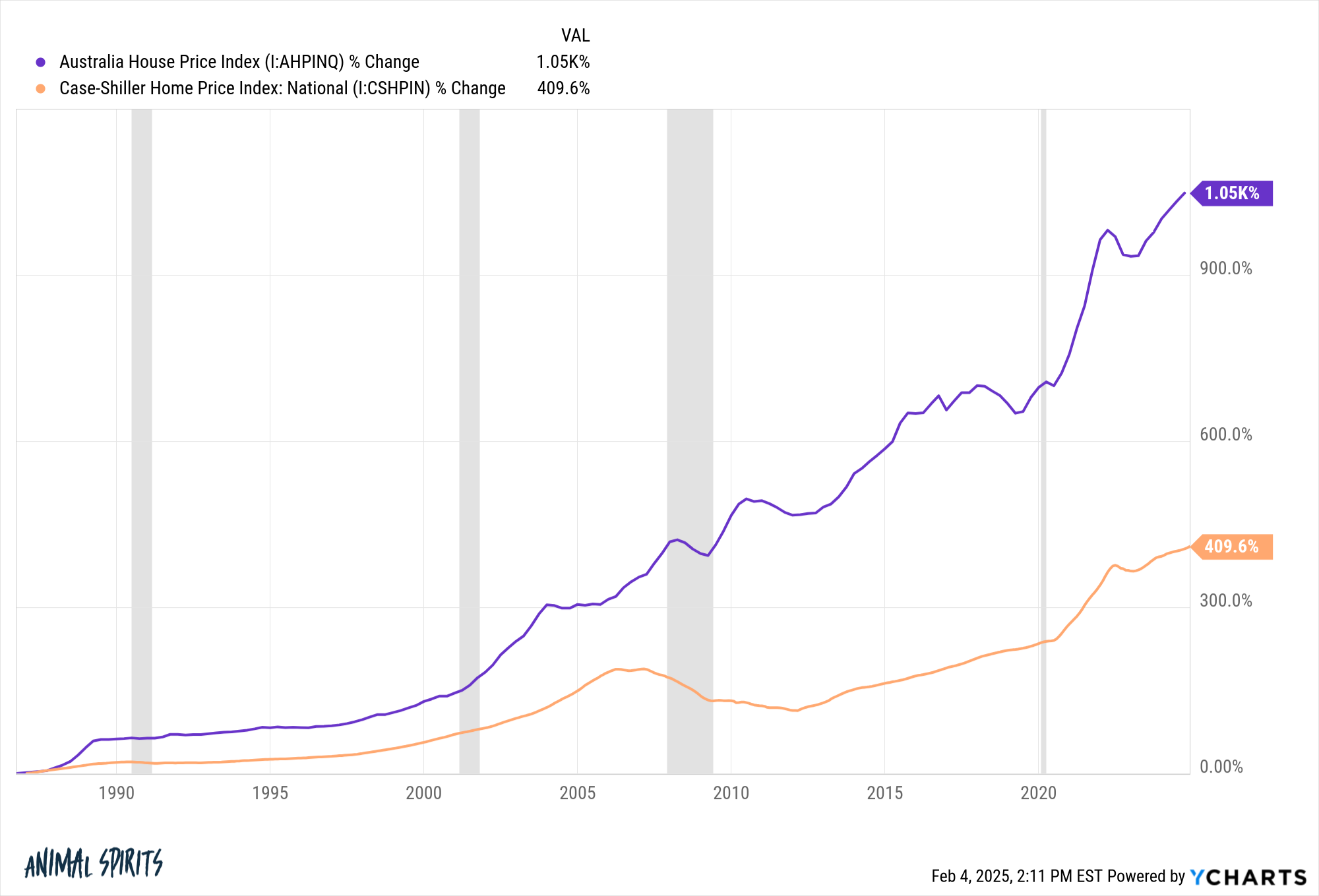
Australian House Prices Slide
Australia’s property market is finally showing cracks in places that once looked almost untouchable. Australian house prices are trending down across Sydney, Melbourne, Brisbane, Perth and Darwin, and that shift matters far beyond weekend auctions. For buyers, it could mean the first real negotiating power in years. For sellers, it is a warning that yesterday’s price expectations may already be obsolete. For investors, it raises the uncomfortable question of whether rental demand alone can keep valuations inflated when borrowing costs, affordability limits and buyer fatigue are all pressing in the opposite direction.
- Major capital city house prices are softening, with Sydney, Melbourne, Brisbane, Perth and Darwin showing downward momentum.
- Affordability is doing the heavy lifting: buyers are hitting borrowing limits even where demand remains strong.
- This is not automatically a crash, but it is a meaningful repricing of risk after years of stretched valuations.
- First-home buyers may gain leverage, though high rates and deposits still make entry difficult.
- Policy choices on supply, tax and credit will determine whether the downturn becomes a reset or another pause before prices rise again.
Why Australian House Prices Are Turning Lower
The housing market does not move on vibes alone. Prices are falling because the math has changed. When mortgage repayments consume a larger share of household income, buyers reduce bids, delay purchases or exit the market entirely. That process can happen quietly at first: fewer bidders at auction, longer listing times, bigger vendor discounts. Then the data catches up.
Sydney and Melbourne are especially sensitive because their median prices already sit at levels that test even high-income households. Brisbane and Perth, which benefited from migration, tight rental markets and relative affordability, are now confronting the same ceiling. Darwin adds a different dynamic: thinner market depth, population volatility and a sharper response when confidence turns.
The big story is not that demand has disappeared. It is that demand can no longer clear at peak prices when credit, income and confidence are all constrained.
That distinction matters. Australia still has strong structural housing demand. Population growth, undersupply, rental stress and household formation all support the market. But support is not the same as unlimited pricing power. A buyer may need a home and still refuse, or be unable, to pay last quarter’s asking price.
Australian House Prices And The Affordability Wall
The affordability wall is now the central force in the market. Households do not buy property with headlines, they buy with borrowing capacity. When lenders assess income, expenses and interest-rate buffers, the result is a hard number. If that number falls short of vendor expectations, transactions stall.
Sydney Shows The Limits Of Prestige Pricing
Sydney remains Australia’s most watched housing market because it concentrates wealth, scarcity and global-city psychology. But even prestige markets can cool when repayment burdens become excessive. Buyers who once stretched to secure a freestanding home are now weighing school zones, commute times and renovation costs with much less tolerance for overpaying.
Vendors in Sydney face a tricky adjustment. Anchoring to peak valuations is natural, but buyers are increasingly armed with comparable sales that show softer results. The gap between asking and clearing price becomes the battleground.
Melbourne Faces A Confidence Problem
Melbourne’s weakness is not just about rates. Investor sentiment has been dented by taxes, regulatory changes and questions about net returns. Apartments and townhouses compete with detached homes for attention, while buyers have more choice across outer suburbs and regional-adjacent corridors.
When confidence slips, Melbourne can feel heavy quickly because its stock levels are often deeper than Sydney’s. More listings mean buyers can be choosier, and choosier buyers force price discovery.
Brisbane And Perth Meet The Cycle
Brisbane and Perth have been two of the country’s stronger narratives: migration, jobs, lifestyle and relatively lower entry prices. But hot markets attract aggressive pricing. Once affordability catches up, even high-demand cities can flatten or fall.
Perth’s resource-linked economy can support income growth, but it also introduces cyclical risk. Brisbane’s Olympic infrastructure story remains compelling, but major-event optimism does not cancel out household budget pressure. Momentum markets are powerful on the way up, and unforgiving when sentiment turns.
Darwin Reminds Investors About Liquidity
Darwin is smaller, and that changes everything. In thinner markets, a handful of sales can shift medians more dramatically. Liquidity risk is higher: it may take longer to sell, comparable prices can be less reliable, and investor exits can create sharper local weakness.
For buyers, that can create opportunity. For investors, it is a reminder that yield is only one side of the equation. Capital stability and exit liquidity matter too.
What This Means For Buyers
A falling market can look like a gift, but it is not automatically easy. Lower prices do not help much if borrowing power falls at the same time. The smart buyer strategy is not to wait endlessly for the bottom. It is to buy with margin, discipline and a clear view of repayment risk.
- Negotiate harder: declining markets reward buyers who test vendor expectations.
- Watch days on market: stale listings often signal flexibility.
- Do not waive due diligence: building issues, strata costs and flood risk can erase any discount.
- Model repayments at higher rates: use a personal stress test, not just the bank’s approval number.
- Separate price from value: a cheaper bad asset is still a bad asset.
Pro Tip: Buyers should track actual sale prices, not advertised ranges. In a cooling market, listing guides can be more about vendor psychology than market reality.
What Sellers Need To Accept Fast
Sellers have one big problem in a downturn: the market reprices faster than emotions do. A vendor may remember a neighbour’s huge sale from six months earlier, but today’s buyer is responding to today’s finance conditions. Overpricing can be costly because properties that sit too long often attract lower offers later.
The best sellers will move from aspiration pricing to evidence-led pricing. That means looking at recent comparable sales, not peak-cycle anecdotes. It also means investing in presentation where it genuinely improves buyer confidence, rather than assuming scarcity will do the work.
In a softening market, the first price is often the best signal. Ignore it for too long and the property risks becoming part of the discount narrative.
Investors Face A Sharper Risk Test
Investors have been leaning heavily on rental shortages to justify higher purchase prices. That logic has limits. A strong rent roll can support cash flow, but it cannot fully offset capital losses, tax changes, maintenance costs and refinancing pressure.
The investor equation now needs more realism. Gross yield is not enough. Net yield after interest, insurance, council rates, land tax, strata fees and repairs is what matters. So is tenant quality, vacancy risk and the likelihood that future buyers will pay a premium for the same asset.
The Apartment Question
If detached houses become too expensive, apartments should benefit. But apartment markets are uneven. High-quality, well-located apartments near jobs and transport can perform well. Poorly built stock with high body corporate fees can lag badly. Buyers are increasingly sensitive to cladding, defects, lift maintenance and sinking fund health.
The Build-To-Rent Wildcard
Build-to-rent remains a policy and investment buzzword, but its impact will depend on scale. If institutional rental supply grows meaningfully, it could ease pressure in some inner-city markets. If it remains niche, traditional landlords will keep pricing power. Either way, investors should watch supply pipelines as closely as interest rates.
Why Policy Still Matters More Than Price Charts
Australia’s housing problem is bigger than one price cycle. The country has a structural mismatch between where people want to live, what gets built, how infrastructure is funded and how tax settings reward property ownership. A short-term fall in prices does not fix that.
Governments can influence the next phase through planning reform, social housing investment, migration settings, first-home buyer incentives and tax policy. But each lever has trade-offs. Demand subsidies can push prices up if supply is tight. Planning reform can help, but only if infrastructure and construction capacity keep pace. Tax changes may improve fairness, but they can trigger political backlash.
The risk is that policymakers treat falling prices as a reason to back away from reform. That would be a mistake. A modest correction may improve sentiment for buyers, but affordability remains stretched by historical standards. The system still needs more homes in the right places, faster approvals and better rental security.
The Future Of Australian House Prices
The next phase will likely be uneven. Premium suburbs with scarce land may hold up better than fringe estates dependent on long commutes and high borrowing. Cities with strong employment and infrastructure will be more resilient than markets relying on speculation. Homes that are energy efficient, well built and close to services should command a durability premium.
Interest rates remain the obvious swing factor. If rates fall, borrowing capacity could improve and buyers may re-enter quickly. But a rate cut is not a magic reset. If unemployment rises or wage growth slows, confidence may remain fragile. If inflation proves sticky, households could remain squeezed even without further rate rises.
Technology will also play a larger role in price discovery. Buyers now use property apps, automated valuation tools and suburb-level data to challenge agents in real time. That does not make the market perfectly rational, but it reduces the information advantage sellers once enjoyed.
The Bottom Line On Australian House Prices
This downturn is not just a data point. It is a stress test for the belief that Australian housing only moves in one direction. Prices can fall, even in desirable cities, when affordability breaks and credit tightens. That does not mean a nationwide crash is inevitable. It does mean buyers, sellers and investors need to stop treating yesterday’s growth rates as tomorrow’s baseline.
For buyers, the opportunity is real but conditional. For sellers, realism is now a competitive advantage. For investors, risk management matters more than hype. And for policymakers, the message is blunt: a softer market is not a solved market. It is a chance to build a housing system that works before the next upswing prices another generation out.
The information provided in this article is for general informational purposes only. While we strive for accuracy, we make no guarantees about the completeness or reliability of the content. Always verify important information through official or multiple sources before making decisions.


