Bolsonaro Family Crisis Rocks Brazil
Bolsonaro Family Crisis Rocks Brazil
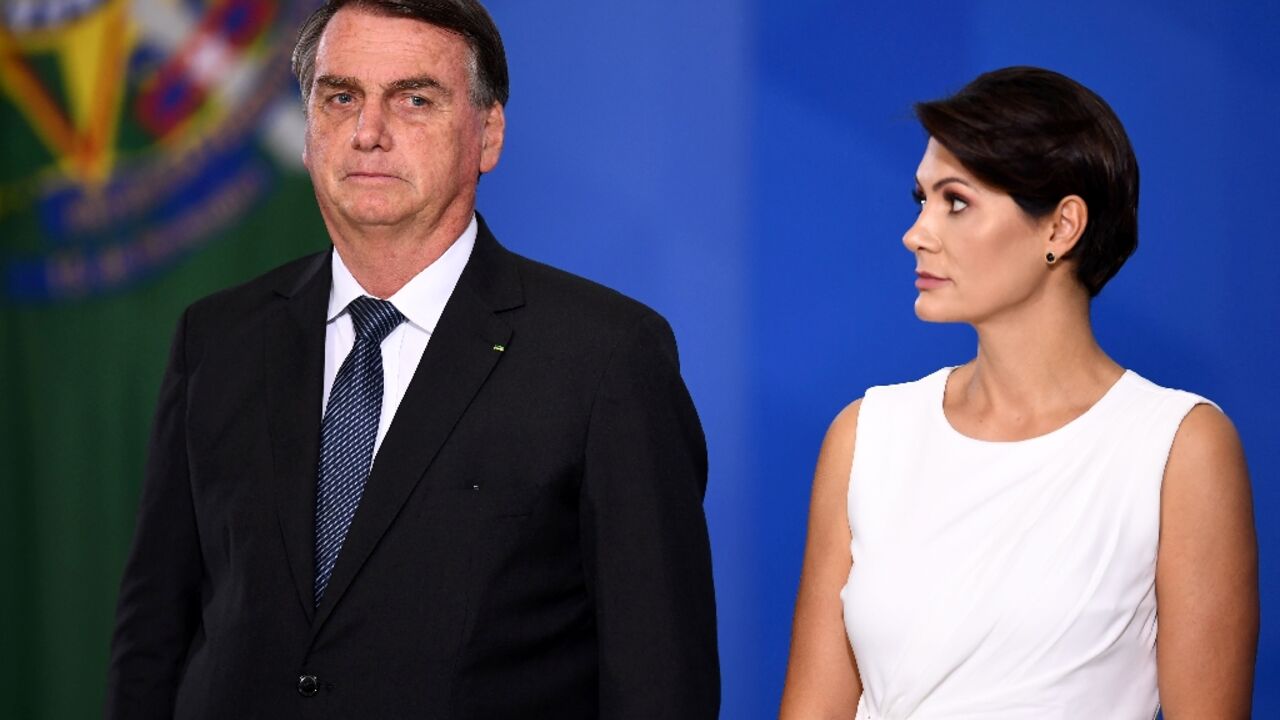
Brazil is staring at a political stress test that reaches far beyond one family, one court case, or one election cycle. The Bolsonaro scandal now sits at the center of a larger battle over whether democratic institutions can survive when a defeated movement refuses to leave the stage quietly. Jair Bolsonaro, his senator son Flávio Bolsonaro, President Luiz Inácio Lula da Silva, and supreme court justice Alexandre de Moraes are locked in a confrontation that blends criminal accountability, dynastic ambition, online mobilization, and raw resentment. For voters, the immediate pain point is brutally simple: can Brazil govern itself while its most polarizing political machine keeps challenging the legitimacy of the system?
- The Bolsonaro scandal is not just legal drama: it is a fight over Brazil’s democratic guardrails.
- Flávio Bolsonaro’s role matters because he represents both family loyalty and a possible political succession plan.
- Justice Alexandre de Moraes has become a symbol of institutional resistance for some and judicial overreach for others.
- Lula’s government must manage stability without turning Bolsonaroism into a permanent opposition martyrdom machine.
- The next election cycle could be shaped less by policy and more by legitimacy, punishment, and revenge narratives.
Why the Bolsonaro Scandal Is Bigger Than One Courtroom
The source of Brazil’s current turbulence is a familiar but dangerous pattern: a former president with a devoted base, a family deeply embedded in politics, a judiciary willing to confront anti-democratic behavior, and an incumbent president trying to keep the state functional while the opposition portrays him as illegitimate. That mix makes the Bolsonaro scandal more than a legal proceeding. It is a live test of how a modern democracy handles an ex-leader who remains politically potent even when out of office.
Jair Bolsonaro’s brand has always thrived on confrontation. He built power by attacking the political establishment, questioning institutions, mocking elite consensus, and presenting himself as the blunt-force alternative to the left. That posture helped him win the presidency. It also made any defeat difficult to absorb, especially for a movement trained to see compromise as surrender.
Key insight: Brazil’s crisis is not simply whether Bolsonaro broke rules. It is whether the rules still have enough authority to constrain a movement that treats constraint itself as persecution.
This is where Alexandre de Moraes becomes central. As a supreme court justice and electoral authority, Moraes has aggressively confronted disinformation, anti-democratic mobilization, and threats against institutions. Supporters view him as a necessary firewall. Critics argue he has accumulated too much power. That dual image is why every move from the court now carries political voltage.
The Bolsonaro Scandal and the Family Power Machine
To understand the stakes, you have to understand that Bolsonaroism is not only an ideology. It is also a family enterprise. Jair Bolsonaro’s sons have long functioned as political operators, media amplifiers, ideological enforcers, and heirs to the brand. Flávio Bolsonaro, a senator, is particularly important because he offers a path from charismatic populism to institutional continuity.
That makes any controversy involving Flávio politically explosive. If Jair Bolsonaro is legally weakened or barred from another run, the family needs a successor who can hold the coalition together. Flávio can appeal to loyalists who see the Bolsonaro name as the movement’s core asset. But he also carries the liabilities of dynastic politics: accusations of entitlement, legal scrutiny, and the perception that the project is more about preserving family power than governing Brazil.
Why Flávio Bolsonaro Matters
Flávio’s importance is strategic. He sits inside the formal political system while maintaining proximity to the grievance-driven energy that made his father such a disruptive figure. That hybrid position lets him speak both languages: institutional conservatism and insurgent rage.
For the right, that can be useful. Brazil’s conservative coalition includes evangelical voters, security hardliners, agribusiness interests, anti-left activists, libertarian-leaning business figures, and voters simply exhausted by corruption scandals across the political spectrum. The Bolsonaro family has been unusually effective at binding those groups through culture-war messaging and anti-Workers’ Party sentiment.
But the same family-centered model creates a ceiling. Voters who may dislike Lula or fear the left may still hesitate to endorse endless institutional conflict. The question is whether Flávio can look like a disciplined alternative or whether he remains trapped inside his father’s permanent war footing.
Brazil’s Judiciary Becomes the Main Political Arena
One of the most striking features of this crisis is how much political conflict has migrated into the courts. In healthier circumstances, elections settle power disputes. In Brazil’s current moment, elections are only one battlefield. Courts, electoral tribunals, congressional committees, police investigations, and social media platforms all shape the struggle.
Moraes sits at the center because he represents the judiciary’s willingness to act against actors accused of threatening democracy. That has included investigations into disinformation networks, anti-democratic plots, and attacks on electoral credibility. In a country still haunted by military dictatorship, the defense of constitutional order carries real weight.
Yet there is a risk. When a judge becomes the most recognizable antagonist of a political movement, the line between institutional defense and personal political symbolism can blur in the public mind. Bolsonaro supporters have seized on that ambiguity, framing Moraes as an unelected power broker rather than a guardian of democracy.
Pro Tip for Watching Brazil’s Crisis
Do not judge the situation only by courtroom outcomes. Watch the reaction ecosystem: congressional speeches, street protests, evangelical messaging, military signals, business confidence, and social media narratives. In polarized democracies, the legal verdict is only half the event. The political interpretation often matters just as much.
Lula’s Hardest Task Is Governing Through Permanent Conflict
Lula returned to power with a promise of normalcy, social investment, international credibility, and democratic repair. But governing after Bolsonaro was never going to mean simply turning the page. Bolsonaroism remains embedded in Congress, state governments, digital networks, churches, police culture, and family WhatsApp groups across the country.
For Lula, the danger is two-sided. If his government appears passive, anti-democratic forces may feel emboldened. If it appears too eager to punish Bolsonaro, the right can claim political persecution. That is the core trap: accountability is necessary, but accountability can also feed the martyr narrative that populist movements rely on.
Lula’s best political route is competence. Inflation, jobs, public security, infrastructure, health care, and social programs matter because they can lower the emotional temperature. Voters are more willing to move past authoritarian nostalgia when democracy delivers tangible results. But if economic anxiety rises, grievance politics becomes easier to sell.
Why this matters: The strength of Brazil’s democracy will not be measured only by whether Bolsonaro is punished. It will be measured by whether ordinary citizens feel the democratic system can improve their lives.
What the Bolsonaro Scandal Means for the Next Election
The next election will likely be shaped by three forces: legal eligibility, succession politics, and the emotional state of the right. If Jair Bolsonaro remains constrained by court decisions, his movement must decide whether to rally behind a family member, a governor, an evangelical-backed figure, or a more conventional conservative.
That decision will reveal whether Bolsonaroism is a durable ideology or a personality-centered phenomenon. If the base transfers smoothly to Flávio or another heir, the movement becomes more institutionalized. If it fractures, Lula’s coalition gains breathing room. But fragmentation can also produce more radical splinters, especially among activists convinced that the system is rigged.
The Succession Problem
Political dynasties can be powerful because they offer name recognition, fundraising networks, and emotional continuity. They can also become brittle. A successor inherits the brand but not necessarily the charisma. Jair Bolsonaro’s appeal was not only ideological; it was performative. His defiance, crudeness, humor, and combativeness created a direct bond with voters who felt mocked by elites.
Flávio Bolsonaro may inherit loyalty, but he must prove he can command enthusiasm. That is not automatic. In populist politics, the founder often overshadows every heir.
Institutional Trust Is the Real Battleground
Brazil’s crisis mirrors a broader global pattern. Democracies are increasingly strained by leaders who use elections to gain power, then attack the legitimacy of institutions that limit them. Courts become enemies. Journalists become conspirators. Electoral authorities become villains. Opponents become existential threats.
That playbook is effective because it gives supporters a complete explanation for defeat: the leader did not lose; the system cheated. Once enough people accept that premise, democratic competition becomes unstable. Every prosecution looks like revenge. Every court ruling looks political. Every election becomes a potential trigger.
The most important question is whether Brazil can rebuild trust without ignoring wrongdoing. That requires transparent legal processes, restraint from political actors, responsible media coverage, and a commitment to distinguish criticism of institutions from efforts to destroy them.
Where Brazil Goes From Here
The likely near-term future is not calm. Expect more legal maneuvers, more claims of persecution, more pressure on Lula, and more attempts by Bolsonaro allies to convert courtroom setbacks into political fuel. The family will continue to matter because the name still mobilizes millions. Moraes will continue to matter because the judiciary remains the main arena of accountability. Lula will continue to matter because his government’s performance may determine whether voters want stability or another rupture.
But the deeper story is about democratic muscle memory. Brazil has survived dictatorship, corruption crises, presidential impeachments, mass protests, economic shocks, and extreme polarization. Its institutions are imperfect, sometimes heavy-handed, and often distrusted. Yet they are still functioning. The scandal surrounding Bolsonaro and his circle is a reminder that democracy is not preserved by sentiment. It is preserved by rules, legitimacy, patience, and the public’s willingness to accept that no political family is bigger than the republic.
The stakes are enormous because Brazil is not a side story. It is Latin America’s largest democracy, a major climate power, a commodity giant, and a geopolitical swing state. If its institutions hold, the message travels. If they buckle, that message travels too.
The information provided in this article is for general informational purposes only. While we strive for accuracy, we make no guarantees about the completeness or reliability of the content. Always verify important information through official or multiple sources before making decisions.