Brain Signals Expose Hidden Hearing Loss
Brain Signals Expose Hidden Hearing Loss
Standard hearing tests have a blind spot, and it is bigger than most patients realize. Plenty of people can score “normal” on a clinic hearing exam yet still struggle to follow conversations in restaurants, offices, airports, and every other noisy place modern life throws at them. That mismatch has frustrated patients, clinicians, and researchers for years. Now, new work on brain signals and auditory processing suggests hidden hearing loss may finally have a more objective trail to follow. If the findings hold up, this could push hearing care beyond the outdated pass-fail logic of the basic audiogram and toward something far more useful: detecting damage before it becomes obvious, disabling, and much harder to manage.
- Hidden hearing loss can affect people who still test “normal” on traditional hearing exams.
- Researchers are looking at
brain signalsto detect auditory damage that standard audiograms miss. - The work matters because difficulty hearing in noisy settings is one of the most common real-world complaints.
- Better diagnostics could reshape prevention, treatment timing, and how clinicians assess hearing health overall.
Why hidden hearing loss matters more than most hearing tests admit
The phrase hidden hearing loss has gained traction because it describes a real and increasingly visible clinical problem: people report hearing difficulties, especially in complex sound environments, but the usual test results do not fully explain their symptoms. A conventional hearing exam is excellent at measuring whether someone can detect faint tones at different frequencies. What it often misses is how well the auditory system handles clarity, timing, and speech separation once background noise enters the picture.
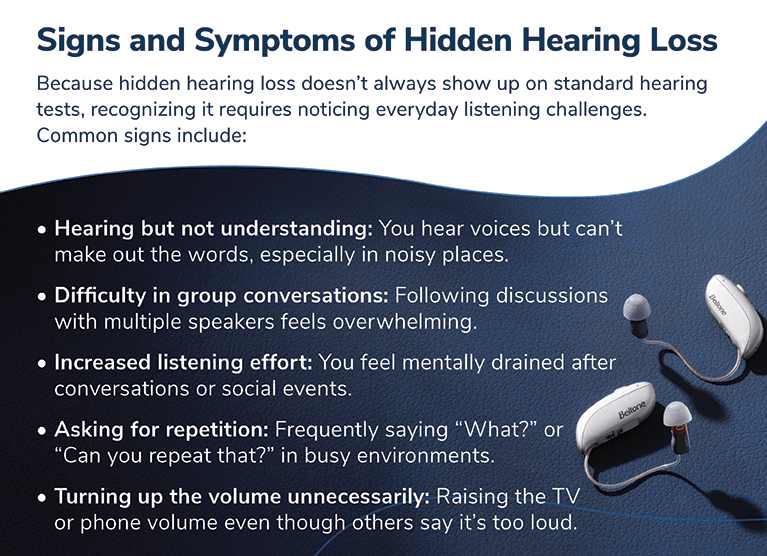
That gap matters because hearing is not just about detecting sound. It is about decoding meaning from sound. A person can hear that someone is talking and still fail to understand the sentence if the underlying neural pathways are compromised.
Hearing care has long leaned on threshold testing. The problem is that hearing in daily life is not a threshold problem alone – it is a signal processing problem.
This is where the newer research becomes compelling. Instead of asking only whether the ear detects a tone, scientists are probing how the auditory system and the brain respond to sound patterns. That shift could reveal damage or dysfunction that remains invisible on a standard chart.
How brain signals could detect hidden hearing loss
The central idea is straightforward even if the science is not: if hidden hearing loss disrupts the way sound information travels from the ear to the brain, then measuring neural responses may expose problems that simple tone detection cannot. Researchers are studying the electrical activity associated with hearing – effectively looking for biomarkers in the brain’s response to sound.
These brain signals can help show whether the auditory system is encoding speech and other sounds efficiently. If the response is weaker, delayed, or less synchronized than expected, that may point to auditory damage despite a “normal” hearing threshold.
What standard audiograms miss
Audiograms are built to test the softest sounds a person can hear in quiet conditions. That is useful, but it is not the whole story. Hidden hearing loss is often linked to difficulty understanding speech in noisy environments, reduced auditory precision, and possible damage in the synapses or neural pathways that carry sound information onward.
In practical terms, that means someone might pass the hearing test used in a routine physical or workplace screening and still find dinner conversations exhausting. The ear may detect sound, but the system may no longer handle complex auditory scenes cleanly.
Why neural timing matters
The brain relies on exquisitely precise timing to separate one voice from another, detect subtle speech cues, and maintain intelligibility in noise. If the neural representation of sound becomes degraded, listeners may need more effort to keep up. That can lead to fatigue, social withdrawal, reduced work performance, and the persistent feeling that everyone else is mumbling.
What makes this new line of hidden hearing loss research especially promising is that it aims to quantify that degradation directly. Instead of relying only on subjective complaints, clinicians may one day have measurable neural signatures that validate what patients have been saying all along.
Why this hidden hearing loss research could change clinical practice
If brain-based measures prove reliable, the implications for hearing care are significant. Today, many patients with real listening problems leave appointments with few clear answers because their standard scores appear normal. A better diagnostic layer could improve that in several ways.
Earlier detection
One of the biggest opportunities is identifying auditory injury earlier. Hidden hearing loss may be associated with noise exposure, aging, or other forms of auditory stress that do not immediately show up as classic hearing threshold loss. Catching those changes sooner could support prevention strategies before the damage becomes more debilitating.
Better patient validation
There is also a human benefit here that should not be underestimated. Patients whose symptoms are dismissed because they “passed” a hearing test often end up frustrated or discouraged. Objective brain signal measures could help bridge that credibility gap.
When diagnostics fail to reflect lived experience, trust erodes. Better biomarkers do not just improve science – they improve care.
Smarter treatment decisions
Improved diagnosis could also reshape treatment planning. If clinicians can distinguish between classic threshold hearing loss and more hidden auditory processing deficits, interventions may become more tailored. That could influence decisions around hearing protection, auditory training, assistive listening tools, follow-up intervals, and future therapies designed for neural repair.
The strategic guide to what patients and clinicians should watch next
This research is exciting, but it is important to stay grounded. Early findings do not instantly translate into a new standard of care. Still, there are smart takeaways right now for both patients and professionals.
For patients with “normal” hearing tests but real problems
- Do not ignore persistent listening difficulty: If speech in noisy places consistently feels harder than it should, that is worth discussing with an audiologist.
- Describe situations, not just symptoms: Explain whether the problem appears in restaurants, meetings, classrooms, or crowded family settings.
- Ask about advanced assessment options: Speech-in-noise testing and other specialized evaluations may offer more insight than a basic audiogram alone.
- Protect your hearing now: Reducing unnecessary high-volume exposure still matters, especially if hidden damage is already suspected.
For clinicians and hearing-care providers
- Look beyond thresholds: Patient complaints about clarity, fatigue, and speech-in-noise difficulty deserve serious attention even with normal pure-tone results.
- Track functional hearing performance: Real-world listening ability is often more revealing than quiet-booth detection scores.
- Prepare for biomarker-driven care: As
neural responsetools mature, workflows may need to evolve.
Pro tip for both groups
Think of hearing health more like cardiovascular health than a binary pass-fail condition. You can be technically “within range” and still show meaningful signs of stress or decline. That mindset is likely to become more important as hidden hearing loss diagnostics improve.
What the science still needs to prove
The promise here is real, but so are the open questions. Researchers still need to establish how consistent these brain signal markers are across different age groups, noise exposure histories, and clinical settings. They also need to determine whether these measures can reliably separate hidden hearing loss from other conditions that affect attention, cognition, or auditory processing.
That matters because hearing is not isolated from the rest of the brain. Fatigue, memory load, language processing, and even stress can influence how people perform on listening tasks. A useful diagnostic tool must be specific enough to identify auditory damage without over-attributing every listening complaint to the same mechanism.
Scalability is another challenge. If the testing requires highly specialized equipment, complex interpretation, or long appointment times, adoption could lag. For this research to truly change care, it will need to be not just accurate, but practical.
Why hidden hearing loss is becoming a bigger public health story
This is not a niche issue. Modern life is loud, and cumulative sound exposure is easy to underestimate. Earbuds, concerts, traffic, open offices, industrial settings, gyms, and constant media consumption all add up. At the same time, populations are aging, and hearing-related quality-of-life issues are becoming harder to ignore.
That creates a perfect storm: more people are likely experiencing subtle auditory decline before conventional tests catch it. If hidden hearing loss can be measured earlier and more convincingly, public health messaging may shift from “get tested when you notice major problems” to “monitor auditory resilience before communication starts breaking down.”
That would be a major cultural change, and honestly, a necessary one. Hearing has too often been treated as something to address only after obvious loss appears. The smarter approach is to treat it as infrastructure: protect it early, measure it better, and intervene before the cracks widen.
Why this matters for the future of hearing tech
There is also a technology angle here that should get attention. If brain-based auditory biomarkers become clinically viable, they could influence everything from diagnostic devices to hearing aid fitting logic to personalized audio systems. Future hearing tools may not rely solely on what users say they struggle with. They may incorporate objective neural data that helps calibrate support more precisely.
That is a big deal because hearing technology has often been forced to compensate for incomplete diagnostics. Better input data usually leads to better product design, better personalization, and better outcomes. In that sense, the research is not just about detecting hidden hearing loss. It is about building a more modern stack for hearing care overall.
The bottom line on brain signals and hidden hearing loss
The most compelling part of this hidden hearing loss research is not just the science – it is the correction it offers to an old clinical blind spot. For too long, people have been told their hearing is fine because one narrow test said so, even when daily life clearly said otherwise. By focusing on brain signals and how the auditory system actually processes sound, researchers may be moving the field toward a more honest and more useful definition of hearing health.
That does not mean the standard audiogram is obsolete. It means it may no longer be enough on its own. And if this work continues to validate objective neural markers, hidden hearing loss could stop being hidden in the one place that matters most: the exam room.
The information provided in this article is for general informational purposes only. While we strive for accuracy, we make no guarantees about the completeness or reliability of the content. Always verify important information through official or multiple sources before making decisions.