Space Dust Reveals Planet Birth
Space Dust Reveals Planet Birth
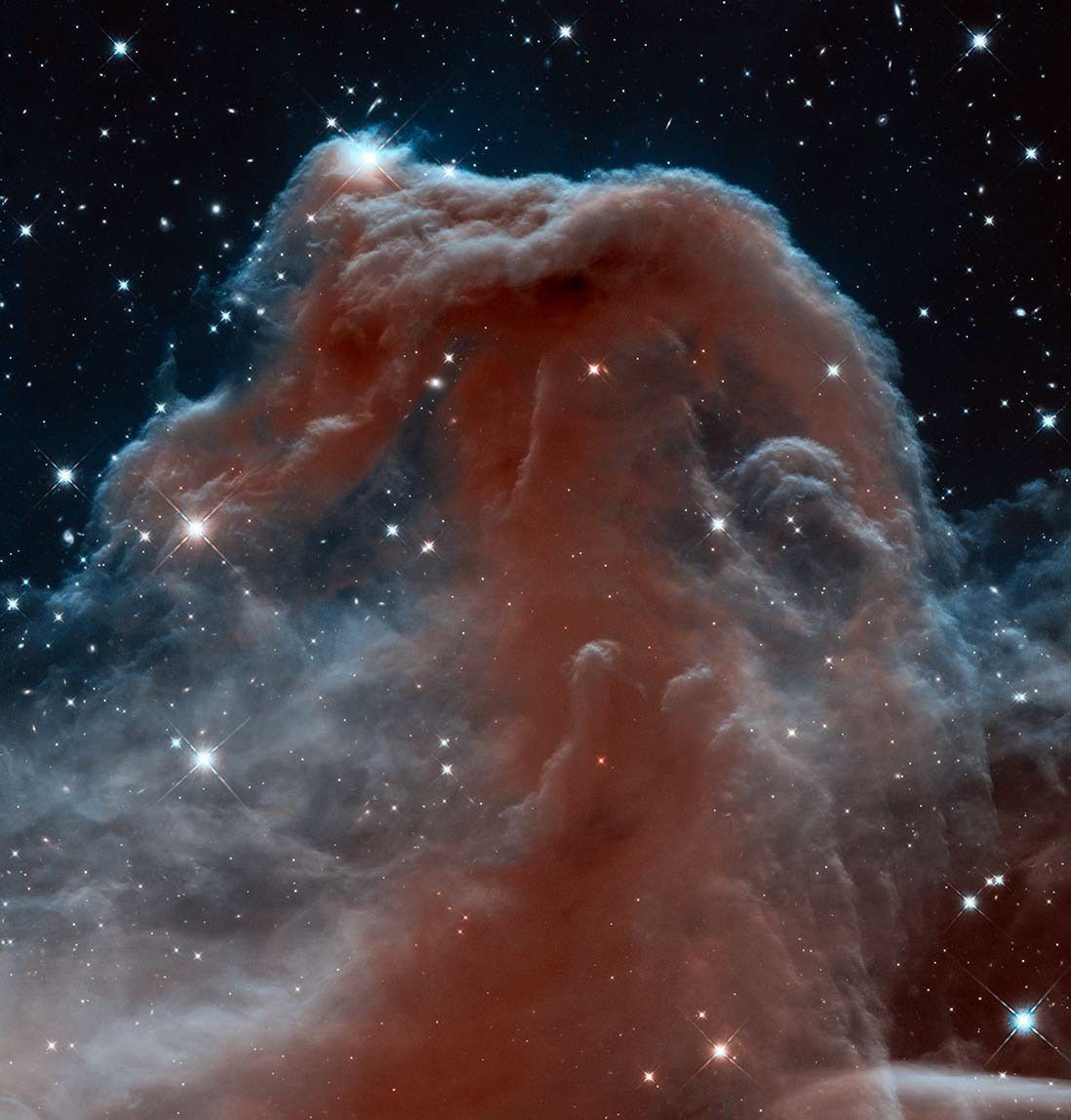
Planet formation has always been one of astronomy’s hardest promises to cash in. Scientists know stars are born inside swirling disks of gas and dust, and they know planets somehow emerge from that chaos. The problem is that the critical steps happen across vast distances, over long timescales, and behind clouds of material that are notoriously difficult to image. That is why fresh attention on space dust matters so much. What looks like a beautiful cosmic snapshot is actually a data-rich record of collision, chemistry, gravity, and time – the raw mechanics of planetary construction happening in plain sight.
For researchers, this kind of view is more than visual evidence. It is a chance to test the models that explain how tiny grains of dust grow into pebbles, then planetesimals, and eventually fully formed worlds. For everyone else, it is a reminder that the most familiar objects in the night sky began as something far messier and far more fragile.
- Space dust images can expose the earliest stages of planet formation inside disks around young stars.
- Dust is not background noise: it is the material from which rocky worlds, moons, and even parts of giant planets emerge.
- New observations help astronomers compare real disk structures with long-standing theoretical models.
- These findings matter because they sharpen the search for habitable systems and explain how our own solar system likely formed.
Why space dust matters more than it sounds
Dust has an image problem. Outside astronomy, the word suggests residue, clutter, or something to wipe away. In astrophysics, dust is foundational. These microscopic grains, often made of silicates, carbon-rich material, and ices, are the building blocks of planets. Inside a protoplanetary disk, they absorb and scatter starlight, clump through repeated interactions, and drift through environments shaped by radiation, turbulence, and gravity.
That makes a detailed image of space dust far more valuable than a pretty picture. Dust patterns can reveal rings, gaps, asymmetries, spirals, and dense clumps – each one a clue. Some suggest newborn planets are already carving paths through the disk. Others indicate pressure traps where particles collect long enough to begin serious growth.
Key insight: when astronomers map dust, they are not just documenting material. They are reconstructing the architecture of planet formation in progress.
What the imagery likely tells us about planet formation
Without reducing the science to a single dramatic conclusion, the real value of high-quality dust observations is pattern recognition. Planet formation is not a clean assembly line. It is an unstable environment where the same grain can collide, stick, shatter, migrate, or vaporize depending on local conditions. That complexity means every new image can pressure-test existing assumptions.
Disks are structured, not uniform
One of the biggest lessons from modern astronomy is that young stellar disks are often highly organized. Instead of smooth halos of material, they show distinct lanes and concentrations. Those structures matter because planets do not emerge from uniform conditions. They form in regions where material density, temperature, and motion create the right opportunities.
If the image associated with this research highlights dust distribution in a disk, the implication is straightforward: the environment around a young star is already doing some of the sorting. Nature is building neighborhoods before it builds worlds.
Dust growth is the first hard step
Going from tiny grains to kilometer-scale bodies remains one of the most challenging transitions in planetary science. Small particles can stick together through electrostatic effects and gentle collisions, but larger aggregates face what researchers often call growth barriers. They can spiral inward toward the star, fragment in faster collisions, or fail to accumulate efficiently.
Dust observations help by showing where material may be lingering long enough to overcome those barriers. If a disk contains pressure bumps or dense rings, those regions can act like safe zones. Instead of falling inward too quickly, particles collect and grow.
Invisible planets may still leave visible fingerprints
One of the most compelling interpretations of dust structure is that planets can announce themselves before telescopes directly image them. A forming planet can disturb surrounding material, opening a gap or generating waves in the disk. That means astronomers may infer a hidden world from the shape of the dust around it.
This is where the excitement gets justified. Sometimes the most important discovery is not seeing the planet itself, but seeing the evidence that only a planet-like body can explain.
Why this space dust breakthrough matters beyond one image
A strong astronomy image does two things at once. It answers a narrow question while opening several larger ones. That is exactly why space dust research sits at the center of modern planetary science.
It helps explain our own origin story
The solar system did not begin with eight polished planets. It began as a disk. Every improved observation of dust around young stars gives scientists a better analogue for the conditions that produced Earth, Mars, the asteroid belt, and the gas giants. Researchers cannot travel back to watch our own formation, so they study younger systems as stand-ins for cosmic history.
This matters because origin stories in science are not philosophical luxuries. They shape how we interpret planetary composition, orbital dynamics, and the availability of water and organics.
It sharpens the search for habitable worlds
The exoplanet boom has changed astronomy from a hunt for isolated discoveries into a statistical enterprise. The next challenge is understanding which planetary systems are likely to produce stable, rocky planets in habitable zones. Disk dust studies are essential here. They reveal how common the right raw materials might be, how material moves through a system, and whether giant planets disrupt or support terrestrial planet formation.
If astronomers want to know where life-friendly planets are most likely to emerge, they first need to know how often the ingredients and disk conditions line up.
It improves the models behind telescope time
Observatories do not just collect photons at random. They rely on models to decide where to look, what wavelengths to prioritize, and which systems deserve follow-up. Better dust imaging improves those models. The result is more efficient science: sharper predictions, cleaner comparisons, and fewer assumptions that survive only because no one had data good enough to challenge them.
Why this matters: every refined dust map makes future observations smarter, not just prettier.
The technical challenge behind seeing space dust
Dust is scientifically useful precisely because it interacts with light, but that same trait can complicate observations. Depending on the wavelength, dust may glow, absorb, or obscure. Researchers often need to combine data across multiple bands to understand what they are really seeing. A bright feature in one range may imply particle size, temperature, or composition that looks very different in another.
There is also a scale problem. Planet formation unfolds across enormous distances, yet the key structures can be relatively fine. To resolve them, astronomers need both sensitive instrumentation and strong data processing. In practical terms, that means careful calibration, sophisticated imaging pipelines, and theoretical models that can translate patterns into physical meaning.
Even then, interpretation requires restraint. A gap in a disk might suggest a forming planet, but it could also reflect changes in grain size or local dynamics. Good astronomy is often less about dramatic certainty and more about narrowing the field of plausible explanations.
What comes next for space dust research
The most important consequence of a strong new observation is momentum. Once astronomers identify promising structures in a dusty disk or related environment, the next step is comparative analysis. Is this pattern common? Is it tied to star mass, age, chemistry, or environment? Does it evolve quickly or persist long enough to shape planetary outcomes?
Future work will likely focus on three fronts.
- Higher resolution imaging: to separate fine disk features and better isolate potential planet-driven structures.
- Multi-wavelength observation: to estimate particle sizes, temperatures, and material composition more reliably.
- Model validation: to compare observed dust behavior with simulations of accretion, migration, and disk evolution.
That combination is where the field gets especially powerful. Imaging alone can suggest. Imaging plus modeling can explain.
The bigger editorial takeaway
There is a temptation to treat any astronomy visual as either pure spectacle or instant proof. Both instincts miss the point. The real story in space dust research is that we are finally getting good enough at observation to interrogate one of science’s oldest, most ambitious questions: how worlds begin.
That makes this more than a niche academic update. It is a marker of scientific maturity. Astronomy is moving from broad narratives about star and planet formation toward increasingly detailed, testable accounts of the mechanisms involved. The grains matter. The gaps matter. The asymmetries matter. Taken together, they are turning cosmic origin stories into measurable physics.
And that is why a dust image can carry such unusual weight. It condenses timescales of millions of years into a single frame while giving researchers a live laboratory for the processes that eventually produce planets, atmospheres, and maybe life. The image may be static, but the science behind it is anything but.
Pro tip: when you see astronomers celebrating a new dust observation, pay attention to the structure, not just the glow. The shapes in that material often contain the real headline.
For a field built on distance and inference, that is a major step forward. Space dust is no longer just the stuff between the stars. It is one of the clearest records we have of planets being assembled from scratch.
The information provided in this article is for general informational purposes only. While we strive for accuracy, we make no guarantees about the completeness or reliability of the content. Always verify important information through official or multiple sources before making decisions.