Cape Verde’s World Cup Run Ignites
Cape Verde’s World Cup Run Ignites
Cape Verde’s World Cup run is doing more than filling highlight reels. It is jolting a dispersed nation into a single, loud conversation and reminding the football business that identity can be as powerful as tactics. For a country with a tiny population and a global diaspora stretching from the UK to Portugal, the tournament has become a living proof that sport can compress distance, revive memory, and change how a nation sees itself. That matters because modern football is not only about elite infrastructure and massive TV deals. It is also about belonging, recognition, and the kind of emotional infrastructure that survives long after the final whistle. Cape Verde’s surge has turned quiet supporters into believers and distant relatives into a collective force.
- Cape Verde’s World Cup run is a national and diaspora event, not just a sporting result.
- The team’s success shows how football can strengthen identity across borders.
- Small nations can still disrupt elite tournaments with organization, belief, and timing.
- The broader lesson: modern sport is also about culture, community, and soft power.
Why Cape Verde’s World Cup run matters now
Cape Verde’s World Cup run lands at a moment when football is often framed as a contest of scale: larger federations, bigger budgets, more data, more depth. Yet the island nation has flipped that script. Its progress has created something rare in modern sport – a story that feels both improbable and inevitable. Improbable because the nation is tiny by global football standards. Inevitable because diaspora communities, especially in the UK, have long carried these teams in memory before the wider world noticed them on the pitch.
That is why the reaction has been so intense. For Cape Verdeans abroad, this is not a novelty. It is recognition. It is proof that a shirt, a crest, and a qualifying campaign can reconnect people to family histories that were stretched by migration. The result is a football story with political and cultural weight, even if it arrives through the supposedly apolitical language of sport.
For diaspora communities, a tournament run is never just about the scoreline. It becomes a mirror, reflecting where people came from and how they still belong.
The diaspora effect behind Cape Verde’s World Cup run
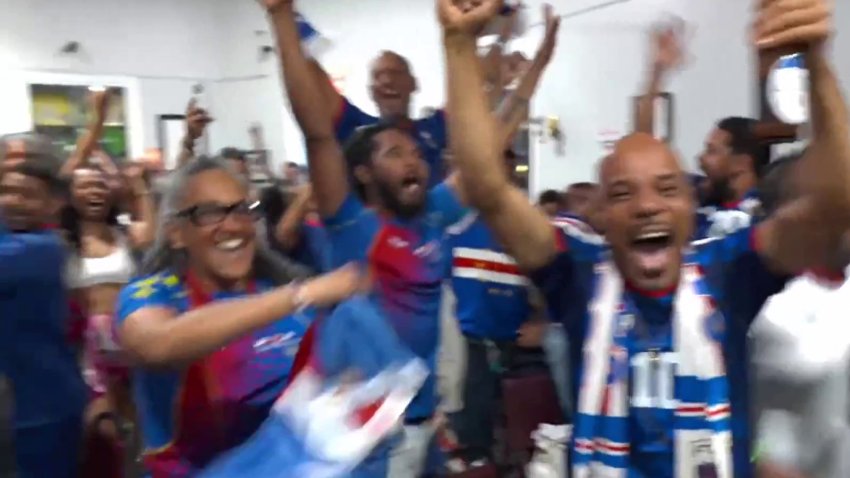
The most important layer of Cape Verde’s World Cup run may be happening far from the stadium. In the UK, where many families trace ties to the islands through migration, the team’s success has created a fresh emotional current. Social feeds fill with flags, old photos, and match clips. Conversations that might normally sit in the background of everyday life move to the center. That is the quiet power of international football: it can activate identity at scale.
There is a business lesson here too. Federations often spend millions trying to manufacture engagement, yet the strongest loyalty still comes from legitimacy. Fans do not need an activation campaign when the team feels like theirs. That is especially true for diaspora communities, who often experience national identity in layered, hybrid ways. A World Cup run gives those layers a stage.
Identity travels better than marketing
Football administrators love talking about growth markets, but Cape Verde’s rise shows that the most durable growth is emotional. A child in London, Paris, Rotterdam, or Lisbon may not live on the islands, but a family name, a flag, or a relative’s memory can anchor allegiance for decades. When the team wins, those connections stop being abstract.
That matters because modern sports ecosystems increasingly compete for attention against entertainment platforms, creators, and constant digital noise. Cape Verde’s story cuts through because it feels authentic. It is not a campaign. It is a country being seen.
Cape Verde’s World Cup run and the small nation advantage
Small nations are often treated like underdogs by default, but that framing misses the real competitive edge. Smaller federations can sometimes move faster, build clearer identity, and create tighter collective discipline. They do not have the luxury of waste. Every selection choice matters. Every tactical decision is visible. Every player feels the weight of the badge.
That can produce something powerful: cohesion. In larger systems, talent depth can mask structural problems. In smaller ones, alignment becomes the asset. Cape Verde’s World Cup run highlights the value of a team that knows exactly what it is, and what it is not. There is no pretending to be a superpower. There is only the work of organizing, executing, and believing under pressure.
What elite football can learn
There is a temptation in elite sport to assume that winning is mostly a function of budget. But the modern game keeps proving that structure, selection, and collective purpose still matter. Cape Verde’s surge offers a reminder that smart football can outplay bigger machinery when the margins tighten.
- Clear identity beats vague ambition.
- Tactical discipline matters when matches become compressed and tense.
- Shared purpose can be more durable than raw star power.
- Momentum changes how players and fans interpret every next result.
That does not mean money is irrelevant. It absolutely shapes access, development, and long-term sustainability. But Cape Verde’s run proves that football still leaves room for teams that are organized enough to exploit uncertainty. The sport may be increasingly industrial, yet it still rewards emotional clarity.
What this means for the UK and the wider football map
The UK angle is impossible to ignore. Diaspora communities have long reshaped the texture of English football culture, from matchday rituals to family allegiances to youth development pipelines. Cape Verde’s World Cup run adds another chapter to that story. It gives second and third-generation supporters a way to participate in global football without abandoning their local lives.
That dual identity is increasingly normal. Fans can support Premier League clubs on weekends and carry national allegiance rooted in family history. For broadcasters, sponsors, and federations, this is not a footnote. It is a map of how football consumption really works now. People do not always choose between local and ancestral identity. They stack them.
When a diaspora turns up for a team, it is not a niche audience. It is a durable fanbase with memory, pride, and intergenerational reach.
How Cape Verde turned belief into momentum
The most compelling thing about Cape Verde’s World Cup run is how quickly belief can change a team’s ceiling. Once a squad begins to feel that its story is bigger than its constraints, performance often follows. Confidence affects pressing, passing choices, defensive shape, and decision-making in the final third. Football is technical, but it is also psychological.
That is why runs like this can accelerate everything around a national side. Young players pay attention. Coaches gain credibility. Young fans begin to imagine themselves in the shirt. Sponsors, too, start recalculating the value of association. A deep tournament run can rewrite a country’s football brand in weeks.
Pro tip for federations watching this closely
Do not chase the spectacle without building the system. A breakthrough run is valuable, but only if it is converted into long-term development. That means better scouting, stronger youth pathways, smarter diaspora engagement, and a plan to keep players connected to the national project after the headlines fade.
For emerging football nations, the key lesson is simple: momentum is not a strategy unless it becomes infrastructure.
The future implications of Cape Verde’s World Cup run
If Cape Verde sustains this level of visibility, the ripple effects could be significant. More children may choose football earlier. More families may invest in local academies. More diaspora communities may see international sport as a bridge rather than a sentimental afterthought. And for global football institutions, the story reinforces a truth they often underplay: the game becomes richer when more nations can matter.
There is also a softer but equally important implication. In an era of fractured attention and political noise, Cape Verde’s run offers a rare shared narrative. It reminds people that national pride does not have to be exclusionary to be powerful. It can be connective. For a country spread across oceans and generations, that is not a minor achievement. It is the point.
The bigger lesson from Cape Verde’s World Cup run
What makes Cape Verde’s World Cup run so compelling is not simply the upset potential. It is the clarity of meaning. This is sport doing what it does best: collapsing geography, elevating identity, and making a small nation feel suddenly central. That kind of moment is rare, and that is why it resonates so deeply.
For the football industry, the takeaway should be uncomfortable but useful. The game is not only owned by the richest leagues or the deepest pools of talent. It is still available to teams with coherence, to communities with memory, and to fans who show up because the story belongs to them.
Cape Verde’s rise is a football headline, yes. But it is also a cultural event, a diaspora reunion, and a case study in how belonging can become competitive advantage.
The information provided in this article is for general informational purposes only. While we strive for accuracy, we make no guarantees about the completeness or reliability of the content. Always verify important information through official or multiple sources before making decisions.