Central Synagogue Arrest Exposes Security Gaps
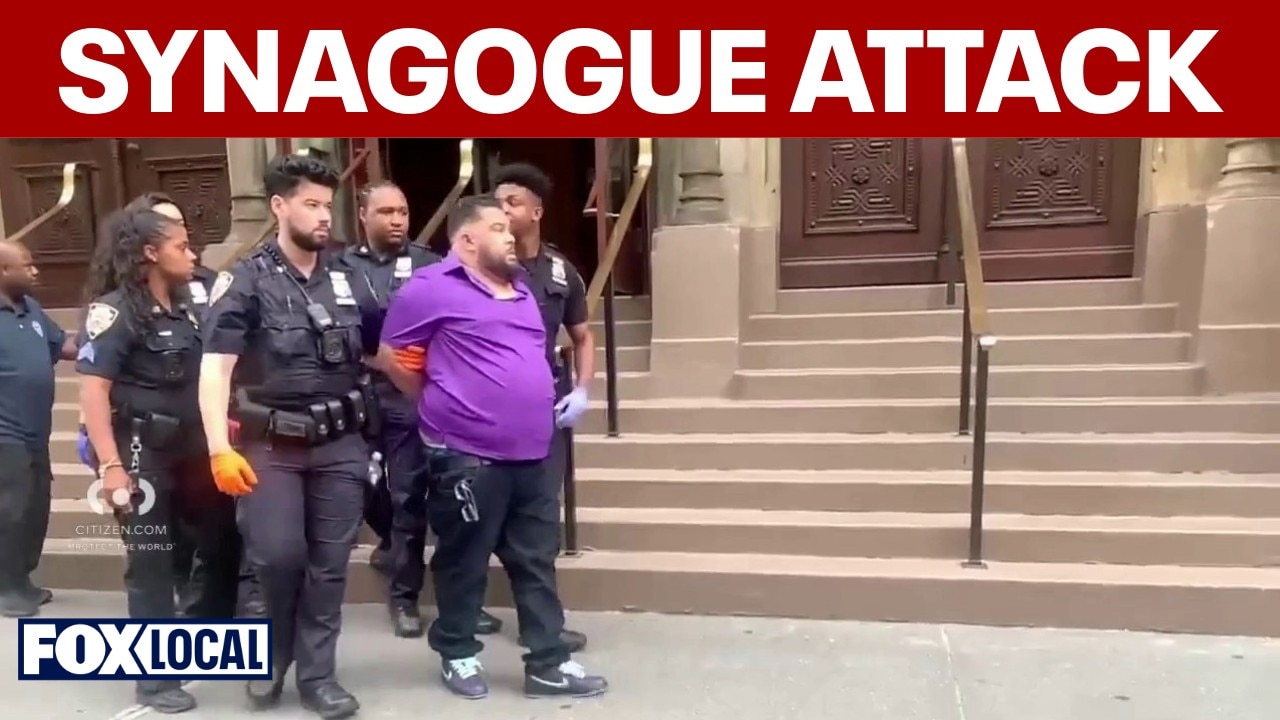
Central Synagogue Arrest Exposes Security Gaps
The arrest tied to a Shabbat assault at Central Synagogue lands at a moment when religious institutions are already operating under a permanent state of alert. For congregations, the fear is no longer abstract: a service can become a target, a familiar entrance can become a vulnerability, and a community gathering can turn into a security incident in seconds. What makes this case matter is not just the violence itself, but the larger signal it sends about how exposed houses of worship remain, even in a city with massive police resources and deep emergency planning. The central question is blunt: if a synagogue in New York can be breached in the middle of Shabbat, what does meaningful protection actually look like?
- The arrest highlights persistent security risks at houses of worship.
- Synagogue safety now depends on layered prevention, not just visible guards.
- Hate crime response is only one part of the larger emergency picture.
- Communities are being forced to balance openness, worship, and hardening.
Why this case matters beyond one arrest
The Central Synagogue arrest is not just a local law enforcement story. It sits at the intersection of public safety, religious freedom, and the practical limits of urban security. Every major city has the same uncomfortable problem: soft targets are everywhere, and the places meant to feel most welcoming are often the easiest to exploit.
That tension is especially sharp for synagogues. Unlike corporate offices or government buildings, they are not designed to feel militarized. People arrive to pray, to gather, to mark sacred time. Heavy-handed security can make that experience feel compromised. But too little protection leaves congregants exposed.
The hard truth is that safety at houses of worship is now a systems problem, not a single-guard problem.
This is why the arrest matters. It forces a closer look at what failed, what worked, and what communities can realistically do next without turning spiritual spaces into fortresses.
Central Synagogue arrest and the security gap
The phrase Central Synagogue arrest will likely be remembered because it compresses two realities into one headline: a sacred gathering place and a criminal act. But the broader lesson is about the security gap between intention and preparedness.
Layer one: visible deterrence
Many synagogues already use a mix of access control, volunteer greeters, off-duty officers, and cameras. Those measures can deter opportunistic behavior, but they are not foolproof. A determined aggressor can still exploit timing, crowd flow, or a moment of distraction.
Layer two: response readiness
When an incident happens during a service, the speed of communication matters as much as physical presence. Who calls 911? Who guides people out? Who locks doors? Who checks on children or older congregants? Those questions sound simple until the moment they become urgent.
Layer three: intelligence and coordination
Security today is also about pattern recognition. Does the synagogue share threat information with neighborhood partners, local police, and Jewish security networks? Are suspicious incidents being documented consistently? Institutions that treat safety as an isolated task are more likely to miss warning signs.
That is the central lesson of this arrest: a single security measure rarely fails by itself. It is usually the overlap between gaps that creates the opening.
What houses of worship can learn right now
Religious institutions cannot control the city outside their doors, but they can control how prepared they are inside them. The best approach is layered, boring, and disciplined. That is exactly why it works.
- Run drills regularly for evacuation, lockdown, and communication.
- Audit entrances and exits during peak times, not just normal hours.
- Train volunteers to notice behavior changes, not just obvious threats.
- Document incidents consistently, even if they seem minor at first.
- Coordinate with police and community security teams before an emergency happens.
For synagogues, the challenge is finding the right balance between openness and control. A visitor should feel welcomed, but not anonymous. A congregant should feel safe, but not surveilled. That balance is operational, not philosophical.
One practical shift many communities are making is assigning clear roles before services begin. A greeter manages entry. A safety lead monitors the room. A communications contact handles escalation. That division reduces confusion when seconds count.
Another useful step is tightening language around incident reporting. If a community sees the same person lingering outside multiple times, or hears hostile comments near services, that information should not live in someone’s memory alone. It should be logged, reviewed, and shared appropriately.
Why hate crime response still feels too reactive
Even when authorities move quickly, hate crime response often starts after the damage is already done. That creates a frustrating reality for communities: the system is strongest at assigning blame after an event, but weaker at preventing the event in the first place.
For Jewish communities in particular, that gap has been visible for years. Threats may come from ideology, opportunism, or a wider climate of hostility. The form changes, but the burden on the community stays the same: learn to anticipate danger while continuing to live normally.
Prevention is cheaper than recovery, but it demands attention long before headlines force the issue.
That is why this case should not be treated as a one-off law enforcement story. It should be treated as a prompt for city officials, security planners, and congregational leaders to ask whether current systems are actually reducing risk or simply managing aftermath.
The urban safety problem no one wants to own
New York has deep experience responding to threats, but urban density cuts both ways. The same crowded, interconnected environment that gives the city resilience also makes it easier for a disturbance to spread. Transit hubs, sidewalks, sidewalks, social media, and houses of worship all sit inside the same fast-moving ecosystem.
That creates a difficult policy dilemma. Cities want to keep sacred and civic spaces open. They also want to avoid normalizing permanent armed presence. Yet after repeated incidents across the country, the idea that police response alone can do the job is increasingly unrealistic.
This is where planning has to become more specific. A synagogue security plan is not the same as a school plan or a concert venue plan. Services follow their own rhythms. Crowd sizes change by holiday. Entry patterns shift with the calendar. Good security respects those realities instead of forcing generic templates onto them.
A smarter model uses a mix of access control, camera monitoring, volunteer training, and rapid communication. It also builds trust, because congregants are far more likely to cooperate with protocols they understand.
What happens next for communities like Central Synagogue
After an incident like this, the instinct is to look for closure. An arrest can feel like an endpoint. In practice, it is only a midpoint. Legal proceedings may answer who is responsible, but they will not answer every operational question left behind.
Expect procedural tightening
Synagogues often respond by reviewing door procedures, event staffing, and perimeter visibility. That can include better lighting, more consistent badge checks, and revised visitor registration.
Expect emotional aftershocks
Congregants may not talk about fear immediately. Some will still show up every week. Others will quietly stay home. Leadership needs to plan for both reactions without overcorrecting or minimizing concerns.
Expect wider coordination
Community security is becoming more networked. Synagogues increasingly exchange best practices with one another, particularly around high-holiday planning and threat awareness. That cooperation may be one of the most important long-term outcomes of episodes like this.
And there is a broader implication here: institutions that survive modern threat environments are not the ones that never experience danger. They are the ones that build habits, systems, and relationships strong enough to absorb it.
The bigger takeaway for New York and beyond
The Central Synagogue arrest is a reminder that safety is not a background condition anymore. It is part of the cost of participation in public life. For houses of worship, that reality is especially painful because the mission is openness. The point is to gather, not barricade.
Still, pretending that openness alone is enough is no longer credible. Communities need practical security planning, policymakers need to fund it, and law enforcement needs to support it without pretending it can substitute for preparation.
If there is a silver lining, it is this: incidents like this often force institutions to improve faster than they otherwise would. That does not erase the harm, and it should not. But it does mean the response can be more than symbolic. It can be structural.
The challenge now is whether that urgency lasts after the headlines fade.
The information provided in this article is for general informational purposes only. While we strive for accuracy, we make no guarantees about the completeness or reliability of the content. Always verify important information through official or multiple sources before making decisions.