East Potomac Golf Fight Escalates
East Potomac Golf Fight Escalates
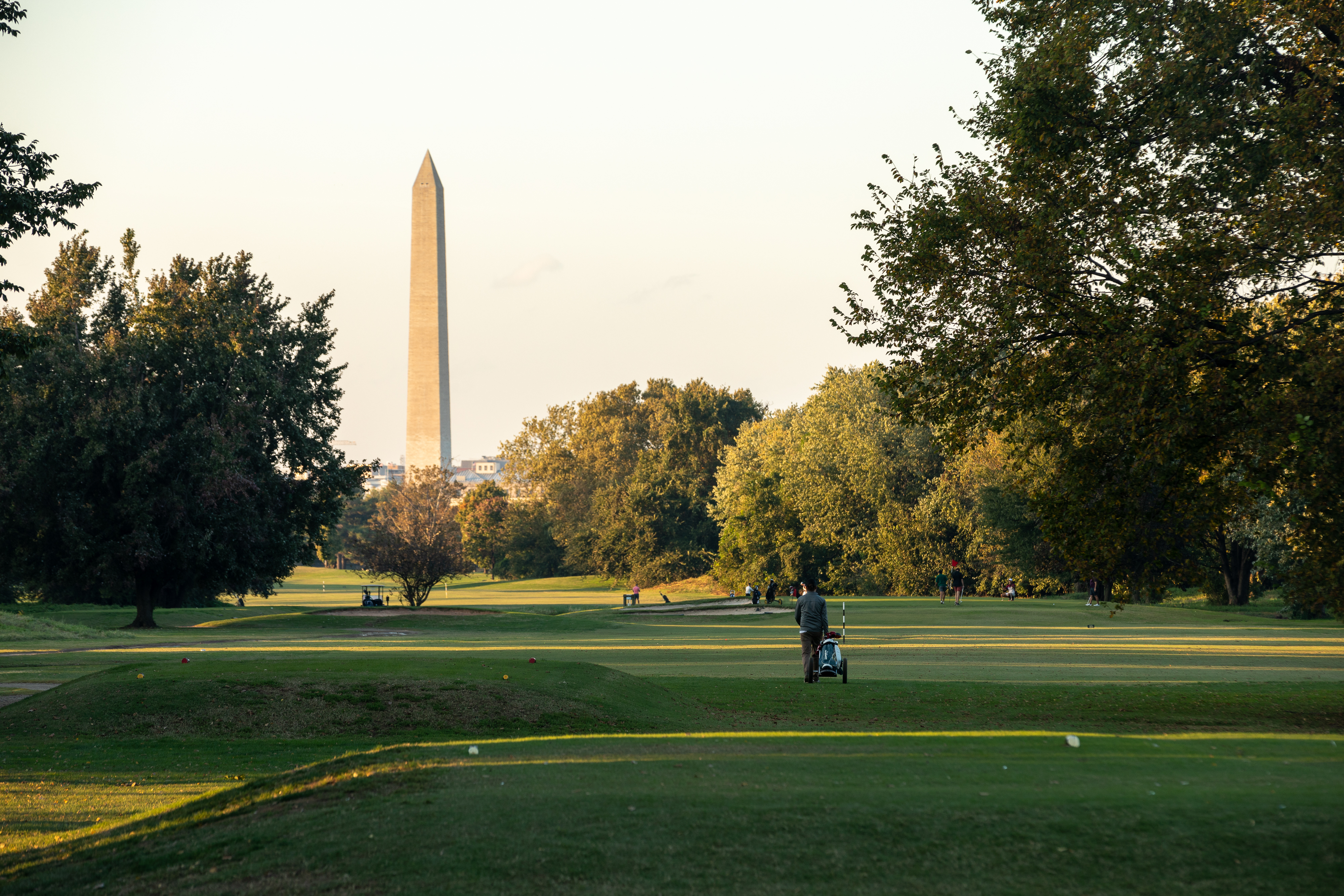
Washington’s public land battles rarely arrive with chainsaws, fairways, and a federal judge in the same frame. But the East Potomac golf course dispute has become exactly that: a high-stakes test of who gets to reshape historic public space, how quickly agencies can move, and whether environmental and community concerns can slow a redevelopment plan once machinery is already in motion. For residents, golfers, preservationists, and city watchers, the pain point is familiar: public assets can feel public only until a consequential decision appears to have been made elsewhere. The controversy over tree clearing at East Potomac is not just about golf. It is about governance, transparency, climate resilience, historic landscapes, and the future of recreation in a capital city where every acre carries political weight.
- The dispute centers on tree clearing tied to changes at the East Potomac golf course.
- A judge’s involvement signals that process, preservation, and environmental review are now central issues.
- The fight reflects a broader national tension between modernizing public recreation and protecting historic green space.
- The outcome could shape how cities manage leased public land and community oversight.
Why the East Potomac Golf Course Fight Matters
The East Potomac golf course sits on land that is more than a recreational amenity. It is part of a civic landscape shaped by federal stewardship, public access, tourism, local identity, and the constant balancing act between preservation and use. When trees come down in a place like this, the reaction is not simply aesthetic. Trees are infrastructure. They provide shade, absorb stormwater, reduce heat, support wildlife, and define the experience of walking or playing through a public course.
The immediate controversy, according to the source reporting, involves tree clearing and a legal challenge that reached a judge. That detail matters because courts tend to enter these disputes when opponents believe the decision-making process may have skipped a required step, underestimated harm, or moved faster than public review should allow. The judicial question is not necessarily whether golf improvements are good or bad. It is often narrower and more powerful: did the responsible parties follow the rules?
Key insight: Public land fights are rarely won by arguing sentiment alone. They turn on procedure, documentation, environmental obligations, and whether agencies can prove they considered the consequences before acting.
East Potomac Golf Course and the Public Land Dilemma
The strongest version of the redevelopment argument is straightforward: public courses need investment. Aging facilities can become expensive to maintain, less accessible to new players, and less competitive with modern recreational expectations. If a course is poorly drained, poorly routed, or underused, renovation can be framed as a public benefit rather than a private upgrade.
But the strongest version of the opposition is just as compelling: modernization can become a convenient label for irreversible landscape change. Once mature trees are removed, no court order or public apology can quickly restore the canopy. Replacement plantings may take decades to deliver comparable shade, habitat, and character. That gap between immediate loss and theoretical future benefit is where these disputes become emotionally and legally explosive.
The Core Tension: Access vs. Alteration
Golf itself complicates the politics. Supporters may see the course as one of the few affordable urban golf options in the region, a place where public recreation can survive in a city of rising costs. Critics may see large golf footprints as an inefficient use of precious land, especially when tree clearing appears to reduce ecological value. Both positions can be true at once, which is why the East Potomac debate resists easy categorization.
The better question is not whether golf deserves space. It is whether changes to that space are being made with enough transparency, public input, and ecological seriousness.
What a Judge’s Role Changes
Once a judge becomes part of a public land controversy, the tempo changes. Agencies and contractors often prefer momentum: plans, permits, schedules, mobilization, execution. Legal review introduces friction. It can pause work, demand records, clarify authority, or force a closer look at whether environmental and preservation standards were met.
For the public, that friction can feel like the only remaining leverage. For project backers, it can feel like obstruction after years of planning. The truth depends on the record. Courts generally do not exist to redesign golf courses. They exist to assess whether decision-makers acted within the law and whether challengers have shown enough harm or procedural defect to justify intervention.
What the Court May Be Looking For
- Authority: Which agency, leaseholder, or contractor had the right to approve the tree clearing?
- Review: Were required environmental, historic, or public-process reviews completed before work began?
- Harm: Is the tree removal causing immediate and irreparable damage?
- Balance: Would pausing the work create more harm than allowing it to continue?
- Public interest: Does the project serve a broader public benefit, and was that benefit properly evaluated?
These are not abstract boxes to check. They determine whether public land governance is meaningful or merely procedural theater.
The Environmental Stakes Behind the Tree Clearing
Tree clearing in an urban floodplain-adjacent landscape carries consequences beyond the visible. Mature trees reduce heat, slow runoff, stabilize soils, and create continuity for birds and pollinators. In Washington, where summers are increasingly punishing and stormwater management is a persistent challenge, cutting trees is not a neutral act.
That does not mean no tree can ever be removed. Diseased, hazardous, or poorly placed trees sometimes need to go. Course renovation may also involve regrading, drainage upgrades, or replanting strategies that improve long-term performance. But the burden of proof should be high when the land is public and the trees are mature.
Pro Tip for readers tracking local land fights: Look past the phrase
tree replacement. Ask about canopy age, species diversity, survival guarantees, maintenance funding, and the timeline for ecological recovery.
Replacement Is Not the Same as Restoration
One of the most common arguments in redevelopment fights is that removed trees will be replaced. The claim is not meaningless, but it can be misleading. A newly planted sapling does not perform the same climate or habitat function as a mature tree. If a project removes large canopy trees and replaces them with smaller ornamental species, the math may look acceptable on paper while the landscape loses real environmental capacity.
That distinction is central to public trust. If the East Potomac work is being sold as improvement, residents will reasonably ask: improvement for whom, measured how, and over what time horizon?
East Potomac Golf Course as a National Case Study
This fight is local, but the pattern is national. Cities across the country are reassessing golf courses, parks, waterfronts, and other public assets under pressure from climate change, budget constraints, housing shortages, and shifting recreation habits. Some communities are converting golf courses into parks or housing. Others are doubling down on golf as an accessible public sport. Many are trying to do both: preserve open space while modernizing facilities.
East Potomac is especially symbolic because it exists in the shadow of federal power. Decisions made there send a message about how public land should be managed when multiple interests collide: local users, federal agencies, contractors, environmental advocates, tourists, and future generations who have no seat at the hearing.
Why Process Is the Product
In public land management, process is not bureaucracy for its own sake. It is the mechanism that converts private plans into public legitimacy. When stakeholders believe a decision was rushed, hidden, or framed too narrowly, even a defensible project can lose credibility.
That is the strategic lesson from the East Potomac golf course dispute. The controversy may ultimately turn on specific permits and judicial findings, but the broader damage is reputational. Once the public suspects that consultation happened after the real decisions were made, every chainsaw sounds like a verdict.
The Business of Public Recreation
There is also a business story underneath the environmental one. Public golf courses often depend on partnerships, leases, operators, and capital improvement plans. These arrangements can be useful. Governments may lack the funds or specialized expertise to upgrade aging recreational infrastructure on their own. A private or semi-private operator can bring investment, marketing, and operational discipline.
But these deals require guardrails. Public land is not just another asset class. Revenue goals, tee-time optimization, event programming, and course redesign must be weighed against open access, affordability, environmental protection, and community use. If the public perceives that a course is becoming less public in spirit, opposition can intensify quickly.
- Affordability: Will improvements raise costs for regular players?
- Access: Will beginners, youth programs, and local residents benefit?
- Ecology: Will the project increase or decrease long-term resilience?
- Accountability: Who is responsible if promises are not kept?
The best public recreation projects answer these questions before opposition forces them into court.
What Happens Next
The immediate future depends on the judge’s decisions and the factual record around the tree clearing. A court could allow work to proceed, pause some activity, require more documentation, or narrow the dispute to specific actions. Even if the project continues, the political conversation is unlikely to vanish. Tree removal creates a visible before-and-after that keeps controversy alive.
Longer term, expect more scrutiny of public-private recreation deals, especially where environmental review and historic landscapes overlap. Agencies may need to communicate earlier and more plainly. Operators may need to treat community trust as a project requirement, not a public relations add-on. Advocates may become more sophisticated in using legal tools before work begins rather than after equipment arrives.
Why this matters: The future of urban green space will not be decided only by planners and architects. It will be shaped by courts, neighbors, climate data, public records, and whether communities believe they were heard before the landscape changed.
The Bottom Line
The East Potomac golf course fight is not a simple clash between golfers and environmentalists. It is a sharper, more revealing conflict over public land in an era when every green acre is expected to do more: cool the city, absorb water, support biodiversity, generate revenue, host recreation, preserve history, and remain accessible.
If the tree clearing was properly reviewed, transparently justified, and tied to a credible long-term public benefit, project backers need to prove it with more than assurances. If it was rushed or inadequately vetted, the court’s intervention may become a necessary correction. Either way, East Potomac now stands as a warning to every agency and operator managing beloved public landscapes: modernization without trust is not modernization. It is a fight waiting to happen.
The information provided in this article is for general informational purposes only. While we strive for accuracy, we make no guarantees about the completeness or reliability of the content. Always verify important information through official or multiple sources before making decisions.