Chang’e-6 Moon samples reboot lunar science
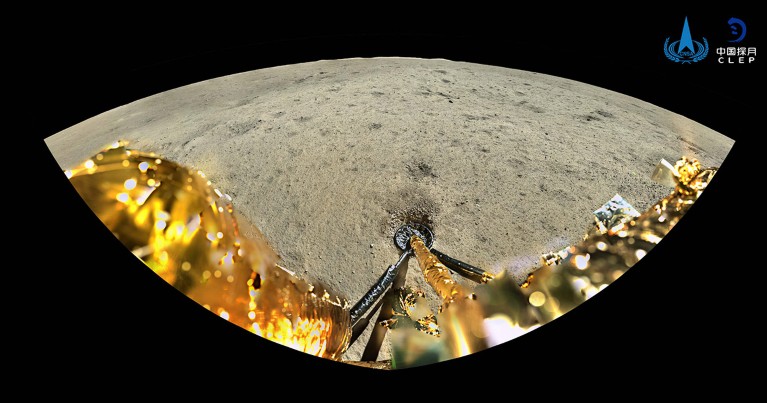
China just delivered the first Chang'e-6 Moon samples from the lunar far side, and the stakes go far beyond bragging rights. A sample return from the most mysterious face of the Moon rewrites how we model its formation, rewires global space politics, and exposes how fast China is iterating on robotic exploration. For researchers, this is the cleanest look yet at material untouched by earlier missions. For rival programs, it is a wake-up call that patient, modular engineering can outpace grand speeches. The next 18 months will decide whether these rocks become a shared scientific resource or a lever in a new space economy.
- First far-side lunar regolith now on Earth via
Chang'e-6 Moon samples. - Engineers proved reusable architecture: precision landing, ascent, and capsule recovery.
- Data-sharing policies will shape whether global labs gain access or face silos.
- Findings could accelerate in-situ resource utilization and lunar base planning.
The Chang'e-6 Moon samples milestone
What actually returned
The capsule likely holds hundreds of grams of fine-grain regolith from the South Pole-Aitken basin, a region sculpted by ancient impacts and volcanic flows. Unlike Apollo material, this soil has spent eons shielded from Earth-facing weathering, making isotopic signatures cleaner for dating early Solar System events. Expect labs to hunt for volatile compounds, glass spherules, and mineral phases that hint at mantle composition and water retention.
Why the far side matters
The far side is older, thicker, and scarred with fewer maria, meaning its crust preserves a deeper geological record. By comparing Chang'e-6 Moon samples to Apollo basalts, scientists can test competing models for the Moon’s asymmetry and refine crater chronology used across the Solar System. If volatiles are higher than predicted, it would reshape strategies for in-situ resource utilization and future base siting.
Chang'e-6 Moon samples mission engineering
Landing in the South Pole-Aitken basin
Precision descent relied on hazard-avoidance lidar, autonomous navigation, and a throttleable engine to settle in rugged terrain. The lander deployed a robotic arm and drill to collect both surface and subsurface material, banking redundancy against contamination and sample loss. This repeatable approach shows China is standardizing landing stacks that can anchor cargo drops for future crews.
Ascent, docking, and re-entry
The ascent vehicle blasted off from the far side, executed an automated rendezvous with the orbiter, and transferred its sealed container with minimal human intervention. That is a dry run for later crewed logistics. Back on Earth, the sample return capsule braked through the atmosphere and performed a skip re-entry to manage heat loads before a parachute landing in Inner Mongolia – a playbook reusable for Mars sample return.
Global stakes: science and geopolitics
Open data or gated lab access
China has promised international collaboration, but allocations may be limited to vetted partners. If access mirrors previous missions, only a small fraction of Chang'e-6 Moon samples will reach non-Chinese labs. That sets up a tension: scientific rigor demands broad peer review, while geopolitical caution favors controlled distribution. How Beijing balances that will signal whether the lunar economy tilts toward cooperation or siloed competition.
Pressure on Artemis and allied programs
NASA’s timeline for Artemis sample return is later in the decade. The optics of China already holding far-side material could spur budget fights and schedule acceleration in Washington, Tokyo, and Paris. Europe’s ESA, India’s ISRO, and private players like ispace and Intuitive Machines must now show they can deliver unique science, not just land hardware. Expect new bilateral deals to share instruments in exchange for data rights.
The Moon just became less theoretical and more transactional. Access to grams of dust may soon dictate billions in contracts.
Pro tips for researchers and investors
Labs: prep your assays now
Far-side regolith is likely ultra-fine and electrostatically clingy. Labs should validate protocols for clean-room handling, nanoSIMS isotope analysis, and rapid volatile sealing. Draft proposals early, because allocation committees will prioritize teams with tested workflows and open data plans.
Investors: track upstream suppliers
The mission spotlights demand for radiation-hardened sensors, autonomous guidance software, and thermal protection systems. Suppliers that proved their hardware on Chang'e-6 Moon samples flights become prime picks for follow-on missions and commercial cargo. Watch for partnerships in 3D-printed landing gear, superalloy engines, and lithium-ion packs optimized for extreme cold.
What comes after Chang'e-6 Moon samples
Chang’e-7 and Chang’e-8
Chang’e-7 aims for a polar landing with a hopping probe to scout permanently shadowed craters – the likeliest water ice reservoirs. Chang’e-8 will test in-situ resource utilization like sintering regolith into bricks and 3D-printing components. Together, they lay groundwork for the International Lunar Research Station, China’s proposed counterpart to the U.S.-led Artemis Base Camp.
The 24-month watchlist
Key signals to monitor: whether China releases high-resolution compositional maps, how much sample mass is shared abroad, and whether joint missions with other agencies move from MoUs to funded hardware. Commercially, look for new procurement calls for landers, relays, and robotic construction. If those arrive, it means the sample return succeeded not just technically but politically.
Why this matters now
Science acceleration
With Chang'e-6 Moon samples on Earth, comparative lunar geology can advance years faster than waiting for crewed sorties. Provenance from a mapped far-side site allows precise correlation with orbital spectrometry and seismic models. That reduces uncertainty in dating early bombardment, which cascades into better models for Earth’s own formation.
Economic gravity
The mission reframes the Moon as a near-term supply chain, not a distant dream. Demonstrated sample logistics make it easier to justify investor bets on lunar telecom relays, power stations, and additive manufacturing. Once science teams publish findings, expect a rush of patents on regolith processing, dust mitigation, and cold-survival electronics.
Bottom line: the first far-side rocks now sit in terrestrial labs, turning abstract lunar hype into actionable data. If China opts for openness, the whole field benefits. If it keeps the lids tight, the race to the Moon’s south pole will only get sharper – and faster.
The information provided in this article is for general informational purposes only. While we strive for accuracy, we make no guarantees about the completeness or reliability of the content. Always verify important information through official or multiple sources before making decisions.