China Flooding Triggers Cobra Escape Crisis
China Flooding Triggers Cobra Escape Crisis
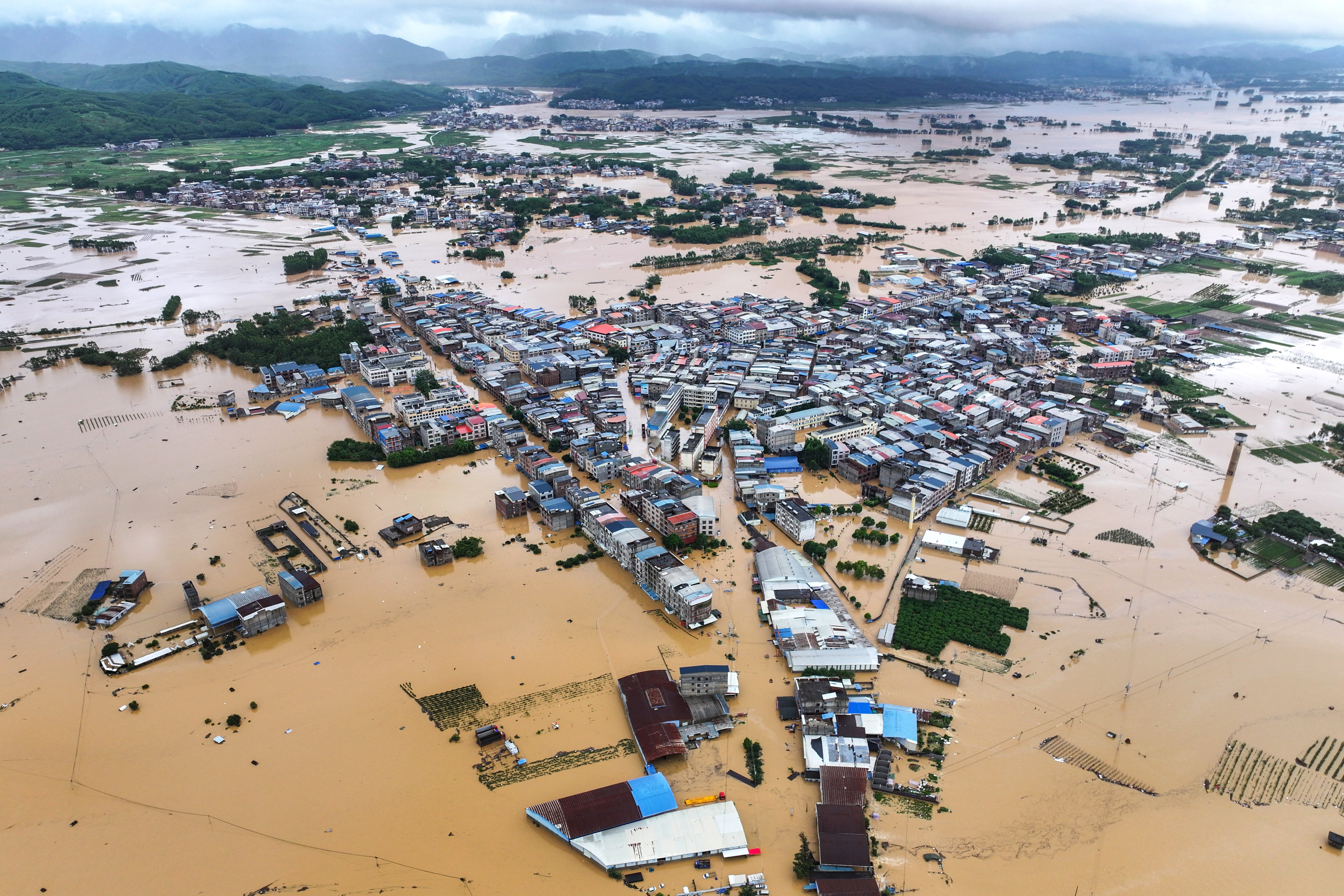
Southern China’s floodwaters did more than drown roads and damage homes. They punched holes in a fast-growing, lightly discussed corner of the wildlife economy: snake breeding farms. As waters surged through farms in the region, cobras and other snakes reportedly escaped into surrounding areas, turning a climate disaster into a public safety and biosecurity problem. That matters far beyond a single province. When extreme weather meets high-density animal production, the consequences can spread faster than officials can respond. For residents, the concern is immediate: venomous snakes near homes, farms, and evacuation routes. For regulators, it is a warning that animal-rearing systems built for profit can become liabilities when the weather turns violent. And for China’s broader agricultural sector, this is yet another reminder that climate resilience is now a core operational issue, not a side note.
- Flooding in southern China has reportedly led to snakes and cobras escaping from breeding farms.
- The incident highlights a growing biosecurity risk tied to extreme weather and concentrated animal production.
- Local residents face immediate safety concerns, especially in flood-affected rural zones.
- Authorities may need stricter standards for containment, licensing, and disaster planning.
- The event is a preview of how climate shocks can ripple through niche industries and public health systems.
Why the snake farm flooding in China story matters
The snake farm flooding in China story is not just an odd news item. It sits at the intersection of climate risk, food-chain regulation, rural infrastructure, and public safety. Snake breeding farms operate with a logic that is simple in normal conditions and fragile under stress: secure enclosures, controlled handling, predictable supply chains, and limited escape risk. Floodwater breaks that logic instantly. Once barriers fail, the question is no longer whether animals can be contained but how quickly they can be tracked, captured, or neutralized before people encounter them.
That is especially sensitive in southern China, where flooding is increasingly severe and less predictable. The region has long dealt with seasonal rain and typhoon-linked deluges, but climate change is making extreme rainfall more intense and more disruptive. When farms housing venomous species sit in low-lying or poorly drained areas, the result is a risk model that looks cheap until it becomes catastrophic.
What looks like an isolated flood incident is really a stress test for the entire system: land use, animal containment, emergency response, and local public trust.
How floodwater turns breeding farms into escape routes
Snake farms are often built around stacked cages, concrete pits, enclosed sheds, and perimeter walls. Those defenses are meant to keep animals in and intruders out. But floodwater changes the physics of containment. It lifts lids, erodes foundations, short-circuits electrical systems, and can physically carry smaller or less firmly secured snakes out of enclosures. Even when fences remain standing, the ground beneath them can wash away, creating gaps that are invisible until it is too late.
Containment failures are rarely single-point failures
A farm does not usually fail because one cage door swings open. More often, it is a chain reaction: drainage backs up, water pools, enclosures shift, workers cannot safely access the site, and animals begin moving through the easiest available route. If breeding farms are clustered together, the problem compounds. One property overflow can become a neighborhood issue if animals spread through ditches, fields, and storm channels.
That is why experts increasingly treat extreme weather as a biosecurity threat. The term usually brings to mind viruses or livestock outbreaks, but the same principle applies here. A flood can liberate animals from controlled systems and place them into environments where human contact becomes likely.
The cobra escape from farms problem is bigger than one species
The headline risk centers on cobras because venomous species create obvious fear and medical urgency. But the underlying issue is broader. A cobra escape from farms is a public health event only because the containment system failed. The same failure mode can affect non-venomous snakes, endangered species held in captivity, and animals bred for meat, skin, medicinal trade, or the pet market. Each category creates different risks, but the structural lesson is the same: if a facility depends on stable weather to remain safe, it is not resilient enough.
Venomous snakes raise the stakes because local clinics and emergency responders must prepare for bites, antivenom use, identification of species, and rapid transport. In rural areas, those resources may be limited. If residents cannot identify whether a snake is dangerous, panic spreads faster than the animals do. That drives unnecessary injuries, delayed treatment, and overburdened emergency lines.
What residents need to know
- Avoid floodwater areas where debris and vegetation can conceal snakes.
- Do not attempt to catch, kill, or move a snake without trained help.
- Keep children and pets away from standing water, drainage channels, and damaged farm structures.
- If bitten, seek urgent medical care and minimize movement.
China’s animal farming model faces a climate stress test
China’s rural economy includes many specialized farms that serve regional demand, export markets, or niche domestic industries. Snake breeding is one of those specialized sectors, and it tends to be more opaque than poultry or pork production. That opacity makes the recent flooding fallout more significant. The public can usually see a collapsed road or a submerged field. It is harder to see how many breeding sites exist, what safety standards they follow, or how much oversight they receive.
That creates a familiar regulatory problem: when an industry grows faster than its compliance infrastructure, disasters expose the gap. Extreme weather is now doing that across sectors. Pig farms, fish ponds, poultry operations, and reptile facilities all depend on water management, evacuation planning, and physical barriers. As storms become more severe, the state and industry will need to answer a hard question: should a high-risk animal facility be allowed to operate in a flood-prone zone without stricter engineering requirements?
Climate resilience is no longer just about roads, levees, and housing. It is also about whether the animals we breed and confine can stay where they belong when infrastructure fails.
What better regulation would actually look like
Responses that stop at cleanup are not enough. If a flood can send cobras into the wild once, it can happen again. The smarter response is a set of practical, enforceable safeguards that reduce the chance of repeat incidents.
Pro tips for policymakers and operators
- Map all breeding facilities in floodplains and reclassify the highest-risk sites.
- Require elevated enclosures, flood barriers, and redundant locking systems for venomous species.
- Mandate disaster response plans with species counts, escape protocols, and local coordination.
- Audit transport, breeding, and disposal records to reduce untracked animal movement.
- Train emergency responders on identification and safe handling of escaped reptiles.
For farm operators, resilience is not a luxury feature. It is the price of doing business in an era of repeated weather shocks. For regulators, the standard should be simple: if a facility cannot prevent escape during a foreseeable flood, it needs to be retrofitted, relocated, or shut down.
Why this matters far beyond southern China
This story echoes a larger global pattern. Extreme weather is increasingly revealing hidden fragilities in industries that depend on containment, logistics, and clean separation between humans and animals. Floods can release chemicals, spread pathogens, and send captive wildlife into neighborhoods. Heat waves can destroy cold chains. Wildfires can force mass evacuations from farms and zoos. Each event looks local until you step back and see the common thread: infrastructure was designed for last century’s climate.
That is why the snake farm flooding in China is worth watching carefully. It is a case study in how climate change can transform a niche rural industry into a public safety issue overnight. It also shows how quickly trust erodes when people suspect that dangerous animals may be roaming nearby and official information is slow to catch up.
The next phase will depend on whether authorities treat this as a one-off cleanup or as evidence that oversight must tighten. If they do the former, the same story will repeat after the next major storm. If they do the latter, the industry could emerge safer, more transparent, and better prepared for a wetter, more volatile future.
The bottom line
Flooding in southern China has exposed more than weak barriers at breeding farms. It has revealed how vulnerable specialized animal industries are when climate extremes hit hard and fast. Cobras escaping into surrounding areas is a vivid, alarming image, but the underlying issue is structural: containment systems, emergency planning, and land-use decisions have not kept pace with the weather. That is the real crisis – and the real warning.
The information provided in this article is for general informational purposes only. While we strive for accuracy, we make no guarantees about the completeness or reliability of the content. Always verify important information through official or multiple sources before making decisions.