China Presses Advantage on Taiwan Arms
China Presses Advantage on Taiwan Arms
The fight over China Taiwan weapons sales is no longer just a defense procurement story. It is a stress test for deterrence, alliance credibility, and the future of power in Asia. When Washington sends mixed signals on arming Taiwan, Beijing does not merely complain – it adapts, probes, and looks for openings. That matters far beyond the Taiwan Strait. Semiconductor supply chains, regional military planning, investor confidence, and the political calculus of allies all move when the US-Taiwan-China triangle starts wobbling.
The real danger is not one dramatic rupture. It is the accumulation of small strategic advantages: delayed deliveries, louder propaganda, more coercive military activity, and a widening sense that Beijing can shape the tempo while Washington argues with itself. That is the gap China wants to exploit, and it is exactly why this moment deserves a harder look.
- China Taiwan weapons sales has become a proxy battle over deterrence and political credibility.
- Beijing benefits when US support for Taiwan looks inconsistent, delayed, or transactional.
- Arms backlogs matter as much as headline announcements because readiness depends on delivery, training, and integration.
- The biggest risk is strategic drift: China gains leverage without firing a shot.
- Why this matters extends beyond security – chips, trade, and allied confidence are all in play.
Why China Taiwan weapons sales matters now
Taiwan has lived with military pressure from Beijing for decades, but the context has changed. China is stronger, more technologically capable, and more willing to combine military signaling with economic and information pressure. At the same time, US politics can turn foreign policy into a domestic bargaining chip. That combination is exactly what Beijing studies.
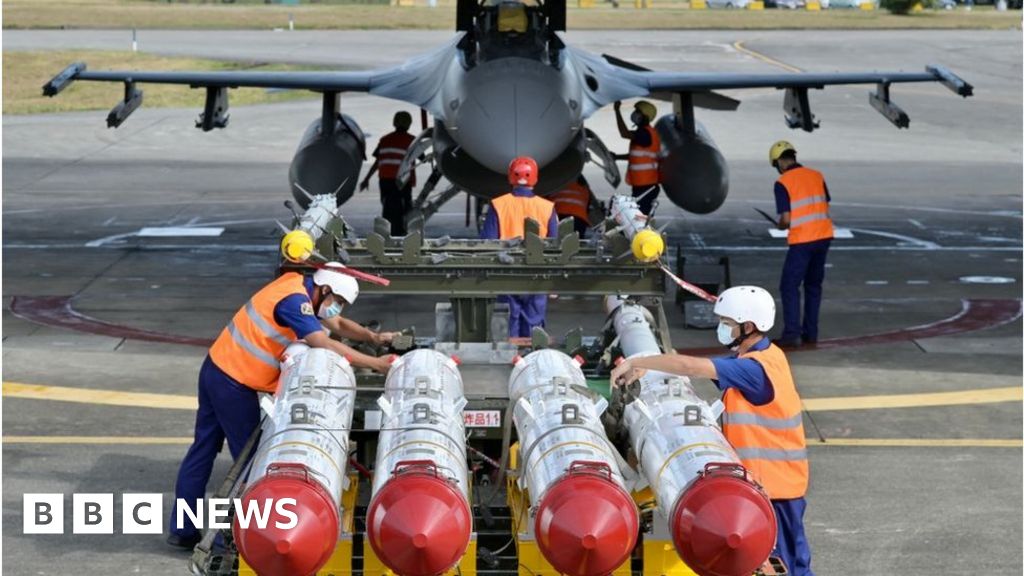
Arms sales to Taiwan are not symbolic line items on a spreadsheet. They are part of a broader deterrence architecture built around air defense, anti-ship missiles, ISR systems, training pipelines, logistics, and the ability to absorb and survive a first wave of coercion. When those systems are delayed, questioned, or publicly politicized, Beijing sees a chance to shape the narrative.
The most valuable gain for China is not a canceled shipment. It is the perception that Taiwan cannot count on timely, disciplined support.
That perception can alter calculations in Taipei, Washington, Tokyo, and European capitals. It can also encourage China to escalate gray-zone tactics such as air incursions, maritime harassment, cyber pressure, and disinformation campaigns.
The strategic opening Beijing wants
China does not need every US arms package to fail. It only needs enough friction to amplify uncertainty. This is where the story becomes more sophisticated than a simple pro-or anti-weapons debate.
Delay is a strategic tool
Backlogs in weapons deliveries create a visible gap between policy promises and military reality. A country can announce support, but if key systems remain stuck in production queues, waiting on congressional politics, or buried in industrial bottlenecks, deterrence weakens. Beijing understands that timing matters as much as intent.
For Taiwan, an approved package that arrives years late is less useful than a smaller package that can be fielded quickly and integrated well. This is especially true for asymmetric systems designed to complicate an invasion or blockade.
Mixed messaging creates leverage
Beijing also profits when US leaders appear divided over Taiwan. Public disputes over cost, priority, or strategic purpose can be repackaged by Chinese state messaging as evidence that American support is conditional, unstable, or self-interested. That narrative is useful both internationally and inside Taiwan.
If China can persuade audiences that US backing is unreliable, it can weaken morale without changing the military balance overnight. That is an information victory with real strategic effects.
Coercion below the threshold of war
China has become increasingly effective at operating in the space below open conflict. Aircraft sorties, naval patrols, legal pressure, sanctions on defense-related firms, and economic retaliation all form part of a broader campaign. In that environment, uncertainty around China Taiwan weapons sales gives Beijing room to intensify pressure while claiming it is simply responding to provocation.
What this reveals about modern deterrence
There is a temptation to treat arms sales as proof of commitment. In reality, deterrence is more operational than ceremonial. It depends on whether Taiwan can actually use what it buys, whether the systems match the threat, and whether support can be sustained under stress.
That means the real questions are less theatrical and more practical:
- Can Taiwan receive systems on time?
- Are those systems survivable in a first strike scenario?
- Do training and maintenance pipelines exist?
- Can inventory be replenished fast enough in a crisis?
- Are political leaders aligned on what deterrence requires?
If the answer to several of those questions is no, then headline-grabbing sales announcements lose much of their value.
Deterrence is not built by press releases. It is built by readiness, stockpiles, dispersion, and political consistency.
The business impact hiding behind the security story
This is where the issue jumps out of the defense silo. Taiwan sits at the center of advanced semiconductor manufacturing, and any increase in cross-strait instability ricochets through global business. Markets can price in risk for a while, but prolonged uncertainty around US support and Chinese pressure has a compounding effect.
Semiconductor exposure
The chip industry depends on stability, predictable shipping lanes, trusted security relationships, and confidence that a regional shock will not suddenly sever high-end supply. Even if military conflict never materializes, a sustained period of pressure can drive companies to diversify production, adjust inventory strategies, and rethink capital allocation.
Insurance and logistics pressure
As strategic risk rises, insurers, shippers, and manufacturers begin to account for it. That can mean higher costs, rerouted supply chains, and more conservative investment behavior. The effect may be gradual, but it is real. Business leaders do not wait for missiles to fly before repricing exposure.
Allied industrial policy
The longer uncertainty around Taiwan persists, the more governments will accelerate industrial resilience plans around chips, telecom infrastructure, and dual-use technologies. That may be prudent, but it also reflects a larger truth: geopolitical ambiguity has become an operating cost.
Why Beijing may see political opportunity
China has long framed Taiwan as a test of American staying power. Any US political turbulence that touches alliance commitments, military spending, or overseas obligations becomes raw material for that argument. Beijing does not need a single transformative event. It benefits from recurring episodes that suggest hesitation or division.
That is why public debates over whether Taiwan is worth the risk, whether arms transfers are too expensive, or whether defense commitments should be renegotiated can echo far beyond domestic politics. They become strategic signals, whether intended or not.
From Beijing’s perspective, the ideal outcome is not immediate confrontation. It is a slow erosion of confidence in US resolve, paired with enough military and economic pressure to make Taiwan feel increasingly isolated.
What Taiwan actually needs from arms sales
Not every weapon contributes equally to deterrence. Taiwan’s defense problem is not to outmatch China symmetrically. It is to make aggression costly, slow, and uncertain.
Priority should favor asymmetric capability
Systems that improve survivability and denial often matter more than prestige platforms. Think mobile missile launchers, coastal defense, air defense interceptors, drones, secure communications, and hardened logistics. These are less glamorous than high-profile hardware, but they fit the operational problem better.
Training and integration are non-negotiable
A delayed or poorly integrated system can create false confidence. Effective deterrence requires doctrine, exercises, sustainment, and interoperability across services. Procurement without integration is strategy by spreadsheet.
Stockpiles matter
Modern conflict burns through munitions quickly. If Taiwan receives sophisticated systems but lacks depth in ammunition and replacement parts, resilience drops sharply in the opening phase of a crisis.
The strongest arms package is the one Taiwan can absorb, field, disperse, and sustain under pressure.
Pro tip for policymakers and observers
When judging the next debate over China Taiwan weapons sales, ignore the spectacle and watch the pipeline. Ask whether production timelines improved, whether training expanded, and whether the package supports a coherent defense concept. The right metric is not political noise. It is operational utility.
- Pro Tip: Look for language around
delivery schedules,munitions inventories, andjoint training. Those details reveal far more than headline dollar figures. - Pro Tip: Watch whether allies align messaging publicly. Strategic coherence can be as important as matériel.
- Pro Tip: Track Chinese responses across military, trade, and information channels. Beijing rarely reacts in only one domain.
Why this matters beyond Taiwan
The implications run across the Indo-Pacific. Japan, the Philippines, Australia, and others watch the Taiwan question as a proxy for how the US handles high-risk security commitments under political strain. If Washington looks inconsistent here, allied defense planning gets harder everywhere.
Europe is watching too, especially after years of learning that industrial capacity and strategic endurance matter more than elegant policy statements. The Taiwan issue is increasingly part of a broader debate about democratic resilience, supply chain security, and whether authoritarian powers can exploit domestic polarization in rival states.
For investors and executives, the lesson is equally sharp: geopolitics is no longer a background variable. It is embedded in procurement, market access, compliance, shipping, and technology strategy.
The bottom line on China Taiwan weapons sales
The most important fact is not that China opposes Taiwan arms sales. That has been true for years. The new reality is that Beijing is getting better at converting political friction around those sales into strategic advantage. It can use delays, partisan noise, and fragmented signaling to weaken deterrence without crossing into full-scale conflict.
That should focus minds in Washington and Taipei. If support for Taiwan is serious, it must be timely, operationally relevant, and consistently explained. Otherwise, China will continue to exploit every gap between rhetoric and readiness.
The stakes are not abstract. They sit at the intersection of military balance, democratic credibility, and the infrastructure of the global economy. That is why this story matters now, and why any complacency around it would be a mistake.
The information provided in this article is for general informational purposes only. While we strive for accuracy, we make no guarantees about the completeness or reliability of the content. Always verify important information through official or multiple sources before making decisions.