Iran Escalates Caspian Tensions After Deadly Vessel Attack
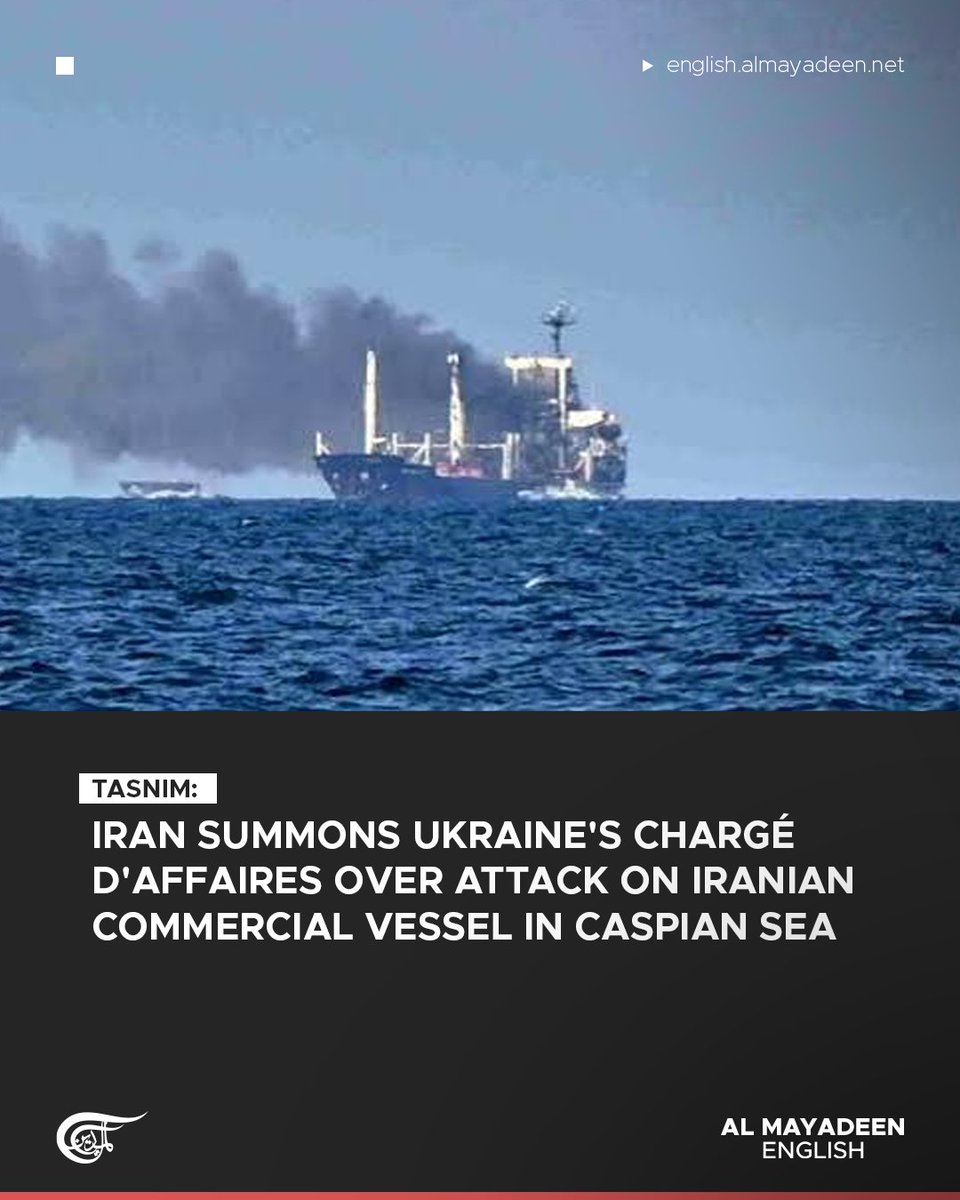
Iran Escalates Caspian Tensions After Deadly Vessel Attack
The Caspian Sea has never been a quiet backwater, but an accusation like this changes the temperature fast. Iran says Ukraine was behind a deadly attack on a commercial vessel, and that claim lands at a moment when every shipping lane, sanctions regime, and proxy conflict is already under strain. For businesses, governments, and insurers watching the region, the bigger problem is not just the incident itself. It is the possibility that a maritime attack in a strategically sensitive inland sea could trigger a wider cycle of retaliation, complicate trade across the region, and deepen already fragile geopolitical fault lines. The Caspian commercial vessel attack now sits at the intersection of security, commerce, and narrative warfare, where facts move slowly and consequences move fast.
- The alleged attack raises fresh fears about maritime security in the Caspian basin.
- Iran’s accusation against Ukraine could harden already tense regional diplomacy.
- Commercial shipping and insurance costs may rise if risk perceptions spread.
- The incident underscores how conflict is spilling into trade corridors far from the front lines.
- What happens next depends on evidence, attribution, and how regional actors choose to respond.
Why the Caspian commercial vessel attack matters now
At first glance, the Caspian Sea may seem distant from the main theaters of global conflict. It is not. The region is a chokepoint for energy flows, commercial movement, and political signaling among states that rarely enjoy stable trust. When Iran accuses Ukraine of a deadly attack on a commercial vessel, the message goes beyond the immediate casualty count. It suggests that maritime commerce in the Caspian is now vulnerable to the same logic that has already made other shipping corridors more dangerous: deniability, escalation, and the weaponization of infrastructure.
For Tehran, the accusation may serve multiple purposes at once. It reframes the incident as an external assault, increases diplomatic pressure on Kyiv, and signals to domestic audiences that Iran sees itself as a target of hostile action. For Ukraine, any such allegation is politically explosive. Kyiv is already defending itself in a war that has internationalized its security challenge. Being linked to a lethal maritime strike in the Caspian would widen the battlefield in the eyes of allies and adversaries alike.
The deeper risk is not one vessel. It is the normalization of attacks on commercial assets in spaces that were once treated as politically manageable.
What we know about the accusation
Iran’s claim centers on a deadly attack on a commercial vessel in the Caspian. The key issue, as always in incidents like this, is attribution. In a contested security environment, who benefits, who has the capability, and what evidence exists are not academic questions. They are the entire story.
That matters because maritime incidents are notoriously hard to verify quickly. Damage can be concealed, communications can be interrupted, and initial claims often arrive before investigators can reconstruct a timeline. If a state accuses another government of orchestrating or enabling such an attack, the bar for proof must be high. Otherwise, the accusation itself becomes a strategic weapon.
There is also a broader context here: the Caspian is a closed inland sea bordered by states with overlapping strategic interests. Any attack on a commercial vessel in that environment creates immediate uncertainty over whether the target was chosen for symbolism, logistics, intelligence value, or simple disruption. Each possibility carries a different escalation path.
How the Caspian commercial vessel attack changes regional security
Maritime security is no longer a side issue
For years, discussions of maritime risk focused on global transit routes such as the Red Sea, the Strait of Hormuz, and the Black Sea. The Caspian rarely commanded the same level of attention. That may now be changing. If commercial shipping there is seen as exposed to politically motivated violence, states around the basin will likely re-evaluate patrol posture, port security, convoy procedures, and intelligence sharing.
This is not just a military problem. It is an economic one. When shipping companies perceive a new threat, they do not wait for the second attack. They price risk immediately. That means higher insurance premiums, tighter routing rules, and more expensive operations for operators already working on thin margins.
Attribution could drive the next move
The most dangerous moment after an incident like this is the attribution phase. If Iran presents evidence that convinces allies and partners, pressure could build for a diplomatic response, sanctions, or a security adjustment. If the evidence is weak or disputed, the accusation itself may still harden positions and make compromise harder.
That creates a familiar but toxic dynamic: one side sees a provocation, another side sees propaganda, and the result is a worsening feedback loop. In a region where naval assets are tightly linked to national prestige, even a limited exchange can be interpreted as a test of resolve.
The commercial fallout from the Caspian commercial vessel attack
Shipping is built on predictability. Remove predictability, and the cost structure changes immediately. The practical consequences of an attack or credible accusation can ripple through logistics networks well beyond the sea itself.
- Insurance premiums may rise as underwriters reassess the likelihood of further incidents.
- Route planning could become more conservative, increasing transit times and fuel costs.
- Port operators may tighten inspection and security procedures, slowing throughput.
- Commodity traders could add a political-risk premium to contracts tied to Caspian transport.
- Energy markets may react if participants fear disruption to nearby infrastructure.
These effects can appear even if the full facts are not yet established. Markets are often less concerned with certainty than with the possibility of escalation. That is why incidents in politically sensitive waterways frequently produce outsized economic reactions compared with the physical damage involved.
What companies should watch next
Firms exposed to Caspian trade routes should be watching for three signals: whether Iran presents technical evidence, whether Ukraine issues a firm denial or counter-claim, and whether neighboring states increase maritime security coordination. Each of those developments would tell operators whether this is a one-off shock or the start of a more persistent threat environment.
Pro tip: companies with regional exposure should stress-test logistics plans for delayed port access, rerouting, and insurance repricing. In security shocks, preparedness is often cheaper than reaction.
Why the accusation is politically combustible
Accusing another state of a deadly attack on a commercial vessel is not just a diplomatic move. It is a framing contest. Iran is signaling that it views the incident as an act of aggression, not an accident or criminal event. That framing matters because it can justify stronger countermeasures and rally domestic support around a security narrative.
Ukraine, meanwhile, has every incentive to resist any claim that could expand its list of adversaries or tie it to violence far from the main battlefront. Even unproven allegations can have lasting diplomatic costs. Once a state is linked to an attack on civilian commerce, the stain can linger long after the evidence debate fades.
In modern geopolitics, the story that lands first can shape policy before investigators finish their work.
That is especially true in a fragmented information environment. State media, social platforms, and rapid-response official statements can compress the timeline from event to blame. The result is a public record that becomes increasingly difficult to unwind, even if later evidence complicates the first narrative.
What this means for the region going forward
The Caspian basin is entering a period where security and commerce are more tightly fused than ever. If this incident is confirmed as an intentional attack, the region may see a broader shift toward militarized shipping protections, sharper intelligence cooperation among some states, and a more aggressive posture toward suspicious maritime activity.
If, on the other hand, the accusation proves overstated or inaccurate, the damage may still be real. False or premature attribution can deepen mistrust and lock governments into retaliatory positions they later struggle to reverse. Either way, the episode reinforces a brutal lesson: regional maritime corridors are increasingly exposed to the politics of distant conflicts.
For policymakers, the priority should be clear-eyed verification and disciplined escalation management. For businesses, the lesson is operational resilience. For everyone else, the takeaway is that the next major geopolitical shock may not arrive through a border crossing or missile strike. It may come aboard a commercial vessel in waters few people were watching.
The bigger strategic lesson
The Caspian commercial vessel attack is not just another headline in a crowded conflict cycle. It is a warning that the boundary between war zones and trade zones keeps eroding. That is bad news for states that depend on maritime commerce, bad news for firms that assumed inland seas were relatively insulated, and bad news for any diplomat trying to contain a crisis once blame starts moving faster than evidence.
Iran’s accusation against Ukraine may or may not stand up under scrutiny. But the strategic damage is already visible: more uncertainty, more risk pricing, and more reason for regional actors to prepare for a world where commercial shipping is increasingly treated as a legitimate target in geopolitical contests.
If the Caspian becomes another arena where civilian logistics are fair game, the consequences will not stop at the waterline. They will show up in contracts, security budgets, energy flows, and the fragile trust that keeps trade moving.
The information provided in this article is for general informational purposes only. While we strive for accuracy, we make no guarantees about the completeness or reliability of the content. Always verify important information through official or multiple sources before making decisions.