China Tightens Grip on AI Chips

China Tightens Grip on AI Chips
China AI chips are no longer just a semiconductor story. They are the fault line in a global power struggle that reaches from data centers in Shenzhen to boardrooms in Silicon Valley. If you build on Nvidia, depend on advanced packaging, or ship cloud services at scale, the pressure is no longer theoretical. Export controls, domestic substitutions, and a fierce push for self-reliance are changing what can be bought, what can be shipped, and what gets built next. The result is a market where technical decisions now carry geopolitical weight, and where the next bottleneck may not be compute itself, but access to the right silicon at the right time.
- China AI chips are becoming a strategic lever, not just a hardware category.
- Export controls are accelerating domestic chip design, packaging, and ecosystem work.
- Global AI leaders face higher supply-chain risk, cost pressure, and product uncertainty.
- The winners will be firms that diversify hardware stacks and plan for constraint, not abundance.
- The real contest is shifting from raw performance to access, scale, and resilience.
China AI chips have become a policy weapon
The story around China AI chips is not simply that one country wants more semiconductors. It is that chips have become a proxy for industrial power. Advanced AI systems depend on dense clusters of accelerators, high-bandwidth memory, advanced interconnects, and cutting-edge manufacturing. That means access to hardware can shape who trains models faster, deploys inference cheaper, and scales infrastructure with less friction.
For Beijing, the answer has been obvious: reduce dependence on foreign suppliers. For Washington and its allies, the response has been equally blunt: slow the flow of the most advanced chips and the tools required to make them. The collision has created a market that is less efficient, more political, and far more fragmented than it was even a few years ago.
China AI chips are no longer a niche procurement issue. They are now a core variable in global AI strategy, supply-chain planning, and national security.
Why the pressure is spreading
The immediate impact of export restrictions is easy to spot. Companies can face tighter access to top-end accelerators, delayed shipments, and product redesigns that force engineers to work around constraints. The deeper impact is more interesting: when one market is cut off from the best hardware, it does not stand still. It begins substituting, localizing, and optimizing around whatever remains.
That is exactly what is happening with China AI chips. Domestic firms are racing to improve training and inference hardware, while software teams adapt models to run efficiently on less capable silicon. This is not just about making a single chip better. It is about building an ecosystem that can survive under constraint.
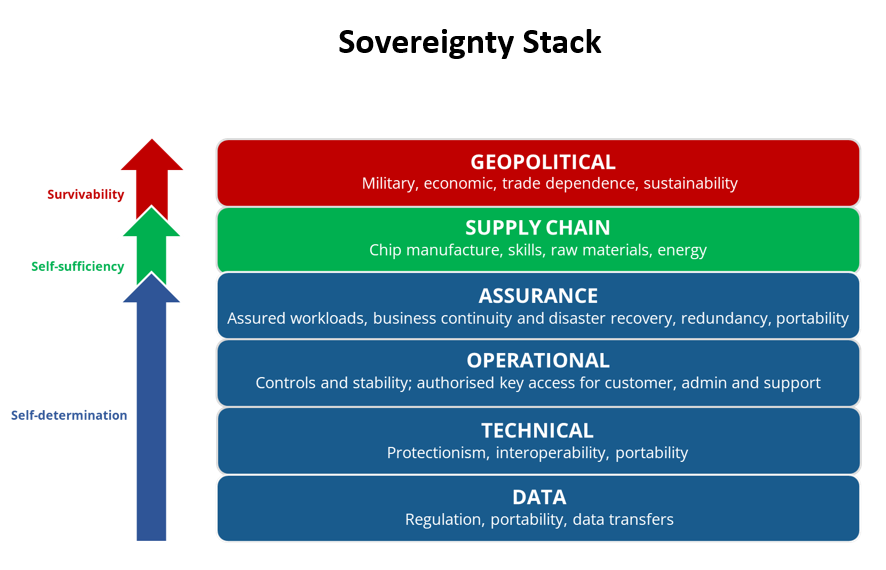
From performance chase to survivability
In the past, chip strategy was mostly about winning benchmarks. Now the more important question is whether the stack can endure disruptions. Can a cloud provider reroute workloads if its preferred GPU is scarce? Can a model company train at lower precision without collapsing quality? Can a hardware startup build around existing packaging and foundry capacity instead of waiting for a perfect node?
Those are the questions defining the next phase of China AI chips. And they are not unique to China. Any company operating in AI infrastructure should be asking the same thing.
China AI chips and the domestic substitute problem
Domestic substitution sounds straightforward until you look closely. Building a competitive AI chip requires far more than transistor density. It requires advanced design software, compiler maturity, reliable manufacturing, high-end memory access, board-level integration, thermal management, and a developer ecosystem that actually wants to target the hardware.
This is where the challenge becomes structural. Even if a local chip closes the gap on paper, it may still struggle to match the broader stack that makes Nvidia so dominant. CUDA remains a moat because it is not just software. It is inertia, documentation, tooling, and developer familiarity wrapped into one.
For China AI chips to matter globally, domestic suppliers must solve more than arithmetic performance. They need to deliver usable systems that developers trust. That means easier ports, better libraries, tighter integration with frameworks, and enough reliability to keep enterprise buyers from hesitating.
The packaging bottleneck matters more than most people think
Advanced AI hardware is often constrained not by the chip die itself, but by packaging, memory, and board integration. If one component is blocked, the entire system can slow down. That makes high-bandwidth memory and advanced packaging a strategic choke point.
For China AI chips, this is a critical pressure point. Even with strong domestic design capabilities, the surrounding supply chain can determine whether a chip becomes a real deployment option or remains a promising prototype. The lesson is simple: in AI hardware, the system is the product.
What this means for global tech companies
For global enterprises, the rise of China AI chips is not just something to observe. It changes procurement strategy, architecture choices, and long-term pricing assumptions. Companies that assumed a steady supply of top-tier accelerators are being forced to think like resilience planners.
Pro Tip: If your AI roadmap depends on one vendor or one hardware class, you are carrying more risk than your planning docs admit. Build for redundancy early, not after a shortage hits.
- Design workloads so they can run across multiple accelerator families.
- Use abstraction layers where possible to reduce vendor lock-in.
- Test lower-precision and smaller-model inference paths before you need them.
- Track memory, networking, and packaging constraints alongside compute availability.
- Assume supply volatility will persist longer than any single quarter.
The businesses that adapt fastest will not necessarily be the ones with the biggest budgets. They will be the ones that treat hardware flexibility as a product capability, not a procurement afterthought.
China AI chips are pushing the market toward bifurcation
The most likely long-term outcome is not a clean global split, but a messy bifurcation. One stack will continue chasing the bleeding edge of performance, dominated by the most advanced US-linked ecosystems. Another will optimize for domestic scale, controlled supply, and acceptable performance under constraint.
That split has consequences. It can raise costs, complicate software distribution, and slow the spread of standardized tooling. It can also create separate innovation paths, where one market optimizes for absolute capability while another optimizes for availability and autonomy.
When technology becomes geopolitically segmented, efficiency takes a back seat to control. That tradeoff can reshape product design for years.
The software layer will decide the pace
Hardware gets the headlines, but software often decides who wins. If domestic China AI chips improve compiler support, framework compatibility, and model optimization workflows, they become much more credible. If not, the chips remain second-tier options that only fit narrowly defined use cases.
That is why the ecosystem around the silicon matters so much. Model developers need reliable toolchains. Enterprises need predictable performance. Cloud providers need schedulable capacity. Without those pieces, even strong local silicon can struggle to gain real momentum.
Why this matters now
AI is entering a phase where scale, cost, and availability matter as much as raw model quality. The companies that can train and serve efficiently will have an edge. The countries that can manufacture and package at scale will have leverage. And the firms that assume access to premium chips will remain stable are likely to get surprised.
China AI chips sit at the center of that shift. They are a test of industrial policy, a stress test for global supply chains, and a signal that the AI race is becoming more fragmented. If you are building products, infrastructure, or investment theses around AI, this is not a side story. It is the operating environment.
What comes next for China AI chips
Expect more local chip launches, more software adaptation, and more pressure on companies to make hardware decisions with geopolitics in mind. Also expect a growing emphasis on inference efficiency, since running models cheaply at scale may prove more valuable than chasing the highest-end training performance every time.
There is a deeper irony here. Restrictions intended to slow one market can also accelerate its domestic industry by forcing faster learning, tighter execution, and less dependency on imported systems. That does not guarantee parity. But it does guarantee momentum.
For now, the smartest stance is not to assume a single future. It is to prepare for multiple hardware realities at once. In the AI era, resilience is becoming the new benchmark.
The information provided in this article is for general informational purposes only. While we strive for accuracy, we make no guarantees about the completeness or reliability of the content. Always verify important information through official or multiple sources before making decisions.