EU Accelerates AI Rules
Europe is forcing AI to grow up fast
The EU AI Act is no longer a distant policy debate. It is becoming a live operational problem for startups, cloud giants, and enterprise buyers that want to ship AI products without stepping into a regulatory trap. For teams building or deploying models, the question is no longer whether governance matters. It is how quickly they can adapt before the rules harden around them. That shift is especially painful for companies that treated AI as a move-fast-and-fix-it category. Europe is signaling that foundation models, high-risk deployments, and transparency obligations will be treated as infrastructure-level concerns, not experimental side quests.
The bigger story is not just compliance. It is market shape. If Europe sets the tone for model documentation, risk controls, and user disclosure, the rest of the industry will feel the pressure. And that could decide which AI businesses scale globally and which ones get stuck rewriting their stack one policy memo at a time.
- The
EU AI Actis pushing AI companies toward stricter transparency and risk controls. - Founders and product teams now need compliance built into the workflow, not added later.
- High-risk AI use cases face the most operational friction, especially in regulated sectors.
- Europe’s approach could become the template other regions copy or react against.
- Winning in AI may now depend as much on governance as on model performance.
Why the EU AI Act matters now
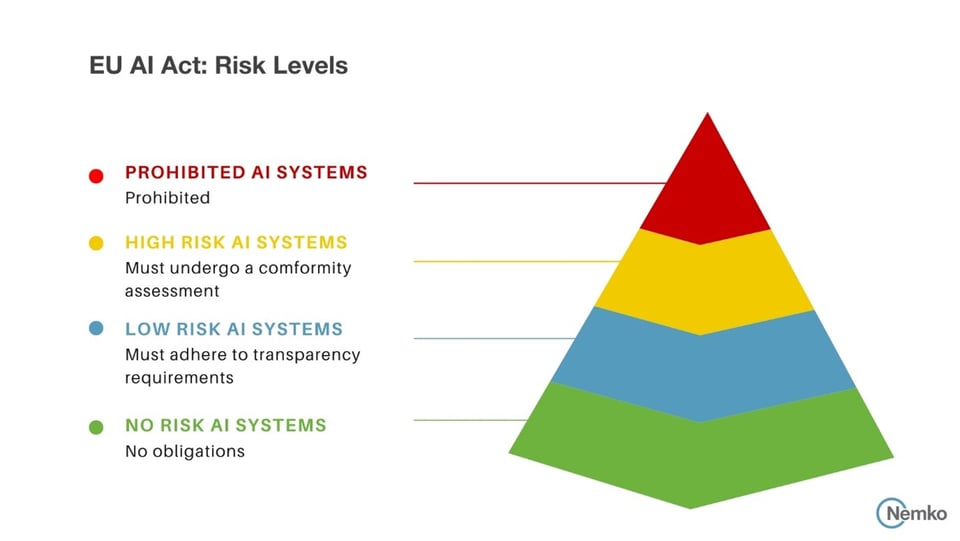
For years, AI policy moved at a glacial pace while model capability sprinted ahead. That mismatch created a familiar tech-industry fantasy: build first, apologize later. Europe is trying to break that pattern. The EU AI Act introduces a framework that sorts AI systems by risk level, with the harshest obligations aimed at use cases that can affect safety, rights, employment, or access to essential services.
That matters because AI is no longer confined to chatbots and demo reels. It is screening job applicants, summarizing medical records, scoring credit risk, assisting customer service, and shaping how businesses make decisions. In those settings, a broken model is not just annoying. It can become expensive, discriminatory, or legally dangerous.
Europe’s bet is simple: if AI is going to be embedded in critical decisions, it should be treated like a governed system, not a product gimmick.
That philosophy may sound restrictive to Silicon Valley, but it also creates certainty. Companies like clear rules when the alternative is a patchwork of lawsuits, shifting standards, and public blowback. The irony is that stricter regulation may actually help serious AI vendors by rewarding the teams that can document, audit, and explain what their systems are doing.
How the new compliance burden changes product strategy
The biggest change is that compliance can no longer be a late-stage checklist. If your product touches regulated domains, legal review has to begin when the architecture is still being designed. That includes data provenance, model evaluation, human oversight, incident logging, and user-facing disclosure.
What teams now have to rethink
- Data sourcing: where training and fine-tuning data comes from, and whether it can be documented.
- Model behavior: whether outputs are predictable enough for sensitive use cases.
- User disclosures: whether people know when they are interacting with AI.
- Human oversight: whether there is a real person who can intervene when the model fails.
- Monitoring: whether the system is watched after launch, not just tested before release.
That is a major shift for lean teams. A startup can still build fast, but it now needs more discipline around its internal process. Product managers, ML engineers, security leads, and counsel have to work as one unit. The companies that treat governance as an engineering problem will likely adapt faster than those that treat it as paperwork.
Pro tip: if your AI product touches hiring, lending, education, healthcare, or identity verification, assume you are in the high-friction zone and map your obligations before you expand features.
What the EU AI Act means for foundation model makers
Foundation model providers are under a particularly bright spotlight. These models sit at the base of an ecosystem, which means their mistakes scale quickly. Europe is pushing model developers to disclose more about training data, evaluate safety risks, and document limitations in a way that downstream developers can actually use.
That is a direct challenge to the old black-box culture of AI labs. The industry has often treated model internals as competitive secrets. But the more powerful the model, the harder it becomes to argue that opacity is acceptable. If a model is going to be embedded into third-party products across industries, regulators want a paper trail that explains what the model is, what it is not, and where the risk lives.
Transparency is becoming a product feature. In AI, the ability to explain failure modes may soon be as valuable as raw benchmark performance.
This also changes procurement. Enterprise buyers are getting more sophisticated. They do not just want accuracy. They want evidence that a vendor can support audits, manage incidents, and deliver compliance artifacts without turning every request into a custom consulting engagement.
Why the biggest winners may be boring
The market loves flashy demos, but regulation tends to reward boring excellence. The vendors most likely to gain from the EU AI Act are the ones with mature security practices, clear documentation, and strong governance tooling. That includes platforms that can help businesses classify AI use cases, monitor outputs, maintain logs, and produce audit-ready reports.
This is a classic enterprise pattern. The first wave of a technology rewards raw capability. The second wave rewards operational maturity. AI is entering that second wave in Europe. That means some of the most valuable products in the next phase may not be the models themselves, but the layers around them: compliance dashboards, evaluation suites, policy engines, and workflow controls.
It also means the competitive field may narrow. Smaller teams without legal, safety, or data governance capacity may struggle to enter regulated markets. That is not necessarily bad news for consumers. But it is a reminder that regulation can shape innovation by raising the cost of carelessness.
How companies should respond now
The smartest response is not panic. It is sequencing. Teams should identify which AI features are most exposed, then build a compliance plan around those first. For many companies, that means auditing data flows, defining acceptable use cases, and creating escalation paths for bad outputs.
A practical AI readiness checklist
- Classify each AI feature by risk level.
- Document training, fine-tuning, and evaluation data sources.
- Assign human owners for escalation and review.
- Prepare user-facing disclosures for AI-driven interactions.
- Set logging and monitoring policies before launch.
- Review vendor contracts for compliance obligations.
For engineering teams, the move is toward repeatability. Build evaluation into the release pipeline. Store decision logs. Track model drift. Measure failure modes by segment, not just in aggregate. If a model performs well overall but fails badly for a specific user group, regulators are unlikely to shrug.
Pro tip: create a shared AI compliance checklist inside your release process so product, legal, and engineering sign off on the same risk profile before launch.
The global ripple effect is bigger than Europe
Even if your company has no immediate plans to sell into the EU, the effects can still reach you. Global software businesses tend to standardize around the strictest major market because maintaining separate product versions is expensive. That means Europe’s rules may quietly become the default operating model for multinational AI products.
That is why this matters beyond Brussels. If large vendors build their systems to satisfy European rules, those guardrails may show up in products used everywhere else. And once compliance tooling exists, it becomes part of the market expectation. Buyers begin to ask for it. Competitors have to match it. Investors start viewing governance as a sign of seriousness rather than drag.
There is also a geopolitical angle. The United States has leaned more toward sectoral guidance and market-led adaptation, while Europe prefers broad rules and enforceable standards. The result could be a split approach to AI governance that forces companies to design for multiple regulatory philosophies at once. That is messy, but it is also predictable. And predictability is something the AI industry has been badly missing.
The real test is execution
Laws on paper are one thing. Enforcement is another. The EU AI Act will only reshape the industry if regulators can interpret it consistently and if companies feel real consequences for ignoring it. That creates a tricky transition period. Some firms will overcomply and slow down. Others will gamble that enforcement lags behind innovation.
The most likely outcome is a messy middle. Well-resourced companies will build compliance into their operations and use it as a market differentiator. Smaller teams will lean on tooling, managed services, and templates to avoid getting buried. And regulators will likely focus first on the most obviously harmful or high-risk deployments.
Still, the direction of travel is clear. AI is moving out of the novelty phase and into the governance phase. That is uncomfortable for builders who want maximum freedom. But it is also a sign the industry is becoming real.
The companies that survive this shift will not just make smarter models. They will make systems that can be trusted, audited, and explained.
What happens next
Expect a wave of product updates, new compliance tooling, and a lot of corporate language about responsibility. Expect vendors to market trust, transparency, and safety with the same enthusiasm they once reserved for speed and scale. And expect more buyers to ask hard questions before signing contracts.
The deeper implication is that AI competition is broadening. Performance still matters, but so do governance, documentation, and operational maturity. That is a more demanding market. It may also be a healthier one.
If the EU AI Act does its job, it will not kill AI innovation. It will make the industry prove it deserves the trust it has been asking for all along.
The information provided in this article is for general informational purposes only. While we strive for accuracy, we make no guarantees about the completeness or reliability of the content. Always verify important information through official or multiple sources before making decisions.