Cincinnati Open Upsets Expose Tennis’s Brutal New Reality
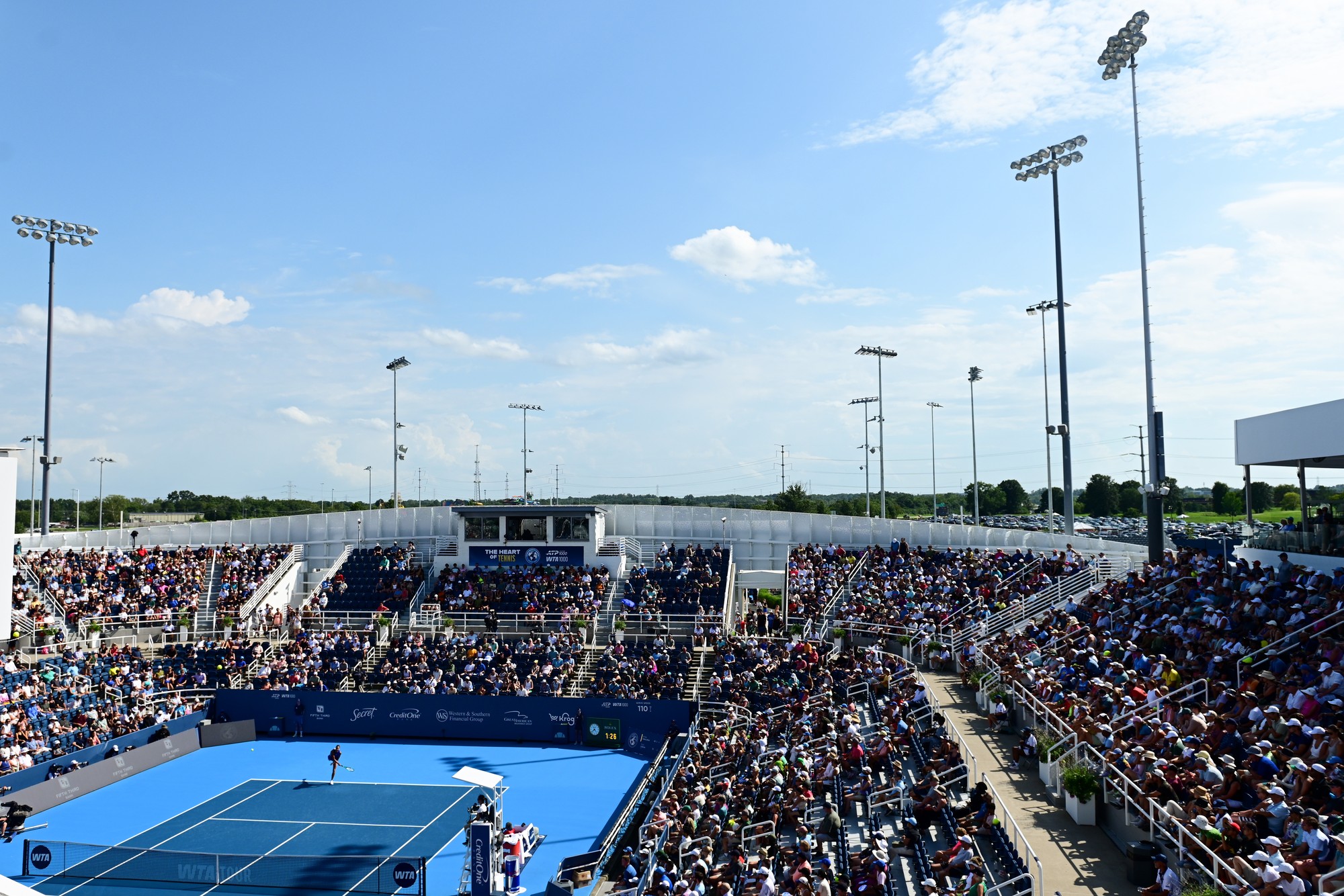
Cincinnati Open Upsets Expose Tennis’s Brutal New Reality
The Cincinnati Open just delivered the kind of reminder the sport never really wants to hear: rankings are no longer a shield. When top seeds fall early, as Sabalenka and Zverev did, the result is bigger than a bracket shock. It is a warning shot about the state of modern tennis, where depth has hardened, matchups are more unforgiving, and even the biggest names can be dragged into a coin-flip by one bad stretch. For players, it means the old safety net is gone. For fans, it means chaos is now a feature, not a bug. And for the tour, it raises a more uncomfortable question: are elite events becoming too physically brutal, too compressed, and too volatile for stars to reliably dominate?
- Top seeds are increasingly vulnerable at big hard-court events.
- The Cincinnati Open is exposing how thin the gap is between favorites and challengers.
- Physical load, matchup variance, and scheduling pressure are reshaping outcomes.
- These upsets could reshape confidence, rankings momentum, and U.S. Open expectations.
What the Cincinnati Open upsets really say
There is always a temptation to treat a shocking loss as a one-off. A bad serving day. A dip in concentration. A hot opponent who played the match of the season. But when multiple top seeds go down in the same event, the pattern matters more than the excuse. The Cincinnati Open sits at a critical point in the calendar, where the hard-court grind has already worn legs down and the next major looms overhead. That combination makes the tournament a pressure test, not just a warm-up.
For Sabalenka, one of the most powerful and relentless players on the tour, an early exit is especially striking because her game is built to impose order. For Zverev, whose peak level can look suffocating, the loss is a reminder that modern ATP events are littered with opponents who can absorb pressure and strike in bursts. The result is an ecosystem where the favorite is still favored – just not protected.
Expert takeaway: In today’s tennis, the difference between a deep run and a surprise exit is often less about talent and more about who survives the first few chaotic momentum swings.
Why the margins keep shrinking
The strongest explanation for these results is also the most boring one: the field is better. Tennis has spent the last decade becoming more global, more data-driven, and more physically optimized. Mid-ranked players are arriving with cleaner mechanics, sharper scouting, and far better conditioning than the archetypes that once filled out draws. That means fewer easy rounds and fewer opponents who simply roll over under scoreboard pressure.
But there is more to it than parity. The sport’s physical demands have become punishing, especially on hard courts. Heavy baseline exchanges, increased average rally length, and near-constant travel can wear down even the best-conditioned players. At the top level, fatigue often shows up before the headlines do: a slight delay on the first step, a few extra misses on returns, a reluctance to take risks on big points. That is where upsets are born.
Hard courts punish hesitation
Hard courts like those in Cincinnati reward aggression but punish indecision. When a seed is even a split-second late, the opponent gets to dictate. That is why the surface can produce dramatic swings in form. One player is suddenly serving lights-out. Another is scrambling. The scoreboard starts to tilt, and momentum in tennis tends to snowball fast.
This is also why early-round matches on the North American swing are so dangerous. The surface is familiar, but the conditions are not static. Heat, humidity, and recovery time all matter. By the time a seeded player realizes they are in trouble, the match may already be on the opponent’s terms.
Cincinnati Open as a stress test for contenders
Every major tournament offers a different kind of lesson. Some expose mental fragility. Others expose tactical blind spots. The Cincinnati Open reveals something broader: how contenders handle pressure when the safety rails disappear. For a top seed, the expectation is not perfection. It is resilience. The ability to win ugly. The ability to adjust when first-strike tennis stops working.
That makes the early exits of Sabalenka and Zverev more revealing than embarrassing. Both players are elite, but elite status alone does not guarantee adaptability on demand. If an opponent starts redirecting pace, serving above expectation, or attacking second serves with confidence, suddenly the favorite is solving a completely different match than the one they prepared for.
The tactical lesson
Top players often win by controlling the shape of points. But the modern tour keeps offering opponents the tools to rip up that script. Better return patterns. Better serve placement. Better defensive transition. Better belief. When all four show up in the same match, the favorite is forced into a Plan B they may not have rehearsed enough.
This is where tournament planning matters. Teams now obsess over scouting and load management because they understand a single lapse can cost an entire week. The Cincinnati Open is not just another stop. It is a compressed battleground where preparation meets attrition.
Why this matters for the U.S. Open race
There is always a shadow hanging over Cincinnati: the U.S. Open. Results here are never isolated. They shape narratives, seedings, confidence, and tactical recalibration heading into the final major of the season. For players exiting early, the immediate concern is not only ranking damage. It is the lost momentum that often matters more than points.
A deep run in Cincinnati can restore belief and sharpen patterns for New York. An early loss can do the opposite, forcing teams to spend the final stretch of prep repairing confidence as much as mechanics. That is a difficult balance, particularly for players who rely on rhythm and repetition to produce their best tennis.
For rivals still alive in the draw, these results are a gift and a warning. A draw that suddenly opens up can invite optimism, but it also creates pressure. Once the favorites are gone, the tournament becomes more volatile, and volatility is where experienced contenders often separate themselves from hopefuls.
Reality check: The absence of top seeds does not make a tournament easier. It usually makes it stranger.
How the best players respond from here
The smartest response to a surprise exit is not panic. It is ruthless diagnosis. The top teams will ask the same questions after this Cincinnati Open shake-up: Was this a physical issue? A tactical mismatch? A timing problem? A mental dip? Or simply the cost of a crowded schedule? The answer is often a mix of all four.
Here is what contenders typically focus on after a loss like this:
- Serve efficiency: reclaiming cheap points to reduce pressure on extended rallies.
- Return positioning: adjusting court stance to avoid being pinned behind the baseline.
- Recovery planning: using sleep, treatment, and workload control to sharpen for the next event.
- Pattern simplification: reducing complexity when confidence is low and execution is fragile.
These are not glamorous fixes. But they are the difference between a bad week and a month-long slide. At this level, confidence is often built by making the game simpler, not prettier.
Pro tip for readers following the tour
Do not judge a player solely by whether they win this week. Look at how they lose, how quickly they reset, and whether the underlying level is still there. The best teams treat a shock result as data, not destiny.
The bigger structural problem for tennis
These upsets also feed a larger debate that the sport keeps circling without fully solving: are players being asked to do too much? The calendar is long, the travel is relentless, and elite competitors are expected to peak at a ridiculous number of stops across surfaces and continents. The system rewards endurance as much as brilliance, which sounds fair until the stars start dropping early and the product becomes more random than coherent.
There is a commercial upside to chaos. Fans love unpredictability, broadcasters love storylines, and a draw filled with surprise contenders can create instant drama. But there is also a risk. If elite tournaments become too unstable, they stop feeling like the stage where the best reliably separate themselves. That is bad for legacy building, and eventually bad for the sport’s long-term narrative architecture.
The Cincinnati Open has not broken tennis. It has simply held up a mirror. The reflection is a tour where depth is real, recovery is a premium, and the distance between a top seed and an early exit can be alarmingly small.
What to watch next
The next few rounds will tell us whether these upsets were isolated shocks or the start of a broader trend. If the draw continues to implode, the conversation shifts from surprise to pattern. If the remaining favorites steady themselves, this will read as just another dramatic stop on the hard-court calendar.
Either way, the message is clear: the era of automatic dominance is over. In modern tennis, the name next to the number one seed matters less than ever once the first ball is struck. At the Cincinnati Open, that reality hit hard.
The information provided in this article is for general informational purposes only. While we strive for accuracy, we make no guarantees about the completeness or reliability of the content. Always verify important information through official or multiple sources before making decisions.