Cockroach Protests Shake Modi
Cockroach Protests Shake Modi
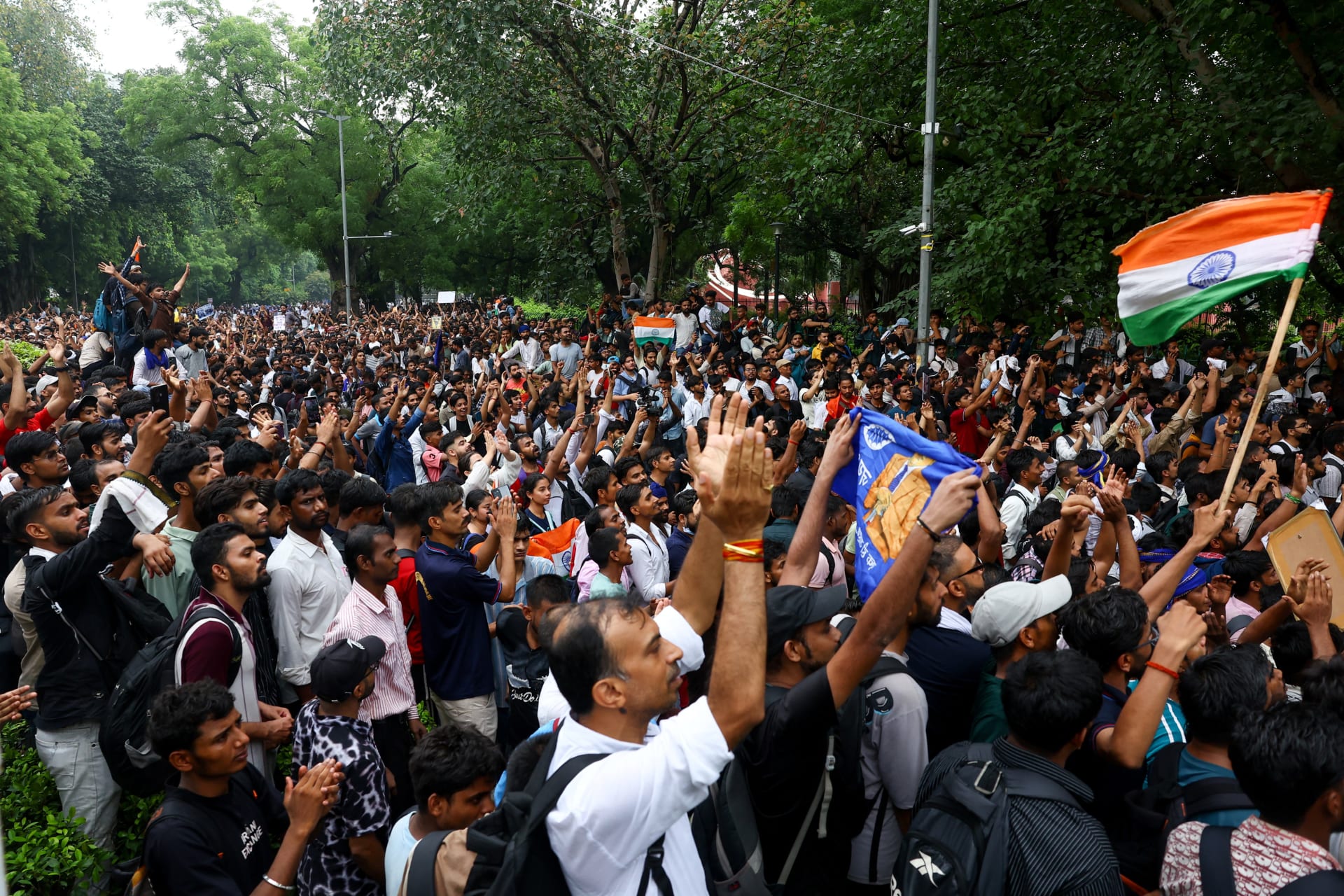
Cockroach protests may sound absurd at first glance, but that is exactly why they matter. In a political climate where symbolism can travel faster than policy, a stunt this sharp cuts through the noise and lands where it hurts: public confidence. For Prime Minister Narendra Modi, the issue is not simply a handful of demonstrators with insects in hand. The real challenge is what the imagery suggests – frustration with power, anger at elite distance, and a growing willingness to mock authority in public. The cockroach protests are a reminder that modern dissent does not always arrive with banners and marching crowds. Sometimes it arrives as satire, and satire can be more politically dangerous than slogans because it makes power look small.
- Cockroach protests are a symbol of deeper public anger, not just a viral stunt.
- The tactic challenges Modi by turning political criticism into ridicule.
- Symbolic protests can spread faster than formal opposition messaging.
- The episode highlights tensions around governance, accountability, and public trust.
- Such protests may signal a new phase of protest culture in India.
Why the cockroach protests matter
The immediate question is not whether the protest method was strange. It was. The better question is why it resonated enough to become news. In a crowded political environment, the most effective protests are often the ones that compress a larger grievance into a single, unforgettable image. That is what the cockroach protests do. They translate anger into ridicule, and ridicule is corrosive to authority.
For Modi, whose political brand has long relied on strength, discipline, and a promise of decisive governance, this kind of public mockery creates a different kind of pressure. It does not just ask whether policies are working. It asks whether the government still understands the public mood. When protests become theatrical, they are often responding to a sense that normal democratic channels are failing to produce change.
When dissent turns into satire, the fight is no longer only about policy. It becomes a contest over legitimacy, perception, and control of the national narrative.
The political message hidden inside the spectacle
Symbolic protest is often dismissed as childish or performative. That is a mistake. Political theater can be deeply strategic because it forces media attention and simplifies a complicated grievance into something instantly legible. A slogan can be ignored. An insect cannot. That is the logic behind the cockroach protests: make the government look evasive by making the protest impossible to forget.
The deeper message is likely about frustration with how power is exercised. Protesters rarely choose absurdity for its own sake. They choose it when they feel ordinary rhetoric has lost force. In that sense, the cockroach becomes a metaphor for resilience, disgust, and public impatience all at once. It suggests a perception that governance has become irritating, persistent, and hard to eliminate. That is an uncomfortable symbol for any administration, but especially one that projects competence and control.
How satire outpaces traditional opposition
Traditional opposition politics depends on speeches, marches, manifestos, and parliamentary pressure. Those tools still matter, but they are slower and easier to filter out. Satirical protest works differently. It is faster, more visual, and more adaptable to social media. One striking image can dominate the conversation long after a formal statement has been forgotten.
That is why the cockroach protests should be seen not as a one-off oddity, but as part of a broader shift in how citizens communicate discontent. The visual economy of politics now rewards sharp, memorable gestures. If a protest can be explained in a single frame, it has a much better chance of traveling beyond the crowd that created it.
What this says about Modi’s political environment
Modi remains one of the most dominant political figures in contemporary India, but dominance does not mean invulnerability. In fact, highly visible leaders often become the best targets for symbolic protests because their brand is so tightly linked to performance and perception. The more a leader is associated with strength, the more damaging public mockery can be.
The cockroach protests reveal a political environment where criticism is increasingly expressive and less deferential. That matters because it indicates not just opposition to specific decisions, but a broader willingness to challenge the government’s image. If people begin to see satire as a more effective language than policy debate, that suggests a widening gap between official messaging and public sentiment.
There is also a practical problem here: governments can respond to conventional protests with negotiation, policing, or policy concessions. Satire is harder. Arresting a joke often makes it bigger. Ignoring it can make it spread. That leaves leaders in a bind, especially when the protest is designed to be shared widely and discussed endlessly.
The risk of overreaction
One of the oldest mistakes in politics is treating ridicule like rebellion. Sometimes a joke is just a joke. But when the joke is repeated at scale, it becomes a political signal. The smartest response is usually restraint. Overreaction turns a marginal protest into a national story and hands the opposition a fresh frame: a government so sensitive it cannot tolerate satire.
That is why the optics around the cockroach protests matter so much. If the state responds too aggressively, the protest’s symbolism grows. If it responds too weakly, critics may claim the government is out of touch. This is the trap of modern symbolic dissent: it forces leaders to choose between looking authoritarian and looking careless.
Why this matters beyond India
The significance of the cockroach protests extends far beyond one country or one leader. Around the world, protest culture is changing. People are less likely to rely only on institutions to broadcast their grievances. Instead, they use visual shorthand, humor, and provocation to force attention. That shift has implications for every government trying to manage dissent in the social media era.
For democracies, the lesson is blunt: legitimacy is no longer maintained only through elections and formal institutions. It is also shaped by how power is perceived in everyday life. If citizens feel ignored, they may stop trying to persuade and start trying to embarrass. And embarrassment can be politically expensive because it is contagious.
For India specifically, the stakes are higher because the country sits at the intersection of mass politics, intense media scrutiny, and a highly networked public sphere. A protest that might once have remained local can now become national in minutes. The cockroach protests fit that pattern perfectly. They are small in form, large in meaning.
In the age of rapid amplification, a protest does not need numbers to be influential. It only needs a symbol strong enough to survive the scroll.
The future of symbolic protest
The most important question is whether this style of protest becomes normal. If it does, governments will need to rethink how they handle dissent. Protest is no longer just about streets and crowds. It is about images, metaphors, and the ability to dominate attention. That changes the relationship between citizens and power.
We are likely to see more of these compressed political gestures because they are cheap, memorable, and hard to suppress without backlash. The cockroach protests may be unusual, but their logic is familiar. They are a response to political fatigue and a signal that some citizens no longer believe direct appeals will work.
For Modi, the challenge is bigger than one protest wave. It is about whether his administration can remain responsive in a political culture that is becoming more impatient, more visual, and less willing to speak in the old language of deference. The real test is not whether officials can dismiss the stunt. It is whether they understand what produced it.
The bottom line
The cockroach protests are not important because they are strange. They are important because they are effective. They reveal a public mood that is angry enough to choose ridicule over ritual, and they expose how fragile political authority can be when it depends too heavily on image. For Modi, the challenge is to answer the criticism without amplifying it, and to show that the government can hear not only formal opposition, but also the jokes that cut deepest. In the current political climate, that may be harder than it sounds.
The information provided in this article is for general informational purposes only. While we strive for accuracy, we make no guarantees about the completeness or reliability of the content. Always verify important information through official or multiple sources before making decisions.