Trump DC Arch Sparks Legal Fight
Trump DC Arch Sparks Legal Fight
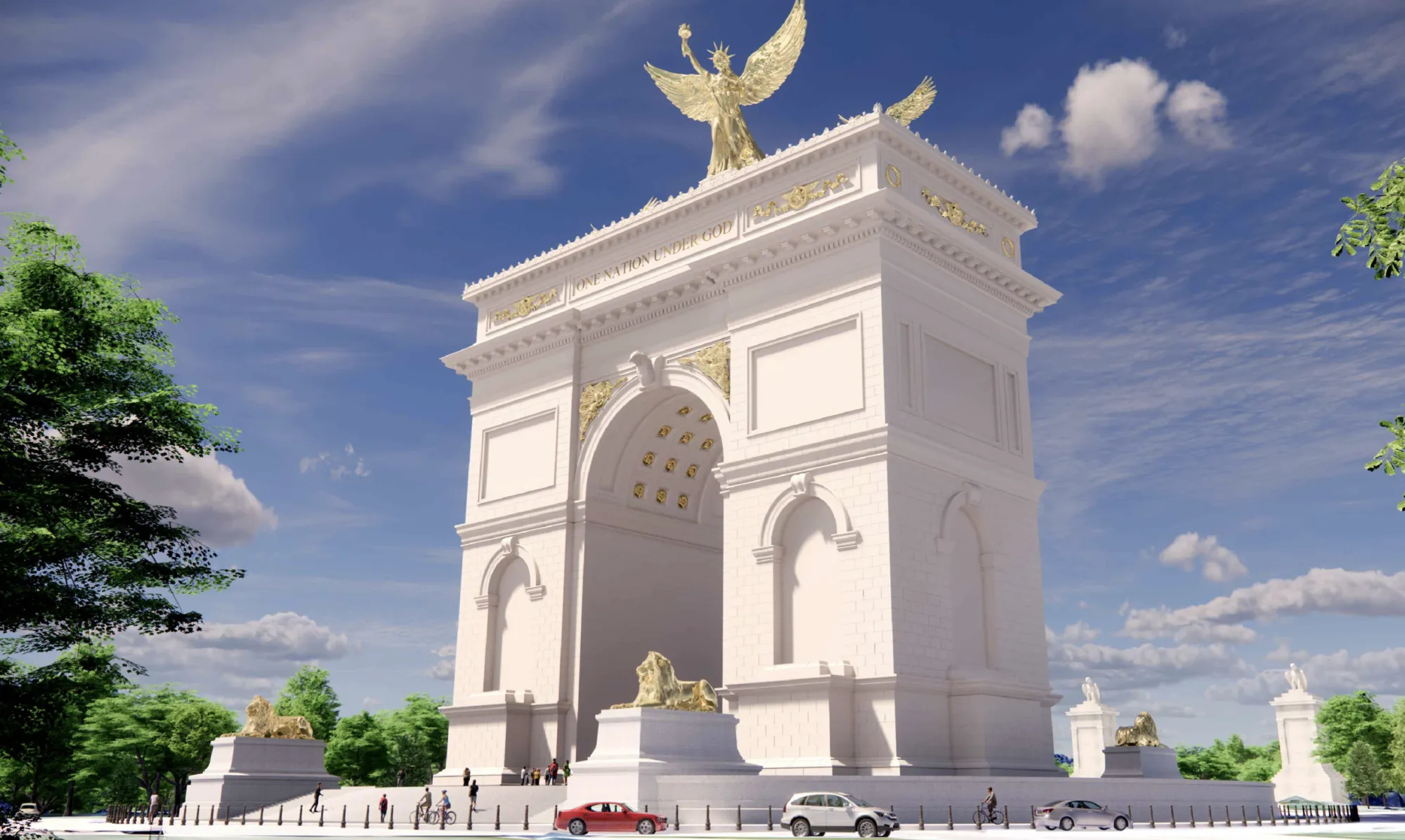
A monument is never just stone, steel or ceremony in Washington. It is a claim on history. That is why the Trump DC arch has become more than a proposed structure near the nation’s most symbolically loaded streets: it is now a legal test of how much power a president can exert over public space, federal planning and the visual language of American democracy. For critics, the project represents political branding dressed up as civic architecture. For supporters, it is a bold act of national commemoration. The new lawsuit challenging the plan puts a sharper question on the table: who gets to decide what Washington looks like, and how much process can be bypassed in the name of legacy?
- The Trump DC arch is facing a fresh lawsuit over planning, authority and public oversight concerns.
- The dispute sits at the intersection of politics, architecture and federal land use in the capital.
- Opponents argue the project risks turning public space into a personal political symbol without sufficient review.
- The case could shape future fights over presidential influence on monuments and civic design.
Why the Trump DC Arch Became a Legal Flashpoint
The planned arch in Washington, DC has triggered a lawsuit because it is not merely a design proposal. In the capital, architecture carries constitutional weight. Streets, parks, memorials and sightlines are part of a carefully managed civic system intended to reflect national ideals rather than any single administration’s personality.
The central controversy is likely to revolve around whether the project received the appropriate approvals, whether federal agencies followed required procedures and whether the public had a meaningful chance to weigh in. These questions may sound procedural, but they are the machinery that prevents a president, agency or political movement from reshaping federal land without scrutiny.
Key insight: The legal fight is not just about whether an arch should exist. It is about whether public architecture can be accelerated, politicized or personalized without the full weight of review.
That matters because Washington is governed by overlapping layers of authority. Projects in prominent federal spaces can involve planning commissions, preservation bodies, environmental review, congressional oversight and local stakeholders. A lawsuit can force the government to show its work: what was approved, who approved it, and whether the process complied with the law.
The Trump DC Arch and the Politics of Public Space
Presidents have always tried to shape national memory. Some do it through policy, others through libraries, speeches or commissions. Physical structures are different. They occupy land long after an administration leaves office. They become backdrops for protests, school trips, inaugurations and news footage.
That is why the Trump DC arch has become such a charged symbol. An arch is historically associated with victory, empire, arrival and permanence. In Washington, those associations are amplified. A structure placed near major federal landmarks can suggest continuity with national institutions or a direct claim to patriotic meaning.
Supporters may frame the project as a celebration of American strength or civic renewal. Critics see a more troubling pattern: the use of federal space to project a leader’s personal brand. The lawsuit gives those critics a venue to argue that symbolism cannot outrun statutory process.
Why This Matters Beyond One Monument
If the project proceeds after a court challenge, it may strengthen the hand of future presidents who want faster, more assertive control over civic design. If the lawsuit slows or blocks the project, it could reinforce the idea that Washington’s symbolic landscape belongs to the public, not to the occupant of the White House.
Either outcome matters for future administrations. The capital is already under pressure from security upgrades, redevelopment plans, commemorative proposals and partisan fights over historical memory. Every major project becomes a precedent.
What the Lawsuit Is Really Testing
Legal challenges to public projects often focus on technical issues, but those technicalities can determine the fate of billion-dollar infrastructure plans, memorials and federal construction. In this case, the lawsuit may probe several likely pressure points.
- Approval authority: Whether the correct agencies or commissions had legal power to approve the project.
- Public participation: Whether residents, preservationists and stakeholders received adequate notice and input opportunities.
- Environmental and historical review: Whether required assessments were completed for public land, viewsheds or protected areas.
- Use of federal funds or resources: Whether public money, staff time or land management authority were properly used.
- Separation of political and civic interests: Whether the project serves a public purpose or a political one.
None of these issues are minor. A project can be popular and still legally vulnerable if agencies skip required steps. Conversely, an unpopular project can survive if the government can prove that the process was lawful, transparent and within its authority.
Pro Tip for Readers Watching the Case
Do not focus only on the renderings. The most important documents are usually the approvals, meeting minutes, environmental reviews and agency memos. In public land disputes, the paper trail often matters more than the press conference.
The Architecture of Power in Washington
Washington’s built environment is unusually sensitive because it is designed to communicate restraint. The city’s monumental core uses axes, open lawns and classical references to create a sense of civic continuity. Adding a major new feature is rarely just an aesthetic decision.
An arch could alter how people move through and interpret a space. It could create a new ceremonial gateway, change sightlines or shift attention away from existing memorials. Even if the physical footprint is limited, the symbolic footprint could be enormous.
That is why preservation groups and civic watchdogs often fight hard over projects that may look modest to outsiders. In the capital, design choices can become political statements. The height of a structure, its materials, its inscriptions and its location all speak.
Editorial view: The question is not whether Washington should evolve. It must. The question is whether evolution happens through durable public process or through the gravitational pull of presidential ego.
Why the Trump DC Arch Could Reshape Legacy Politics
Modern presidents increasingly think in terms of media architecture: images, backdrops, televised moments and shareable symbols. A permanent arch would function as a physical media asset. It could appear in campaign-style videos, official ceremonies and partisan messaging long before courts finish parsing the administrative record.
This is where the lawsuit becomes strategically significant. It may slow the project enough to reduce its political utility, even if it does not ultimately defeat it. Litigation can delay construction, force disclosures and create uncertainty for contractors, agencies and donors.
For Trump, whose political identity has long emphasized branding, real estate and spectacle, the arch fits a familiar pattern. It translates politics into built form. But the federal capital is not a private development site. It is governed by rules that exist precisely because public symbols should not be treated like campaign props.
The Risk for Both Sides
Opponents risk appearing reflexively anti-Trump if they cannot articulate a broader principle. Their strongest argument is not that the arch is associated with one politician, but that any president should face strict limits when altering shared civic space.
Supporters risk underestimating the power of process objections. Even a politically sympathetic court may be reluctant to bless a project if agencies appear to have cut corners. The stronger defense will likely focus on compliance, public purpose and statutory authority rather than aesthetics.
What Happens Next
The lawsuit could produce several outcomes. A court might allow the project to continue while litigation proceeds. It might issue an injunction pausing key steps. It could dismiss the case if plaintiffs lack standing or fail to show legal harm. Or it could require additional review, effectively sending the project back into the administrative process.
The most consequential scenario may be delay. In Washington, time can be fatal to controversial projects. Elections, budget cycles, agency leadership changes and shifting public attention can all reshape what is politically possible. A monument that seems inevitable one month can become stranded the next.
Still, the controversy is unlikely to disappear quickly. The Trump DC arch has already entered the larger debate over how democracies manage memory in polarized times. Statues, memorials and civic structures are no longer treated as neutral background. They are contested platforms for identity, power and legitimacy.
The Bigger Picture for American Democracy
The lawsuit against the planned arch is a reminder that democracy often depends on boring systems: permits, hearings, reviews, disclosures and jurisdictional boundaries. Those systems can be slow and frustrating, but they are also safeguards against turning public assets into personal trophies.
There is a legitimate debate to be had about how Washington should commemorate national achievements and whether its monumental landscape needs new energy. But the legitimacy of any new structure depends on process. If the public believes the rules were bent, the monument may become a permanent marker of division rather than unity.
That is the central paradox of the Trump DC arch. A structure intended to project strength could instead expose institutional fragility. A project designed to claim history may be remembered for the legal fight it provoked. And in a capital where symbols endure, the process may become just as important as the arch itself.
The information provided in this article is for general informational purposes only. While we strive for accuracy, we make no guarantees about the completeness or reliability of the content. Always verify important information through official or multiple sources before making decisions.