Cyclosporiasis Spreads Fast Across 32 States
Cyclosporiasis Spreads Fast Across 32 States
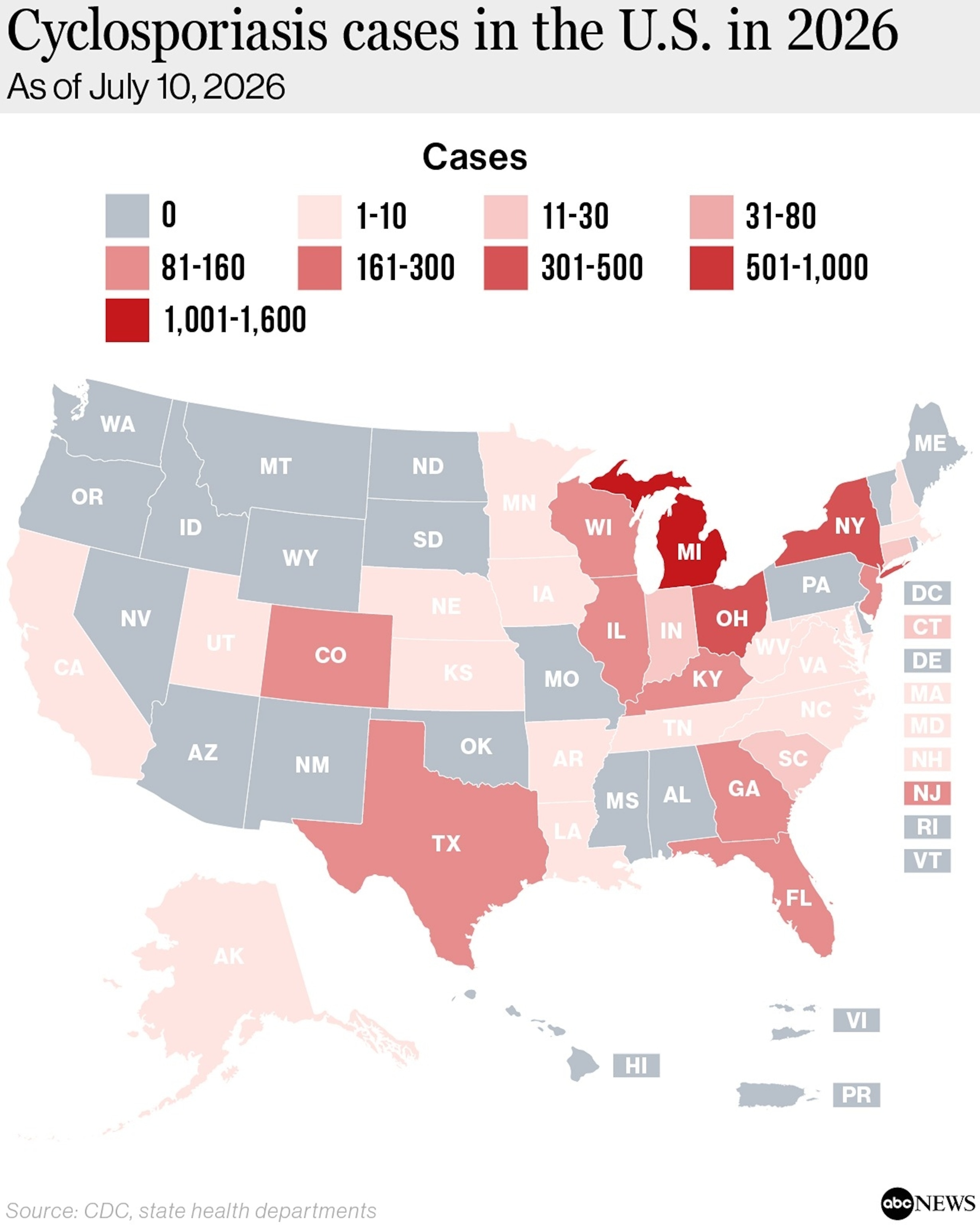
Cyclosporiasis is not the kind of headline most people expect to see dominate summer health news, but it is exactly the kind that should make households pause before the next bite. With cases now confirmed across 32 states, the outbreak is a reminder that a single contaminated ingredient can move through the food system faster than most people can track. For consumers, the problem is not just illness. It is uncertainty: where the contamination started, which foods are affected, and how long it takes public health systems to connect the dots. That lag matters. By the time a pattern becomes visible, thousands of meals may already have been served. For food businesses, hospitals, schools, and families, cyclosporiasis spreading across 32 states is not a niche warning. It is a test of surveillance, supply chain transparency, and basic prevention.
- The outbreak has expanded to 32 states, signaling a broad exposure pattern.
- Cyclosporiasis is often linked to contaminated produce, making traceability critical.
- Symptoms can take time to appear, which delays detection and reporting.
- Prevention still depends heavily on washing produce and monitoring public health guidance.
- The larger lesson is about food safety systems, not just one illness cluster.
Why cyclosporiasis spreading across 32 states matters
The scale is what turns this from a routine health update into a systems problem. When an outbreak reaches 32 states, it usually means the source is not a local kitchen mistake or a single restaurant error. It suggests a contaminated food item moved through distribution networks before health officials could isolate the pattern. That is the hard truth about modern food chains: they are efficient, but they are also vulnerable to small failures that scale quickly.
Cyclosporiasis is caused by the parasite Cyclospora cayetanensis, and it can trigger prolonged gastrointestinal illness. For healthy adults, the infection is miserable. For older adults, children, pregnant people, and anyone with a weakened immune system, the risks are more serious. The broader concern is that outbreaks like this expose how much consumers still rely on invisible safeguards. You cannot see, smell, or taste this parasite. If the produce looks fine, many people assume the food is safe. That is exactly where the danger hides.
When a foodborne illness spreads across multiple states, the real failure is often not the final meal. It is the chain of assumptions that allowed contamination to travel undetected.
How cyclosporiasis spreads
Unlike many stomach bugs people casually call “food poisoning,” cyclosporiasis has a specific parasite behind it. Infection usually happens when someone eats food or drinks water contaminated with parasite oocysts. Fresh produce is a frequent suspect because it is often handled many times before it reaches the table and may be consumed raw. That combination makes leafy greens, herbs, and other high-handling produce especially risky during an active outbreak.
Why produce is often the problem
Produce can be contaminated in the field, during washing, through contaminated water, or later in the supply chain. The issue is not necessarily visible dirt. It is microscopic contamination that survives ordinary handling. This is also why outbreaks linked to produce are so difficult to solve quickly. By the time investigators identify a common ingredient, the product may already be gone from shelves and homes.
That delay creates a public health race against time. Officials depend on patient interviews, purchase records, and genetic or epidemiological patterns to identify a likely source. But if people do not remember what they ate, or if the food came from a meal kit or salad bar, the trail gets even colder.
Symptoms and the delayed warning problem
One reason cyclosporiasis is so tricky is the incubation period. Symptoms may not appear immediately, which means people can keep eating the same contaminated food for days before realizing something is wrong. By then, the exposure may have already affected a household, a workplace, or an entire community.
What to watch for
- Persistent watery diarrhea
- Stomach cramps
- Nausea
- Fatigue
- Loss of appetite
- Possible weight loss
The illness can last longer than many people expect, especially if untreated. And because the symptoms overlap with many other gastrointestinal conditions, some cases may never be reported. That undercount is a major reason outbreaks can look smaller at first and then suddenly seem to explode.
What consumers should do right now
The instinct during an outbreak is to panic, but the smarter move is to reduce exposure and stay alert. Public health officials usually update guidance as investigators identify risky foods or regions. Until there is clarity, the safest approach is disciplined food hygiene and careful attention to symptoms.
Practical protection steps
- Wash hands before preparing or eating food.
- Rinse fresh produce thoroughly under running water.
- Scrub firm produce with a clean brush when appropriate.
- Refrigerate cut produce promptly.
- Throw away food that may have been exposed to a recall or advisory.
- Seek medical advice if gastrointestinal symptoms persist.
Pro tip: rinsing produce is helpful, but it is not a magic shield. If an outbreak is tied to a specific item, the safest choice is to avoid that product entirely, even if it looks and smells normal.
Why public health detection still lags
The modern food system is built for speed, not clarity. Ingredients from multiple farms, processors, and distributors can converge in a single grocery item. That makes recalls harder and slower. It also means outbreak detection often depends on patterns emerging from scattered hospital visits and consumer reports.
This is where public health departments face a brutal balancing act. Move too slowly and the outbreak expands. Move too fast and they risk creating confusion or overbroad warnings that hurt businesses unnecessarily. The best systems are the ones that can detect clusters early, trace supply lines quickly, and communicate clearly without minimizing risk.
Food safety is increasingly a data problem. The faster investigators can connect illness reports to a shared ingredient, the fewer people get sick.
What cyclosporiasis says about the food system
This outbreak is bigger than one parasite. It is a snapshot of how fragile modern food distribution can be when contamination enters early in the chain. Produce is sold fresh, often raw, and often across long distances. That creates enormous convenience for consumers, but it also means contamination can travel widely before anyone notices.
For retailers, restaurants, and food service operators, the message is blunt: traceability is no longer optional. Businesses need ingredient sourcing records, supplier accountability, and rapid response plans that can be activated the moment a public health advisory lands. A slow response can turn a contained problem into a reputational and legal headache.
The business lesson
There is also a financial angle. Outbreaks trigger waste, recalls, customer distrust, and operational disruption. The cost of prevention is usually far lower than the cost of recovery. That includes vendor audits, water safety practices on farms, stronger sanitation standards, and employee training that treats contamination as an everyday operational risk, not an abstract compliance box.
What happens next
As investigators narrow the source, the list of implicated foods may change. That is normal in large multi-state outbreaks. The first warnings are often broad because health officials have incomplete data. Over time, they refine the picture and identify the most likely vehicles of infection. Consumers should expect evolving guidance, not a static answer.
If there is one lesson here, it is that outbreak awareness should be routine, not reactive. People often think food safety begins and ends with a bad restaurant experience. It does not. It depends on the integrity of harvesting water, washing practices, cold storage, transport, and the speed of public communication. When any one of those pieces slips, the result can be illness across dozens of states.
Bottom line: cyclosporiasis spreading across 32 states is a reminder that foodborne illness is not just a personal health issue. It is a supply chain issue, a surveillance issue, and a trust issue. The faster consumers and businesses treat it that way, the better the odds of limiting the next outbreak.
The information provided in this article is for general informational purposes only. While we strive for accuracy, we make no guarantees about the completeness or reliability of the content. Always verify important information through official or multiple sources before making decisions.