Decode the World Cup 2026 Schedule
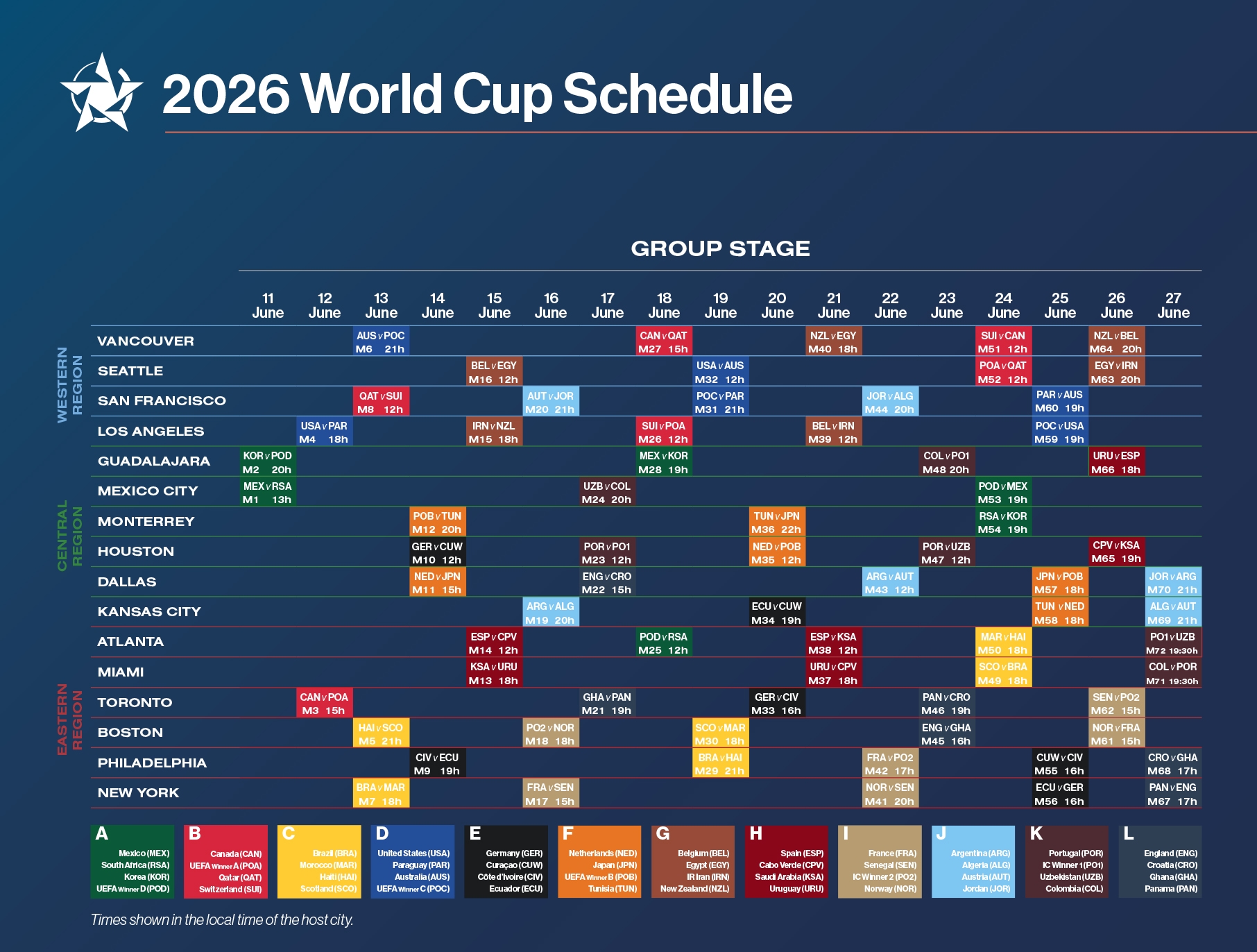
The World Cup 2026 schedule is more than a calendar drop – it is a stress test for modern football. With 48 teams, three host nations, and a tournament footprint stretching across North America, this is FIFA trying to scale the sport’s biggest product without breaking the magic that made it global in the first place. Fans want clarity. Broadcasters want certainty. Teams want recovery time, sane travel, and a format that does not feel like a spreadsheet exercise. That tension is the story.
What makes this edition so compelling is not just the number of matches. It is the fact that every detail – groups, knockout paths, travel logistics, and scheduling rhythm – will shape competitive balance. The expanded field opens the door for more nations and more narratives, but it also raises hard questions about quality, fatigue, and fairness. That is why understanding the structure now matters more than ever.
- World Cup 2026 expands to
48 teamsand104 matches, making it the biggest edition yet. - The tournament uses
12 groups of 4, followed by a larger knockout bracket. - Host duties are split across the
United States,Canada, andMexico, adding major travel complexity. - The schedule is designed to balance global TV demand with player recovery and venue logistics.
- This format could reshape how future international tournaments are built.
Why the World Cup 2026 schedule matters more than ever
At a glance, the schedule looks like a simple fan-service package: more teams, more cities, more games, more drama. But this is a tournament architecture story. FIFA is effectively rebuilding its flagship event around scale. The move from 32 teams to 48 teams means the competition is no longer just bigger – it is structurally different.
That matters because schedules are not neutral. A tournament bracket determines rest days, travel load, preparation windows, and even the psychological pressure of group-stage scenarios. A team that plays across multiple time zones is not having the same tournament experience as one with a tighter geographic run. Likewise, a fan trying to follow the knockout path needs more than host-city hype. They need a format that makes sense.
The real innovation of World Cup 2026 is not expansion alone. It is whether FIFA can make expansion feel coherent.
World Cup 2026 format explained
The core of the World Cup 2026 schedule is the new competition model: 48 teams divided into 12 groups of 4. Each team plays 3 group-stage matches. From there, the top two teams in each group advance, along with the 8 best third-placed teams. That creates a 32-team knockout stage, beginning with a new round often described as the Round of 32.
This is a meaningful departure from recent World Cups. The old setup was compact, brutal, and easier to track. The new one is broader and more forgiving. More teams survive the first phase, which increases hope for emerging nations but reduces some of the do-or-die intensity that made the group stage so compelling.
How the group stage works
Each of the 12 groups functions in familiar fashion. Teams earn points through the standard model: 3 points for a win, 1 point for a draw, and 0 points for a loss. Ranking is decided by points first, then goal difference and other tiebreak mechanisms.
The twist comes after the top two spots. Third place is no longer a soft exit in every case. Instead, several third-placed teams will still progress, which changes how groups may be played tactically. Teams near the margin may approach final group matches with more caution, calculating qualification thresholds instead of chasing outright wins.
What changes in the knockout bracket
Once the group phase ends, the tournament expands into a full 32-team elimination bracket. That means an extra knockout round compared with the 32-team World Cup era. For finalists, the path is longer. The champions will need to survive 8 matches total instead of 7.
That single extra game sounds modest, but in elite football it is not. One more high-intensity match means one more risk event for injuries, suspensions, fatigue accumulation, and tactical disruption. Squads with genuine depth will have a structural advantage.
Host cities and the travel problem
If the format is the intellectual challenge, geography is the operational one. The tournament is spread across three countries: USA, Canada, and Mexico. That gives World Cup 2026 a genuinely continental scale. It also introduces a level of travel complexity that previous editions rarely had to manage.
North America is not a compact host region. Flights between venues can be long, climate conditions can vary sharply, and time-zone changes may affect both recovery and performance. FIFA has tried to organize the schedule in ways that reduce chaos, but there is only so much optimization available when the map is this large.
Why geography could influence results
Travel is not just a convenience issue. It is a competitive variable. Teams with favorable venue sequencing may spend less time in transit, enjoy better sleep consistency, and have smoother training preparation. Others may face repeated relocation, customs coordination, and compressed routines. At tournament level, small advantages compound quickly.
For supporters, there is also a practical side. A cross-border World Cup sounds thrilling until ticket holders realize a realistic travel plan may require multiple flights, separate accommodation strategies, and constant schedule awareness. The event will be bigger than ever, but attending it will demand far more planning.
World Cup 2026 is a football festival built on airline logic as much as sporting logic.
Breaking down the match schedule logic
The schedule itself is designed around multiple masters: stadium availability, local attendance, global TV windows, team rest periods, and the narrative pacing that keeps the tournament feeling like a daily event. FIFA needs headline matchups in prime slots, but it also needs competitive integrity.
That balancing act is harder in a 104-match tournament. More games create more inventory for broadcasters, yet they also risk fan overload. Not every match can be treated as premium content. So the sequencing matters. Opening fixtures, marquee group games, final-round group clashes, and knockout transitions all need to preserve momentum.
What fans should watch for
- Clustered kickoff windows: simultaneous or tightly grouped games may shape qualification drama.
- Rest-day disparities: some teams could enter knockouts with slightly fresher legs.
- Venue sequencing: shorter travel chains may become a hidden competitive edge.
- Late group-stage caution: third-place qualification can change risk-taking behavior.
One pro tip for serious followers: track the bracket path, not just the fixtures. In a tournament this large, understanding who a group winner is likely to face can be almost as important as the group results themselves.
Why expansion is both exciting and risky
There is a strong case for this expansion. More teams means more regions represented, more national audiences emotionally invested, and more pathways for football markets outside the usual power centers. That is good for the sport’s reach and, bluntly, very good for FIFA’s commercial engine.
But expansion is never free. The concern is not simply that there are more games. It is that more games can dilute stakes if the design does not hold tension. The old 32-team format had an elegant severity. Every point mattered immediately. The new model creates more opportunities, but it must work harder to maintain urgency.
There is also the player-welfare angle. Elite football’s calendar is already packed. Clubs and national teams are stretching top players across domestic leagues, continental competitions, and international windows. Adding a larger and longer World Cup intensifies that load, even if squad rotation helps absorb some pressure.
What this means for teams, coaches, and squads
World Cup planning used to center heavily on a starting eleven and a few trusted reserves. That logic is aging out. In 2026, depth could be the defining asset. Coaches will need flexible lineups, recovery management, and multiple tactical identities for different opponents across a longer route.
Three strategic shifts to expect
- More rotation: teams cannot realistically play the same core group at full intensity throughout the event.
- More pragmatic group play: advancing efficiently may matter more than dominating stylistically.
- More emphasis on substitutions: bench quality becomes a tournament weapon, not a luxury.
For analysts and fans, this means evaluating contenders differently. A star-driven side may look dangerous on paper, but a balanced squad with tactical adaptability may be better built for the actual demands of World Cup 2026.
World Cup 2026 schedule and the business of global sport
There is no separating this event from its economic logic. A bigger World Cup means more tickets, more sponsorship inventory, more broadcast windows, and more host-city activation. The schedule is part sporting design and part media product roadmap.
That does not make it cynical by default. Major sports events are commercial systems. The question is whether the commercial growth supports the competition or overwhelms it. So far, World Cup 2026 looks like a bold attempt to do both: broaden access while scaling revenue. If it works, expect this version of the tournament to become the new baseline for football mega-events.
If it struggles, the criticism will be immediate: too many matches, too much travel, too little clarity. That is why the schedule is not a footnote. It is the product.
Why this matters beyond 2026
The expanded World Cup is effectively a prototype for the future of global tournaments. Governing bodies across sport are watching. Can a competition become significantly larger without becoming less legible? Can organizers stretch geography while preserving fairness? Can broadcasters monetize scale without exhausting audiences?
Those are not just football questions. They are modern sports-business questions.
The answer will come from execution. If the World Cup 2026 schedule delivers clear storylines, manageable travel rhythms, and knockout drama that feels earned, this tournament will be remembered as a smart reinvention. If not, it will look like a case study in what happens when growth outruns simplicity.
For now, one thing is clear: this is the most ambitious World Cup ever staged. And whether you are a fan, a coach, a broadcaster, or just someone trying to make sense of the bracket, the format is no longer background information. It is the main event.
The information provided in this article is for general informational purposes only. While we strive for accuracy, we make no guarantees about the completeness or reliability of the content. Always verify important information through official or multiple sources before making decisions.


