Delhi Locks Down Dissent
Delhi Locks Down Dissent
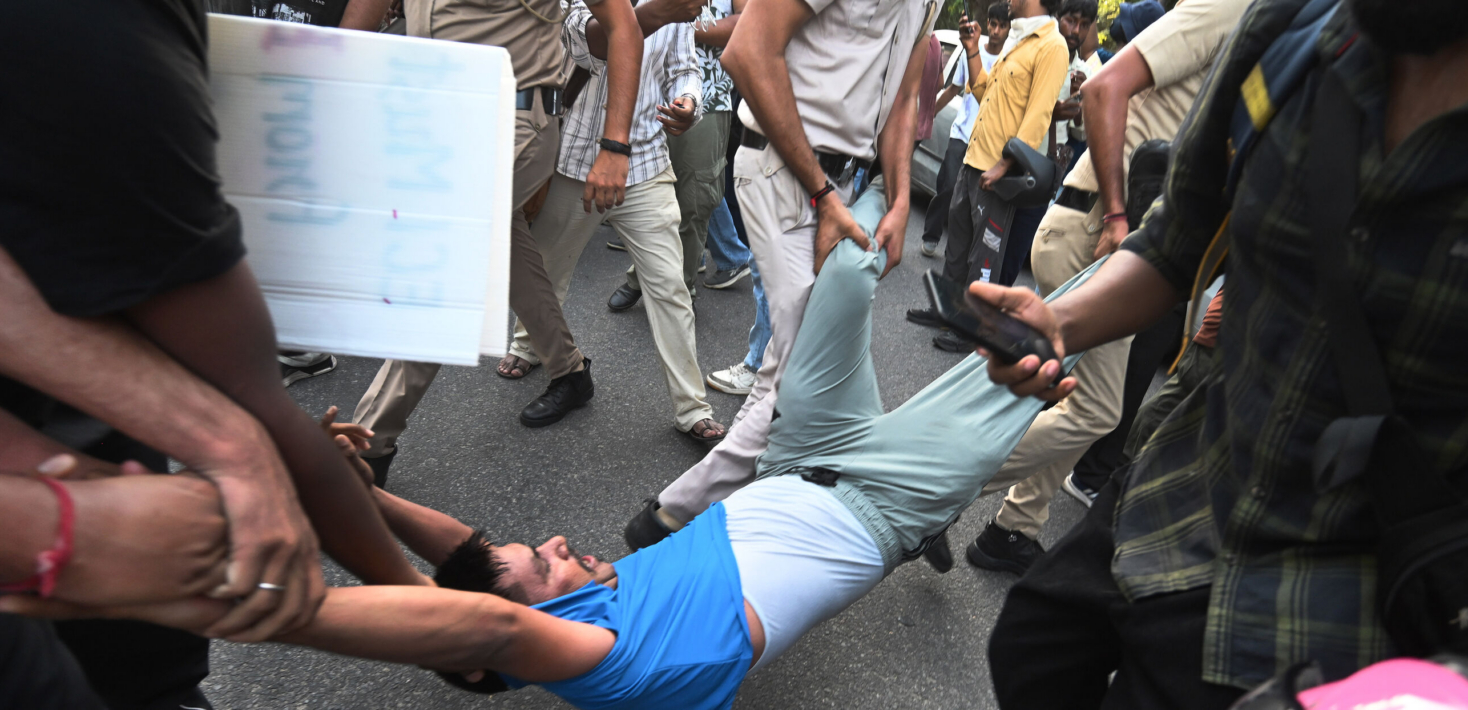
A capital city does not lock itself down unless the people in charge believe the street has become more powerful than the podium. The Delhi protest lockdown reported ahead of planned demonstrations is not just a policing story. It is a warning flare about youth anger, state anxiety, and the increasingly fragile bargain between public order and democratic expression. For residents, the immediate pain is familiar: blocked roads, suspended routines, extra checkpoints, disrupted transport, and a city forced to move at the speed of security orders. But the bigger question is harder to ignore: when a government treats young protesters as a force to be contained before they gather, what does that say about the confidence of the system itself?
- The Delhi protest lockdown signals a shift from reactive crowd control to pre-emptive political containment.
- Youth-led demonstrations are harder to neutralize because they move fast, organize digitally, and often lack a single negotiable leader.
- Security restrictions may prevent immediate disorder, but they can also amplify the grievances they are meant to suppress.
- The stakes extend beyond one protest: India’s democratic credibility depends on how it manages dissent in its most visible city.
Delhi Protest Lockdown Shows the Politics of Pre-Emption
The most revealing part of a lockdown before a protest is timing. Authorities are not responding to chaos already underway. They are attempting to prevent a political moment from forming in public view. That is a very different posture. It turns the city into a managed zone and treats assembly not as a constitutional pressure valve, but as a security risk.
For a capital like Delhi, this is especially significant. Delhi is not merely a municipal space. It is the national stage, the place where protest movements become images, images become narratives, and narratives become political pressure. A march in a distant district can be dismissed as local unrest. A march in the capital can become a national referendum.
The question is not whether the state has a duty to maintain order. It does. The question is whether order is being defined so broadly that dissent itself becomes the disturbance.
This is why lockdowns, barricades, detentions, internet controls, and restrictions on public gathering matter beyond their immediate inconvenience. They are tools of friction. Each one raises the cost of showing up. Each one tests whether anger can survive the logistics of suppression.
Why the Delhi Protest Lockdown Matters Now
The phrase reportedly heard around the planned demonstrations – how can you stop these kids – captures the generational anxiety at the center of the story. Young protesters are not easy targets for old playbooks. They do not always wait for party structures, union chains, or formal permission. They can move through encrypted chats, short videos, campus networks, and neighborhood circles. Their politics can look spontaneous even when it is deeply organized.
That creates a dilemma for governments. If authorities ignore youth-led protests, they risk allowing the movement to grow. If they crack down early, they risk making the movement look morally stronger and the state look afraid. The more visible the lockdown, the more it can validate the protesters’ claim that official power is unwilling to listen.
The Digital Nervous System of Protest
Modern demonstrations are not built only in streets. They are assembled through social media, messaging apps, livestreams, memes, and location-sharing. This changes the balance of power. A barricade can block a road, but it cannot fully block the circulation of an image. A detained organizer may disappear from a protest site, but a clip of that detention can become a recruitment tool within minutes.
That does not mean digital activism automatically wins. States have learned too. They monitor keywords, map networks, restrict connectivity, and flood feeds with counter-narratives. But the contest has become less about whether protest can be stopped and more about who controls the story when stopping it becomes visible.
The State’s Security Argument Is Real but Incomplete
There is a reason authorities reach for restrictions before high-risk protests. Large gatherings can spiral. Rumors can spread. Counterprotesters can appear. Public transport can be overwhelmed. Police can be placed in impossible positions between restraint and escalation. A government that fails to plan for unrest is irresponsible.
But planning is not the same as blanket restriction. Democratic policing requires proportionality: narrow measures, clear communication, legal accountability, and a visible effort to preserve the right to peaceful assembly. When a lockdown feels like a political message rather than a safety measure, public trust erodes quickly.
- Legitimate security planning focuses on specific risks and defined locations.
- Overbroad lockdown tactics disrupt ordinary life and can punish people who are not protesting.
- Transparent orders help citizens understand what is restricted, where, and for how long.
- Accountability mechanisms matter when police powers expand in moments of tension.
The central test is simple: can the state protect the city without converting the city into a sealed political arena?
Delhi Protest Lockdown and the Optics of Fear
Every crackdown has two audiences. The first is domestic: protesters, residents, political rivals, and supporters who want to see strength. The second is global: investors, diplomats, rights groups, and foreign media watching how the world’s largest democracy handles dissent.
For India, the optics are especially consequential. The country sells itself as a rising power with democratic depth, institutional resilience, and a massive youth dividend. But a youth dividend becomes politically volatile when young people believe institutions are closed, jobs are scarce, inequality is entrenched, or expression is punished.
A confident democracy does not need to fear young citizens in the street. It needs to fear the conditions that made the street their best option.
This is where lockdown politics can backfire. The state may win the day by preventing a march, but lose the week if the images of empty roads, heavy police presence, and anxious officials become symbols of overreach. In protest politics, prevention can still produce a spectacle.
What Residents Experience When a Capital Locks Down
For people living in the city, the strategic debate is not abstract. A lockdown can mean missed wages, delayed medical visits, shuttered shops, canceled classes, and hours lost at checkpoints. The burden rarely falls evenly. Office workers may switch to remote work. Daily wage earners cannot. Well-connected residents may navigate restrictions with information and influence. Others meet the full weight of uncertainty.
That social cost should be part of any serious assessment of pre-protest restrictions. Public order is not free. It is paid for by commuters, vendors, students, patients, delivery workers, and families trying to move through a city suddenly redesigned around fear.
Pro Tip for Readers Watching Similar Events
When evaluating any protest lockdown, do not only ask whether violence occurred. Ask what was restricted, who was affected, whether orders were public, whether courts or oversight bodies were involved, and whether peaceful assembly remained possible somewhere. Those details separate responsible crowd management from political suppression.
The Future of Protest Is Younger and Faster
The reported line about stopping kids lands because it recognizes a real shift. Youth movements are often decentralized, emotionally fluent, and media-native. They can frame issues with a speed that formal politics struggles to match. They also tend to be less patient with institutional delay, especially when they view that delay as a tactic rather than a process.
Governments facing this kind of energy have three choices. They can engage early and seriously. They can perform engagement while relying on force behind the scenes. Or they can try to shut the moment down before it matures. The third option may look efficient, but it is rarely durable.
India’s challenge is not unique, but Delhi makes it unusually visible. Across the world, capitals are becoming pressure chambers for young people who feel locked out of economic security and political influence. The tools of control are becoming more sophisticated, but so are the tools of mobilization.
The Bottom Line
The Delhi protest lockdown is bigger than one planned demonstration. It is a snapshot of a deeper contest over who gets to occupy public space, who gets to define security, and how much dissent a democracy can tolerate when the dissenters are young, networked, and unwilling to wait their turn.
Authorities may argue that restrictions are necessary to prevent disorder. Sometimes they are. But the health of a democracy is measured not by how efficiently it empties the streets, but by whether citizens can enter them peacefully and be heard. If the answer to youth anger is always barricades, the message is clear: the system is listening less to voices and more to threats. That is not stability. It is deferred instability with better crowd control.
The information provided in this article is for general informational purposes only. While we strive for accuracy, we make no guarantees about the completeness or reliability of the content. Always verify important information through official or multiple sources before making decisions.