School Safety Demands Answers
School Safety Demands Answers
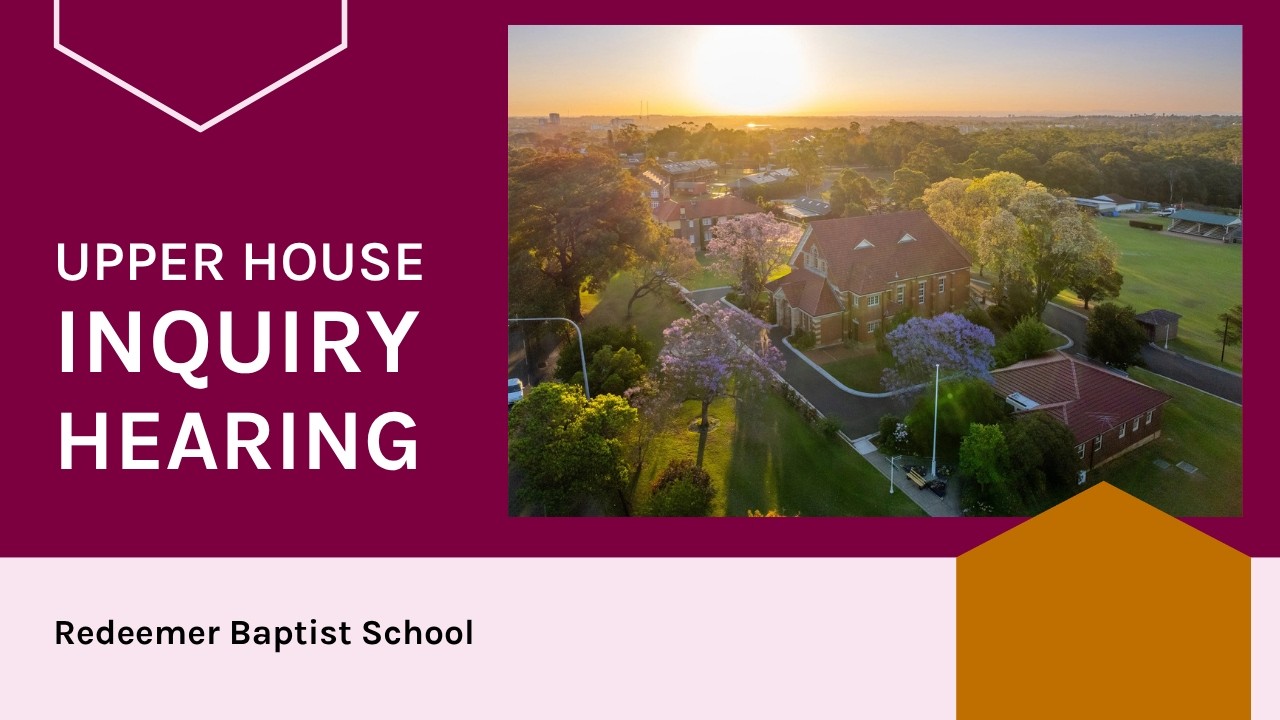
When families hand children over to a school, they are making one of society’s most basic trust transactions. That trust becomes fragile when a report alleges teenagers were placed in situations that blurred basic safeguarding boundaries. The Redeemer Baptist School inquiry, reported by the Guardian, is not just a local controversy. It is a stress test for how private schools manage child protection, excursion rules, staff conduct and institutional accountability when parents are not in the room. The allegations that teens were made to share beds with teachers will land like a shockwave for any parent, but the bigger question is what systems allowed such arrangements to be considered acceptable, documented, ignored or disputed in the first place.
- The Guardian report centers on allegations involving student safety at Redeemer Baptist School.
- The key issue is not only conduct, but governance: policies, reporting lines and oversight.
- Private and faith-based schools face increasing scrutiny over safeguarding standards.
- Parents should expect clear rules on excursions, accommodation, supervision and complaints.
- The Redeemer Baptist School inquiry could influence wider expectations for school accountability.
The Redeemer Baptist School Inquiry Puts Safeguarding Under the Microscope
The Guardian’s reporting describes an inquiry involving Redeemer Baptist School and allegations that teenage students were made to share beds with teachers. Even before any final findings are tested, the nature of the allegations raises a blunt safeguarding question: how could a school environment ever permit arrangements that compromise the basic boundary between adults in authority and children in their care?
Safeguarding is not a vibes-based discipline. It is built from explicit rules, predictable reporting channels and a culture that treats ambiguity as a risk rather than an inconvenience. When students travel, attend camps or stay overnight under school supervision, the standards should become stricter, not looser. The moment a child is away from home, the school’s duty of care intensifies.
Key insight: In child safety, the absence of harm is not proof of a good system. A good system prevents foreseeable risk before anyone has to prove damage occurred.
The most important thing for readers to understand is that inquiries like this rarely hinge on a single question. They ask whether rules existed, whether staff understood them, whether leaders enforced them, whether complaints were taken seriously and whether parents were given enough visibility to make informed decisions.
Why the Redeemer Baptist School Inquiry Matters Beyond One Campus
It would be easy to file this story under local scandal and move on. That would miss the larger point. Schools operate as trust institutions. They are granted unusual access to children’s time, movement, learning, emotional development and personal information. In return, they owe families something more rigorous than good intentions.
The Redeemer Baptist School inquiry lands in an era when parents are far less willing to accept institutional opacity. Across education systems, the old model of deference to school leadership is being replaced by demands for auditable policies, transparent complaint handling and clear child safety protocols.
Faith-based schools face a specific accountability challenge
Faith-based and independent schools often build strong communities around shared values. That can be a strength. It can also create risk if loyalty to the institution is allowed to outrank scrutiny of conduct. The best faith-based schools understand this tension and overcorrect toward transparency. They make child protection policies visible, enforce them consistently and ensure external oversight is not treated as an attack on community identity.
For parents, the question is not whether a school has a mission statement. It is whether the school can show practical safeguards: who supervises children overnight, how rooms are allocated, how staff are trained, how concerns are reported and what happens when a complaint involves a senior figure.
Private education cannot rely on reputation alone
Independent schools often compete on culture, discipline, academic performance and community. But reputation is not a substitute for governance. If a school cannot explain its safeguarding framework in plain language, families should be concerned.
Pro Tip for parents: ask for the school’s policies on overnight accommodation, staff-student boundaries, mandatory reporting, complaints handling and excursion supervision ratios. If the answers are vague, delayed or defensive, that is useful information.
What Strong School Safety Policies Should Make Impossible
Any credible child safety framework should be designed around one principle: prevent foreseeable boundary violations. That means a policy should not merely discourage risky conduct. It should make it operationally difficult for risky conduct to occur unnoticed.
For overnight school activities, baseline expectations typically include separate sleeping arrangements for staff and students, age-appropriate supervision, documented rooming plans, multiple adults present, gender-sensitive arrangements where relevant and a clear escalation path if circumstances change unexpectedly.
- Separate accommodation: staff and students should not share beds, and sleeping spaces should be clearly assigned in advance.
- Documented planning: room allocations, supervision schedules and emergency procedures should be recorded before travel.
- Two-adult safeguards: staff should avoid isolated one-on-one situations with students wherever possible.
- Parent transparency: families should know the nature of accommodation and supervision before giving consent.
- Complaint independence: students and parents should be able to report concerns outside the immediate chain of command.
None of these safeguards are exotic. They are the basic architecture of child protection. The point is not to assume every adult is dangerous. The point is to design systems that do not depend on perfect judgment from every adult at every moment.
The Hardest Question Is Institutional Culture
Policies can look immaculate on paper while culture quietly undermines them. This is where many institutions fail. A school may technically have a child safety policy, a code of conduct and a complaints process, yet still send signals that speaking up is disloyal, disruptive or career-limiting.
Students are especially vulnerable to those signals. They may fear not being believed. They may worry about punishment, embarrassment or social fallout. In a tightly knit school community, the pressure to stay quiet can be intense. That is why safeguarding must be visible, repeated and normalized long before a crisis occurs.
Editorial view: The real test of a school is not whether it can produce a polished policy after scrutiny begins. It is whether a student knew exactly how to raise a concern before the adults realized there was a problem.
For school leaders, that means training cannot be a once-a-year compliance slideshow. Staff need scenario-based instruction. Students need age-appropriate education about boundaries. Parents need honest communication. Boards need to ask uncomfortable questions before journalists, regulators or lawyers do it for them.
What Parents Should Ask After the Redeemer Baptist School Inquiry
Parents do not need to become investigators. But they do have the right to ask direct questions and expect direct answers. The Guardian report is a reminder that trust should be paired with verification, especially when children attend camps, retreats, tours or overnight programs.
Five questions every school should be able to answer
- What are the written rules for staff and student sleeping arrangements during overnight activities?
- Who approves accommodation plans before a trip?
- How are students told what to do if they feel uncomfortable or unsafe?
- Can complaints be made to someone outside the school’s direct leadership structure?
- How does the board monitor child safety compliance?
If a school’s response is to frame these questions as hostile, that is a red flag. Safeguarding questions are not accusations. They are normal due diligence. A confident institution should welcome them because good systems become more credible when they are explained clearly.
Regulators and Boards Need to Treat Child Safety as Core Infrastructure
Education oversight often focuses on curriculum, funding, teacher registration and academic outcomes. Those matter. But child safety is not an add-on. It is core infrastructure, as essential as classrooms, payroll or enrollment systems.
Boards have a particularly important role because they sit above day-to-day school management. They should not wait for controversy before examining whether child protection controls are working. They should receive regular reporting on incidents, complaints, training completion, excursion approvals and policy breaches. They should also test whether students and parents know how to use reporting channels.
That kind of governance is not bureaucratic excess. It is the difference between a policy that exists and a policy that functions.
The Future of School Accountability Will Be More Transparent
The broader trend is clear: parents, regulators and the public are demanding more transparency from institutions that care for children. Schools that treat scrutiny as a threat will struggle. Schools that treat it as a design requirement will build stronger communities.
The Redeemer Baptist School inquiry may become part of a larger shift in how Australian schools, particularly independent and faith-based institutions, communicate safeguarding standards. Expect more pressure for clear excursion protocols, independent complaint pathways, board-level accountability and plain-English parent disclosures.
There is also a technology layer emerging. Schools increasingly use digital consent forms, incident management platforms and centralized compliance tools. Those systems can help, but only if they support a serious safety culture. A digital form cannot replace judgment. A compliance dashboard cannot protect a student if leadership treats warning signs as reputational problems rather than safety signals.
School Safety Is a Trust Contract
The allegations reported by the Guardian are disturbing because they strike at the center of the school-family relationship. Parents cannot supervise every excursion. They cannot inspect every accommodation plan. They cannot know every interaction between staff and students. That is precisely why schools must operate with rules that are stronger than trust alone.
The lesson is not panic. It is accountability. Schools should be able to prove that their systems protect children, empower students and withstand scrutiny. Families should feel entitled to ask how those systems work. Regulators and boards should insist that safeguarding is not merely promised, but practiced.
The final measure of any school is not its branding, its values statement or its exam results. It is whether children are safe when adults have power and parents are absent. On that standard, every school should be ready to answer hard questions.
The information provided in this article is for general informational purposes only. While we strive for accuracy, we make no guarantees about the completeness or reliability of the content. Always verify important information through official or multiple sources before making decisions.