Ebola Mutation Alarm Spreads
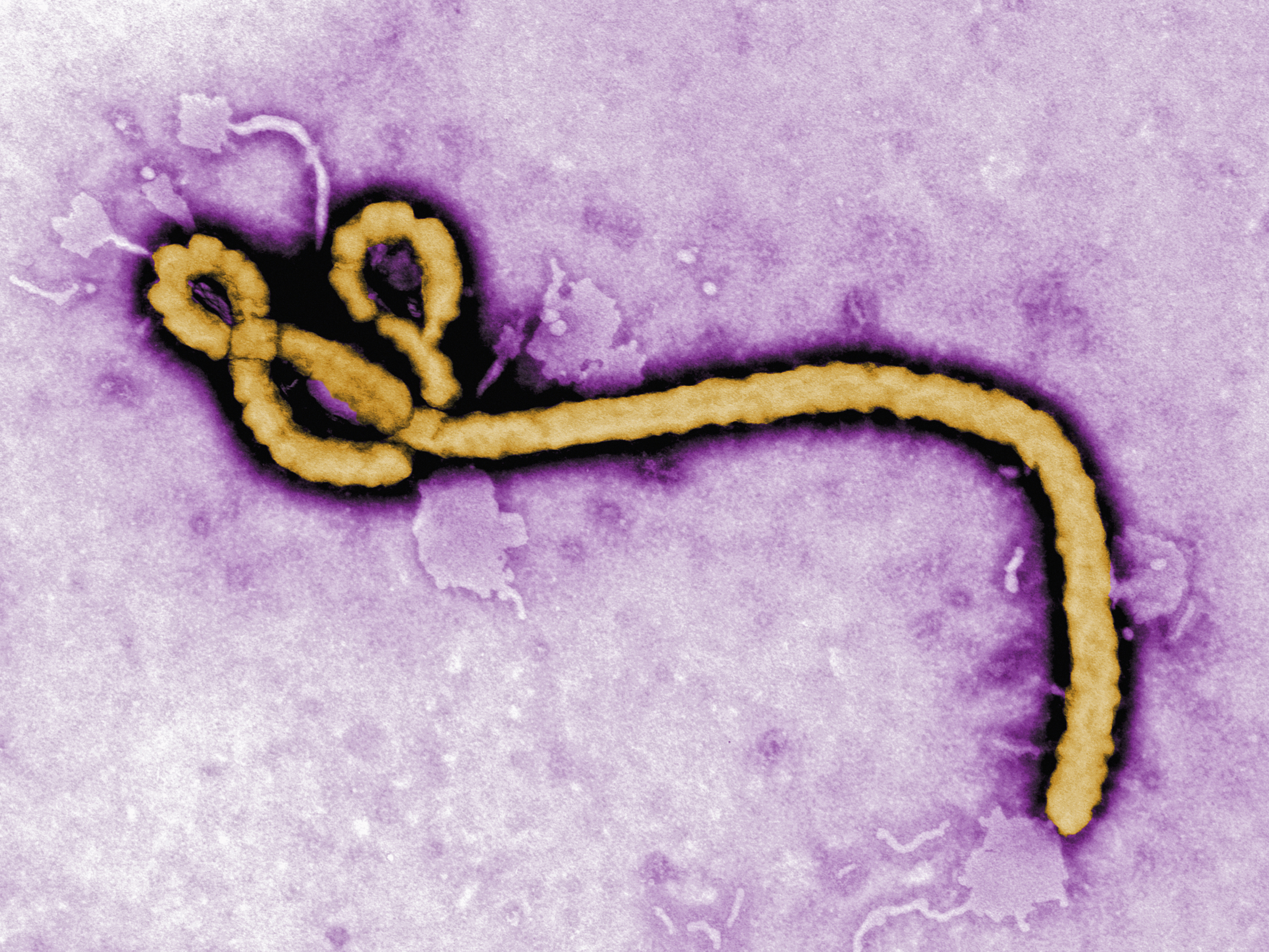
Ebola Mutation Alarm Spreads
The latest warning out of the Democratic Republic of Congo is the kind of headline that makes public health officials sit up straight. Ebola is not just resurfacing as a familiar threat. It is reportedly mutating, which changes the conversation from containment to adaptation. That matters because the difference between a controlled outbreak and a regional crisis can come down to how quickly scientists detect viral shifts, update diagnostics, and keep treatment protocols aligned with what is actually circulating on the ground. For anyone watching global health, this is not a distant field note. It is a stress test for surveillance systems, vaccine strategy, and emergency logistics at the exact moment the world can least afford complacency. The question is no longer whether Ebola remains dangerous. It is whether our response infrastructure can keep pace when the virus changes the rules.
- Fresh mutation concerns in the DRC are raising the stakes for Ebola surveillance and response.
- Genetic change can complicate diagnostics, contact tracing, and vaccine planning.
- Public health systems need faster sequencing, sharper data sharing, and better field logistics.
- The bigger issue is not panic, but whether outbreak tools can adapt in real time.
Why the Ebola mutation story matters now
When an outbreak report includes the word mutation, the alarm is not about science fiction. It is about operational risk. Viruses mutate as a matter of biology, but not every mutation changes behavior in a meaningful way. Some shifts are noise. Others can alter how a virus spreads, how severe disease becomes, or how well existing tests and countermeasures work. The fact that this conversation is happening in the DRC is especially important because the country has long been a frontline for Ebola response, often with limited infrastructure, difficult terrain, and insecurity that complicates field operations. That combination turns even a manageable outbreak into a logistical puzzle.
What makes the current situation worth attention is not just the virus itself, but the broader pressure test it creates. Can labs sequence samples quickly enough? Can health workers keep up with contact tracing when transmission patterns evolve? Can vaccine stockpiles and treatment protocols be adjusted before local spread becomes wider regional concern? Those are not theoretical questions. They are the difference between a contained flare-up and a crisis that forces international agencies into catch-up mode.
“The real danger is not mutation by itself. It is mutation combined with slow detection, weak surveillance, and delayed response.”
The Ebola mutation challenge in the DRC
Ebola outbreaks are never just a biomedical problem. They are a systems problem. In the DRC, public health teams typically have to operate across a mix of dense communities, remote villages, and areas where transportation is unreliable. Add community mistrust, limited communications, and the occasional collapse of local services, and you get the exact conditions in which a mutated strain can quietly exploit gaps.
Mutation concerns also raise a practical issue: how much of the outbreak picture is known, and how much is inferred? Early in any event like this, the data can be incomplete. Samples may be sparse. Sequencing may lag behind transmission. Field teams may see patterns that look unusual before labs can confirm why. That gap between observation and confirmation is where misinformation tends to grow, and where authorities can lose credibility if messaging is vague or overconfident.
What mutation could change
In epidemiological terms, a meaningful mutation could affect several things:
- Transmission dynamics if the virus becomes more efficient at moving between hosts.
- Diagnostic accuracy if existing tests are less sensitive to the new sequence.
- Clinical outcomes if disease severity shifts in either direction.
- Immune escape if antibodies from vaccination or prior exposure become less effective.
That does not mean all of those outcomes are happening at once. But public health planners have to think in scenarios, not headlines. A mutation report is really a prompt to ask what systems are in place if the worst plausible version of the virus begins to emerge.
Why surveillance is the real frontline
Modern outbreak control depends on speed. Not just speed in treating patients, but speed in noticing that something has changed. That is why sequencing capacity matters so much. Genetic surveillance can help determine whether cases are linked, whether the outbreak is growing through new chains of transmission, and whether the virus is diverging in a way that requires updated tools.
For Ebola, this is especially critical because the response playbook relies on early isolation, ring vaccination, safe burials, and rapid tracing of contacts. If the virus begins spreading in ways that are harder to catch, the whole system becomes less reliable. That is why laboratories, field epidemiologists, and local health teams are all part of the same defensive line.
Pro tip for public health systems
One of the most effective outbreak investments is not flashy equipment. It is resilient data flow. That means sample transport, lab turnaround, case reporting, and field communications all need to work together. If one layer stalls, the rest of the response slows down with it. In Ebola response, minutes and hours matter more than press conferences.
What this means for vaccines and treatments
The word mutation often triggers immediate concern about whether vaccines still work. That is understandable, but it is also where nuance matters. Ebola countermeasures are not the same as those for fast-evolving respiratory viruses. Some vaccines and treatments remain effective even as variants shift, but that confidence depends on the nature of the mutation and how far it changes the virus’s surface proteins or behavior.
Public health agencies will want to know whether the current strain still fits the assumptions built into existing vaccine deployment and treatment access. If the answer is yes, the response can stay largely operational. If not, the response becomes more technical, more urgent, and more expensive. Either way, stockpiling medicine is only part of the picture. Delivery matters. Cold chain matters. Trust matters. Training matters.
“A vaccine only protects people if it can reach them, be accepted by them, and remain matched to the threat they face.”
How the outbreak could evolve from here
The most likely near-term path is not a Hollywood-style escalation. It is a race between transmission and containment. If health workers can isolate cases, trace contacts, and sequence samples quickly, the mutation concern may end up being a scientific footnote rather than a turning point. But if the virus is spreading in hard-to-reach areas, or if distrust keeps people from seeking care early, the mutation story becomes more consequential.
There are three broad scenarios to watch:
- Contained variation: the mutation exists, but does not materially change the outbreak response.
- Operational complication: diagnostics, tracing, or vaccine confidence become harder, even if severity stays similar.
- Biological shift: the virus changes in a way that meaningfully alters spread or immune response.
Public communication should avoid jumping to the third scenario without evidence. But planners cannot afford to ignore it either. Preparedness means treating a low-probability, high-impact outcome seriously enough to be ready, without amplifying fear.
What readers should watch next
There are a few signals that will reveal whether this becomes a major story or a contained one. First, look for updates on sequencing findings. If the mutation is limited and does not appear linked to faster spread or worse outcomes, that is reassuring. Second, monitor whether cases remain geographically clustered or begin crossing into new areas. Third, watch whether local and international health agencies keep communication disciplined and specific. Vague reassurance is a red flag. Clear, measured updates are what you want from an outbreak response.
It is also worth watching whether neighboring countries increase readiness. In a region where borders can be porous and health systems uneven, Ebola does not respect administrative lines. Preparedness across the region is often the difference between a national emergency and a broader one.
Why this matters beyond the DRC
It is tempting to file this under faraway health news, but that would miss the larger lesson. Every Ebola outbreak exposes how fragile the global biosurveillance system still is. Mutation concerns make that fragility more visible. If a virus can shift while response teams are still assembling the basic facts, then the issue is not just Ebola. It is whether the world has built health infrastructure that can absorb biological surprises without collapsing into panic.
That has implications for funding, technology, and political will. Better sequencing labs. Faster sample-sharing agreements. Stronger community outreach. Smarter vaccine logistics. More support for local health workers who are usually the first and last line of defense. These are not optional upgrades. They are the baseline for a world where outbreaks will keep testing human institutions.
The unsettling truth is that mutation is normal, but preparedness is not. Ebola in the DRC is once again reminding everyone that the virus is only part of the story. The rest is whether we can see it soon enough, understand it fast enough, and respond well enough to stop the next headline from becoming the next disaster.
The information provided in this article is for general informational purposes only. While we strive for accuracy, we make no guarantees about the completeness or reliability of the content. Always verify important information through official or multiple sources before making decisions.