Ebola Protests Ignite Congo Crisis

Ebola Protests Ignite Congo Crisis
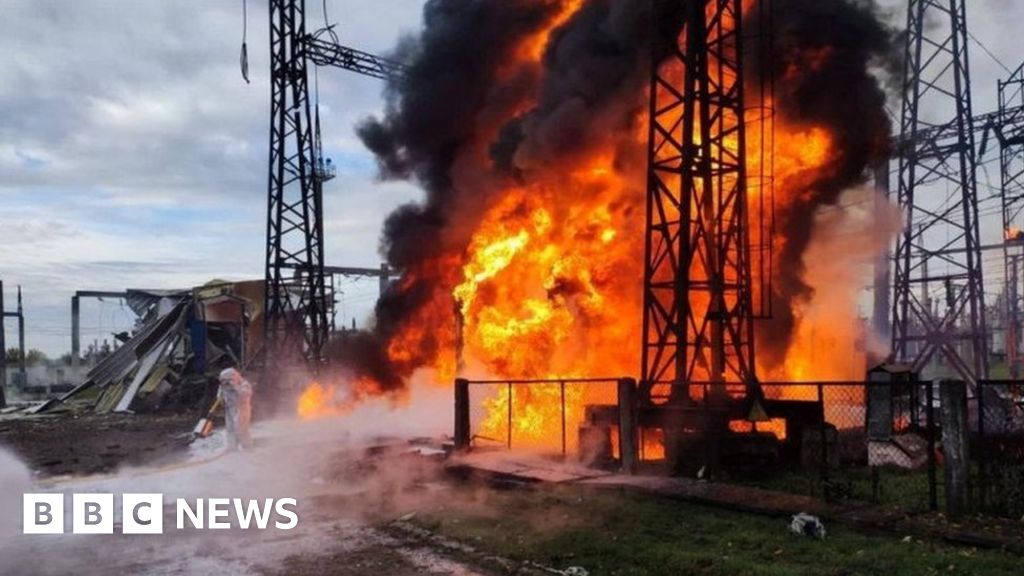
Ebola protests in Congo are not just another flashpoint in a fragile region – they are a warning about what happens when public health, politics, and public mistrust collide at the worst possible moment. When an Ebola treatment clinic is attacked or burned, the damage goes far beyond a single building. Patients disappear, contact tracing breaks, frontline workers retreat, and a virus that depends on confusion gets exactly what it needs. That is the real stakes here. This is not only a story about disease containment. It is about legitimacy, fear, and whether governments and health systems can protect people who no longer believe they are being protected.
The immediate shock is obvious. The deeper problem is harder to fix: once communities view an outbreak response as foreign, coercive, or politically contaminated, every ambulance, checkpoint, and health team can look like a threat instead of a lifeline.
- Ebola protests in Congo reveal how quickly outbreak control can unravel when public trust collapses.
- Attacks on clinics disrupt treatment, surveillance, vaccination, and contact tracing all at once.
- Political instability and misinformation can turn a health emergency into a security crisis.
- Long-term containment depends as much on community legitimacy as on medicine and logistics.
When an Ebola clinic burns, the outbreak response burns with it
The destruction of an Ebola treatment site is not symbolic damage – it is operational damage. These clinics are core infrastructure for isolating suspected cases, treating confirmed patients, protecting healthcare workers, and coordinating data collection in real time. Remove that node and the whole system weakens.
In practical terms, the consequences arrive fast. Suspected patients may avoid care entirely. Confirmed patients may flee or become harder to monitor. Medical records can be lost. Vaccination rings around confirmed cases can break down. Teams that were already stretched thin may suspend movement because security risks outweigh mission goals.
That chain reaction matters because Ebola control is brutally time-sensitive. Every delay in identifying a case creates new chances for transmission. Unlike slower-moving public health failures, an outbreak can punish institutional hesitation almost immediately.
A clinic attack during an Ebola response is not a side story – it strikes at the architecture of containment itself.
Why Ebola protests in Congo keep becoming more than a health story
Outbreak reporting often focuses on case counts, mortality rates, and international response teams. Those are essential, but they can obscure the political reality on the ground. Ebola protests in Congo resonate because they emerge from deeper grievances: weak state presence, insecurity, distrust of authorities, and suspicion that outside actors benefit from crisis while ordinary people absorb the risk.
That dynamic is especially dangerous in regions where armed conflict, displacement, and poor public services have already eroded confidence. If people experience the state primarily through force, neglect, or corruption, they are less likely to trust emergency health directives delivered under pressure. Even a scientifically sound intervention can fail socially if it is not seen as legitimate.
The trust deficit is a force multiplier
Public health systems rely on consent more than many policymakers admit. Isolation protocols, safe burials, vaccination campaigns, and exposure reporting all require communities to cooperate with institutions. If that social contract is broken, technical excellence is not enough.
Trust failures tend to multiply:
- Patients hide symptoms to avoid removal or stigma.
- Families resist burial protocols seen as disrespectful or imposed.
- Rumors spread faster than verified guidance, especially where institutions lack credibility.
- Health workers become targets because they are visible representatives of contested authority.
This is why outbreak response teams increasingly need anthropologists, local mediators, faith leaders, and community networks alongside clinicians and epidemiologists. The work is not just medical. It is relational.
Misinformation thrives in the vacuum
Whenever institutions fail to explain risk clearly and consistently, other narratives rush in. People may believe treatment centers are places where patients go to die, or that responders are inflating case numbers for money or political control. Those beliefs can sound irrational from a distance, but in environments shaped by trauma and exclusion, they often fit a lived experience of broken accountability.
The modern lesson is clear: information strategy is outbreak strategy. Even without high-tech disinformation machinery, fear can organize itself quickly through local rumor networks, radio chatter, messaging apps, and street-level political mobilization.
The fragile mechanics of Ebola containment
Ebola containment is not a single intervention. It is a tightly linked system. Break one part and the rest begins to strain.
Case isolation and treatment
Patients need access to secured facilities where they can be diagnosed, monitored, and treated without exposing families and neighbors. If clinics are attacked, burned, or abandoned, that safe channel collapses. More people remain in the community while infectious.
Contact tracing
Contact tracing requires responders to identify everyone who had meaningful exposure to a confirmed case, then monitor them for symptoms. This process is labor-intensive and deeply dependent on trust. If families scatter after violence or refuse to cooperate, contact chains become incomplete.
Vaccination rings
One of the most effective tools in Ebola control is ring vaccination: vaccinating contacts and contacts of contacts around a confirmed case. But ring vaccination only works when responders can accurately map social networks and move safely through affected areas. Security disruptions can turn a targeted strategy into a patchwork one.
Safe burials
Ebola can spread through handling bodies, which makes burial practice one of the most sensitive and consequential parts of response. Safe burial teams must balance infection prevention with cultural and religious respect. If communities feel stripped of dignity, resistance can harden fast.
Why this matters beyond one clinic
It would be a mistake to treat this incident as isolated local unrest. What happened points to a larger truth about global health security: outbreak readiness is only as strong as the public institutions carrying it. You can fund vaccines, deploy emergency teams, and stockpile protective equipment, but if local legitimacy is absent, those assets lose force at the moment they matter most.
This has implications well beyond Congo. The same pattern has shown up across multiple crises: communities resist interventions they perceive as extractive, opaque, or politically manipulated. Disease control then becomes entangled with elections, armed violence, ethnic tension, or anti-elite anger. The outbreak stops being only a biological event. It becomes a contest over power and trust.
Viruses exploit biological vulnerability. Outbreaks exploit institutional vulnerability.
What authorities and responders need to do differently
There is no quick fix after a clinic attack, but there are strategic lessons that should shape the response.
Lead with local legitimacy
Community health response cannot be designed as a top-down security exercise. Authorities need trusted local voices out front: neighborhood leaders, clergy, survivors, local clinicians, and civil society figures who can explain why treatment and tracing matter. Technical teams should support that legitimacy, not substitute for it.
Protect infrastructure without militarizing care
Security is necessary, especially when facilities and workers are under threat. But over-militarizing treatment centers can intensify fear and reinforce perceptions that public health is coercive. The challenge is building credible protection that does not transform care into occupation.
Communicate with operational honesty
People are more likely to trust unpleasant truths than polished vagueness. Officials should clearly explain what is known, what is uncertain, and what the immediate risks are. Mixed messaging fuels suspicion. Consistency matters as much as speed.
Build response systems that survive disruption
Health systems in volatile regions need redundancy. That means decentralized data capture, mobile care capacity, flexible vaccination teams, and contingency planning if a fixed treatment center goes offline. In technical terms, resilience matters as much as efficiency.
A simple operational mindset might look like this:
if clinic_status == "offline": deploy_mobile_teams(); secure_records(); re-map_contacts(); activate_local_mediators();
That is not software guidance so much as a planning truth: when one node fails, response systems need immediate fallback pathways.
The harder question is political, not medical
The easiest takeaway is that protesters harmed a critical health response. That is true, but incomplete. The harder and more useful question is why communities become willing to attack the very systems meant to help them. Public anger does not emerge in a vacuum. It builds where institutions are absent until crisis, where services are inconsistent, and where people experience intervention as something done to them rather than with them.
This does not excuse violence against clinics or staff. It does explain why purely biomedical solutions routinely fall short in conflict-affected settings. If authorities want durable outbreak control, they have to treat civic trust as core infrastructure. Not as public relations. Not as a side program. As infrastructure.
The broader signal for global health
For international observers, the event should puncture a persistent illusion: that outbreak response is mainly a question of supplies, protocols, and emergency funding. Those matter, but they are only one layer. The deeper challenge is governance under stress. Can institutions move quickly without becoming predatory? Can they enforce necessary safety measures without losing social consent? Can they show up as reliable before the emergency, not just during it?
Those questions determine whether communities cooperate, hesitate, or resist. And in an Ebola outbreak, hesitation can be enough to change the trajectory.
Ebola protests in Congo are therefore more than a regional crisis headline. They are a stress test for every public health system that assumes science alone can carry trust. It cannot. Medicine can treat patients. Vaccines can slow transmission. But only legitimate institutions can persuade frightened communities to stay inside the response instead of turning against it.
That is the uncomfortable lesson: the clinic may have burned in one place, but the vulnerabilities it exposed are global.
The information provided in this article is for general informational purposes only. While we strive for accuracy, we make no guarantees about the completeness or reliability of the content. Always verify important information through official or multiple sources before making decisions.