Education Department Dismantling Hits Reality
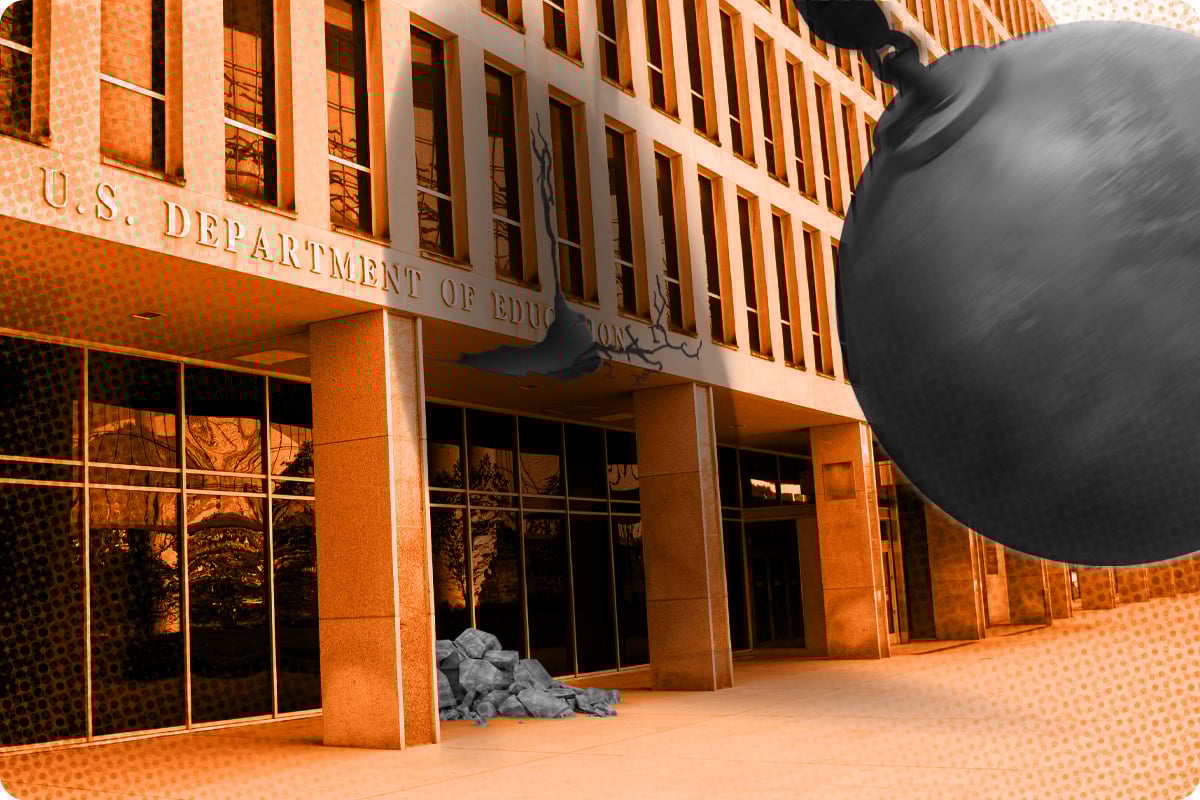
The Education Department dismantling effort has moved from campaign-trail abstraction to operational reality, and the stakes are no longer theoretical. For families waiting on aid, borrowers navigating repayment, districts counting on federal dollars, and students protected by civil rights enforcement, the question is not whether Washington can shrink an agency. It is whether the government can keep the education system’s most fragile machinery from grinding down while it does. The department has always been smaller than its political symbolism suggests, but it sits at the center of funding, oversight, student lending, and accountability. Pulling it apart is not like deleting a line item from a spreadsheet. It is closer to rewiring a live power grid while schools, colleges, and households are still plugged in.
- The Education Department dismantling push is testing the limits of federal capacity, not just ideology.
- Student loans, civil rights enforcement, special education, and school funding are the biggest pressure points.
- States may gain flexibility, but many lack the infrastructure to absorb federal responsibilities quickly.
- The real impact will show up in delays, uneven enforcement, and widened gaps between wealthy and poor communities.
Education Department dismantling collides with the machinery of government
The political case for shrinking or dismantling the department is familiar: education is local, Washington is bureaucratic, and federal mandates often arrive with paperwork that districts resent. That argument has real traction because schools do not experience federal policy as an abstraction. They experience it through compliance forms, grant conditions, reporting deadlines, and sometimes slow-moving help desks.
But the counterargument is just as practical. The department does not run America’s schools. It does not write most curricula, hire most teachers, or set most classroom schedules. Its power comes from money, enforcement, data, and the federal student aid system. Remove the structure too quickly and the most immediate effect is not liberation. It is uncertainty.
Key insight: The department is politically loud but administratively lean. That makes dismantling it less like cutting bureaucracy and more like removing a load-bearing beam from a crowded building.
Federal education policy is a maze of programs with legal obligations attached. Title I sends money to schools serving low-income students. IDEA supports students with disabilities. FAFSA unlocks college aid. OCR investigates discrimination complaints. PSLF, IBR, and other repayment programs shape the financial lives of millions of borrowers. None of these functions disappear just because a department is downsized. They have to be moved, reinterpreted, outsourced, or neglected.
What the Education Department dismantling effort changes first
The earliest consequences are usually not dramatic headlines. They are queues. Processing queues. Complaint backlogs. Delayed guidance. Conflicting answers from federal contractors. Schools and borrowers may not notice a missing office on day one, but they notice when a grant award is late, a civil rights complaint sits untouched, or a loan servicer cannot explain which rule applies.
Student loans become the stress test
The federal student loan portfolio is one of the most complex consumer finance systems in the country. It depends on servicers, databases, eligibility rules, income verification, appeals, forgiveness processing, and constant policy updates. If staffing is cut or oversight is fragmented, the borrower experience deteriorates fast.
This matters because borrowers are already operating in a low-trust environment. Years of repayment pauses, court fights, policy reversals, and servicer transitions have made the system feel unstable. Dismantling the department without a clean operational handoff risks turning confusion into default, and default into damaged credit, wage garnishment, and long-term financial drag.
Pro Tip for borrowers: Keep copies of payment histories, income recertification notices, forgiveness counts, and servicer messages. In a disrupted system, your own records can become the fastest path to resolving errors.
Civil rights enforcement gets quieter
The Office for Civil Rights is not just a symbolic office. It is where families and students go when they believe a school has failed to address discrimination based on disability, race, sex, national origin, or other protected categories. Weakening that function changes the balance of power between institutions and individuals.
Some critics argue that federal civil rights enforcement has become too expansive or politicized. But even skeptics should care about process. If enforcement is scaled back without a credible replacement, families with fewer legal resources are the least able to push back. Wealthier families can hire attorneys. Lower-income families often depend on the federal complaint process as their only realistic remedy.
Editorial view: A smaller federal footprint may sound neutral, but in education it often shifts the burden from agencies to parents. That is not deregulation for everyone. It is privatized enforcement for those who can afford it.
Why states may not be ready for the handoff
The cleanest version of the dismantling argument assumes states can take over. In theory, that sounds coherent. In practice, state education agencies are not sitting around with surplus staff, spare technology systems, and idle legal teams waiting to inherit federal responsibilities.
Many state agencies already struggle with teacher shortages, data modernization, assessment administration, school accountability, and budget uncertainty. Asking them to absorb more oversight while federal support shrinks could produce a patchwork where students’ rights and resources depend even more heavily on geography.
Flexibility can become fragmentation
There is a real upside to state flexibility. States may tailor programs more closely to local needs, reduce redundant reporting, and experiment with models that Washington would move too slowly to approve. But flexibility without guardrails can harden inequality.
A wealthy state with strong administrative capacity can redesign programs, build new portals, and support districts through transition. A poorer state may struggle to keep up. The result is not simply less federal control. It is a national education map where the distance between best-case and worst-case systems grows wider.
- Districts with strong grant offices will adapt faster to changing requirements.
- Rural and under-resourced districts may lose capacity as rules shift and support thins.
- Students with disabilities could face more inconsistent service enforcement under
IDEA. - College applicants may see aid uncertainty if
FAFSAoperations are disrupted.
The politics are simple, the execution is not
The Department of Education has long been a favorite target because it represents something larger than its headcount. To supporters, it is a guarantor of fairness and national investment. To opponents, it is federal overreach packaged as benevolence. That makes the politics emotionally clean. The execution is anything but.
Congress created many of the department’s core responsibilities through statute. A president or administration can reorganize, downsize, redirect priorities, and slow enforcement, but eliminating major functions often requires legislative action. That legal reality creates a gray zone: an agency may remain alive on paper while its capacity is reduced in practice.
This is where dismantling becomes harder to measure. The department can miss targets without officially abandoning them. It can narrow interpretations of civil rights law without repealing protections. It can move programs to other agencies while degrading expertise. It can keep a website online while the humans behind the system disappear.
Education Department dismantling will shape the next decade
The biggest misconception is that this fight is only about bureaucracy. It is really about who absorbs risk. If the federal role shrinks, risk shifts to states, districts, colleges, families, and borrowers. Some will manage that risk well. Others will be overwhelmed by it.
For schools, the future may involve more uncertainty around grant timing and compliance expectations. For colleges, it may mean more volatility in aid processing and accountability rules. For borrowers, it may mean a repayment system where errors become harder to fix. For parents, it may mean fewer federal channels when local systems fail.
There is a version of reform that could work: simplify federal programs, modernize FAFSA, reduce paperwork, preserve civil rights capacity, protect special education funding, and make loan servicing transparent. But that is not the same as dismantling. Reform requires operational discipline. Dismantling often rewards speed.
Why this matters: The success or failure of this project will not be judged by how many offices close. It will be judged by whether students still get services, families still get answers, and borrowers still get a fair process.
The bottom line
The Education Department dismantling push is a stress test for a country that often wants government to be smaller and more competent at the same time. That combination is possible, but only with serious planning, transparent handoffs, and a commitment to preserving the functions that protect vulnerable students and families.
If the goal is accountability, modernization, and less red tape, there is a credible debate to be had. If the goal is simply to weaken the federal role and let the consequences scatter across fifty states, the costs will not fall evenly. They will land first on the people with the least time, money, and institutional power to navigate chaos.
The department may be politically unpopular in some circles, but the systems attached to it are deeply embedded in American life. Taking it apart is easy to promise. Making sure the country does not lose essential protections in the process is the hard part.
The information provided in this article is for general informational purposes only. While we strive for accuracy, we make no guarantees about the completeness or reliability of the content. Always verify important information through official or multiple sources before making decisions.