Venezuela UNGA Pivot Exposes Power Play
Venezuela UNGA Pivot Exposes Power Play
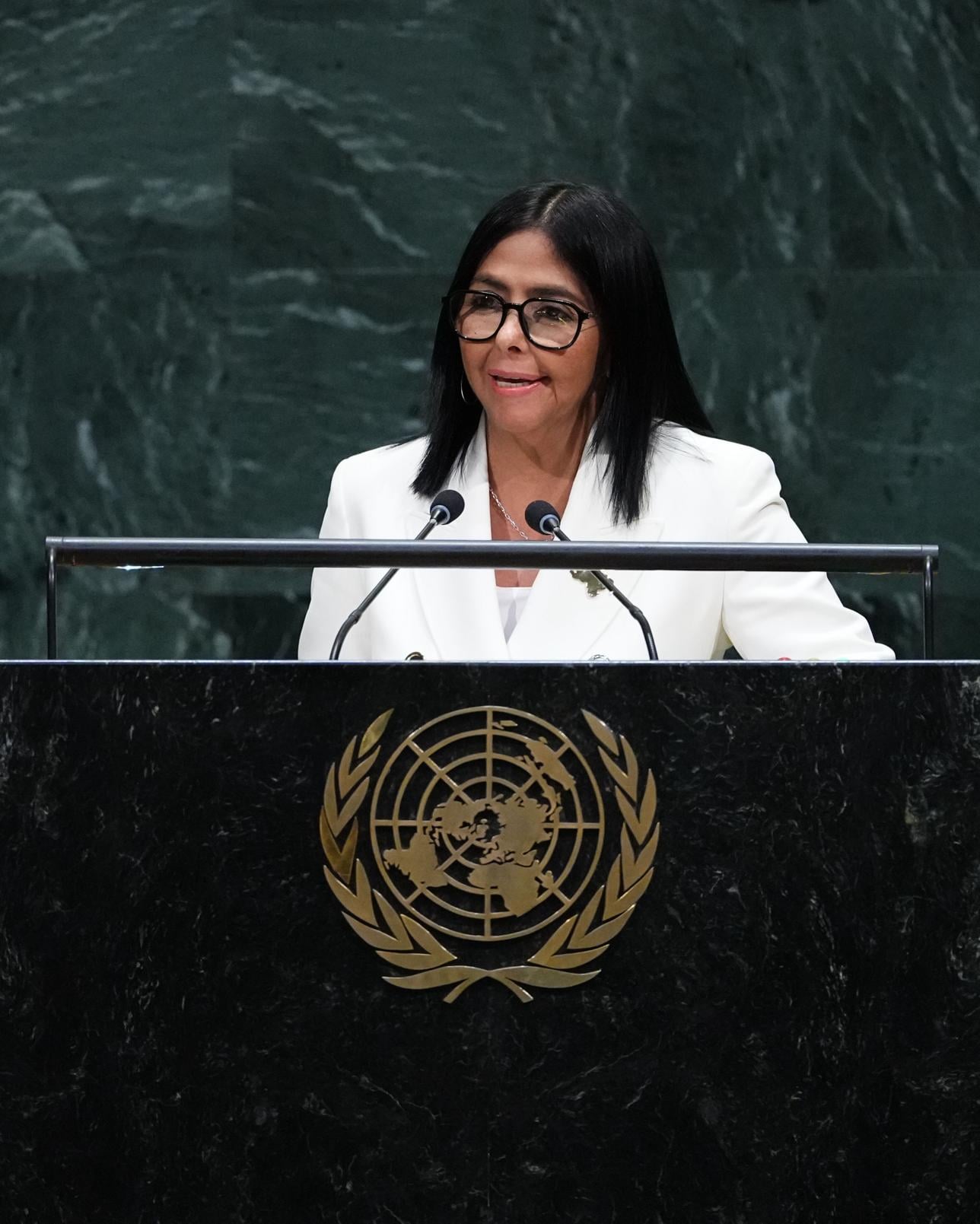
Venezuela UNGA diplomacy rarely moves in a straight line, but Delcy Rodriguez’s sudden about-face around the United Nations stage feels less like a scheduling quirk and more like a signal flare. For Venezuelans exhausted by inflation, migration, repression, and political theater, the question is not whether another elite maneuver happened. It is who benefits when the ruling circle recalibrates in public. The answer matters because Venezuela’s crisis is no longer just a domestic standoff between government and opposition. It is a contest over oil access, sanctions relief, international legitimacy, and the future architecture of power in Caracas. Rodriguez’s posture suggests a regime reading the room: Washington wants leverage, investors want stability, and Maduro’s inner circle wants survival. That combination can produce negotiation, but it can also produce a spoils system dressed up as diplomacy.
- Delcy Rodriguez’s shift points to a broader struggle over legitimacy, not just a one-off diplomatic move.
- Oil and sanctions remain the central currencies in Venezuela’s political bargaining.
- The opposition’s weakness gives the ruling elite more room to negotiate from a position of control.
- Venezuela UNGA messaging is aimed as much at foreign power brokers as at citizens at home.
- The biggest risk is a transition that rewards insiders while leaving democratic accountability behind.
Venezuela UNGA Diplomacy Is Really About Leverage
The United Nations General Assembly is often dismissed as a parade of speeches, motorcades, and carefully worded statements. For governments under pressure, however, UNGA is a marketplace of legitimacy. Leaders and envoys use it to test alliances, float messages, and show that they still belong in the club of sovereign decision-makers.
That is why Rodriguez’s reversal matters. She is not a peripheral figure. She is a core operator in the Venezuelan power structure: a face of the government’s international strategy, a defender of the ruling project, and a political actor whose presence or absence is read for clues. When someone like that changes course, the move is not merely personal. It becomes strategic communication.
The real message is not simply whether Rodriguez attends a global forum. The message is that Venezuela’s ruling elite still believes it can bargain with the world on its own terms.
This is the key to understanding the moment. Caracas does not need universal approval. It needs enough diplomatic oxygen to preserve the ruling coalition, keep oil channels open, and prevent isolation from hardening into collapse. In that sense, every gesture around UNGA becomes part of a larger negotiation.
The Delcy Rodriguez Venezuela UNGA Shift Shows the Regime’s Survival Instinct
Venezuela’s government has spent years mastering the politics of endurance. It has survived sanctions, diplomatic rejection, mass protests, rival claims to authority, and a historic migration crisis. That survival has not come from popularity alone. It has come from institutional control, security loyalty, fractured opposition strategy, and a willingness to trade access for recognition.
Rodriguez’s about-face should be read through that lens. The ruling elite is not improvising randomly. It is adapting to a geopolitical environment that has become more favorable than it was a few years ago. Energy markets are tighter. Washington’s appetite for clean democratic narratives has been complicated by migration pressures and oil realities. Latin American politics have shifted repeatedly, weakening the idea of a unified regional front against Caracas.
Pro Tip for readers tracking Venezuela: watch the verbs officials use. Words like dialogue, sovereignty, cooperation, and stability are not filler. They are coded signals to foreign governments, oil companies, and domestic factions about what kind of bargain may be on offer.
A Negotiation Without Saying Negotiation
Venezuela’s leadership understands that open concession can look like weakness. So it often communicates indirectly. A changed travel plan, a softened phrase, a meeting on the sidelines, or a sudden emphasis on economic pragmatism can all serve as diplomatic trial balloons.
This is especially true when sanctions are involved. The architecture of pressure around Venezuela includes measures tied to individuals, finance, and the energy sector. Any easing, waiver, or license can become politically explosive in Washington and strategically valuable in Caracas. That makes public choreography essential. The regime wants benefits without appearing desperate. Foreign governments want concessions without appearing naive.
Oil Is Still the Prize Behind the Podium
Strip away the rhetoric and the material stakes are obvious. Venezuela sits on vast crude reserves, and its state oil company PDVSA remains central to any serious conversation about recovery. The country needs investment, equipment, expertise, and access to markets. Outside actors need barrels, optionality, and influence in a country that has long been a geopolitical hinge between the United States, China, Russia, and regional powers.
That is why the phrase to the victor belong the spoils hits so hard in this context. The spoils are not only ministries or symbolic victories. They are oil licenses, debt arrangements, legal settlements, mining access, infrastructure contracts, and the political capital that comes from deciding who gets back into the Venezuelan market.
If a transition or partial opening is shaped primarily by insiders, the result could be a controlled redistribution of opportunity. Loyalists, military-linked networks, favored business groups, and pragmatic foreign companies may benefit first. Ordinary Venezuelans, meanwhile, could be told to celebrate macroeconomic stabilization while accountability remains deferred.
A bad bargain can look like progress if the only metric is whether elites are talking again.
Why the Opposition Looks Boxed In
The Venezuelan opposition has courage, history, and moral claims. What it lacks is consistent leverage. Years of repression, exile, internal division, strategic misfires, and public fatigue have reduced its ability to force outcomes. International recognition campaigns once generated momentum, but recognition without control of institutions eventually runs into a wall.
That weakness gives the government space to maneuver. If Caracas can convince outside powers that it is the only actor capable of delivering stability, it changes the conversation. The issue becomes less about democratic restoration and more about managed risk. That is exactly the terrain where authoritarian systems often thrive.
The Stability Trap
The stability argument is seductive. Foreign capitals want migration to slow. Investors want predictable rules. Regional leaders want fewer crises. Citizens want salaries, electricity, medicine, and safety. A government that can offer even partial improvement may gain bargaining power despite its democratic record.
But stability without accountability can freeze injustice into place. It can normalize political exclusion, reward coercive networks, and make future reform harder. Venezuela’s challenge is not merely to restart an economy. It is to rebuild trust in institutions that have been hollowed out by years of politicization and fear.
What Washington and Regional Powers Are Really Watching
For the United States, Venezuela sits at the intersection of energy policy, migration politics, democratic rhetoric, and competition with rival powers. That creates contradictory incentives. Hardline pressure satisfies one political constituency, but total isolation has not delivered regime change. Engagement may produce limited concessions, but it risks legitimizing the very actors accused of dismantling democracy.
Regional governments face their own bind. They cannot ignore the humanitarian and migration impact of Venezuela’s collapse. Yet many also reject interventionist postures and prefer negotiated settlements. This creates space for Caracas to present itself as pragmatic, sovereign, and unfairly targeted.
Sanctions policy, especially measures associated with OFAC, remains the pressure valve. Licenses and restrictions can be tightened or loosened depending on political behavior, electoral conditions, and diplomatic priorities. But sanctions are a tool, not a strategy. Without a credible pathway tying relief to measurable democratic steps, they become part of the background noise.
Why This Matters Beyond Venezuela
Venezuela is a test case for a broader 2020s reality: authoritarian and semi-authoritarian governments can survive pressure if they retain resources, elite cohesion, and geopolitical alternatives. The old assumption that isolation automatically produces capitulation has not aged well. Regimes learn. They reroute trade, cultivate allies, exploit divisions, and wait for foreign priorities to change.
Rodriguez’s UNGA maneuver should therefore be seen as part of a global pattern. Governments under scrutiny use international forums to launder legitimacy, challenge narratives, and probe for openings. They do not need to win over everyone. They need to fracture consensus.
For citizens and observers, the danger is mistaking movement for transformation. A diplomatic pivot can be meaningful, but it is not automatically democratic progress. The hard questions remain: Are political prisoners released? Are elections competitive? Can opposition parties organize freely? Are courts independent? Can journalists work without fear? Are oil revenues transparent?
The Bottom Line on Venezuela UNGA Politics
Delcy Rodriguez’s about-face is important because it captures the core drama of Venezuela’s next phase. The country is not frozen. It is being renegotiated. The ruling elite wants a path out of isolation that preserves its power. Foreign actors want influence and stability. The opposition wants democratic guarantees but struggles to impose costs. Venezuelans want a livable future after years of sacrifice.
The most likely near-term outcome is not a clean break. It is a messy bargain, full of symbolic gestures, partial openings, and contested claims of progress. That does not mean diplomacy should be dismissed. Engagement can reduce suffering and create openings. But it must be judged by outcomes, not atmospherics.
The question is not whether Venezuela returns to the room. The question is who gets to write the terms once it is inside.
If the answer is only the victors, the spoils will be distributed long before the public gets a say. If the answer includes citizens, institutions, and real accountability, then even a cynical diplomatic pivot could become the start of something more durable. For now, skepticism is not pessimism. It is the minimum requirement for reading Venezuela’s power politics clearly.
The information provided in this article is for general informational purposes only. While we strive for accuracy, we make no guarantees about the completeness or reliability of the content. Always verify important information through official or multiple sources before making decisions.