Egypt Silences Journalists
Egypt Silences Journalists
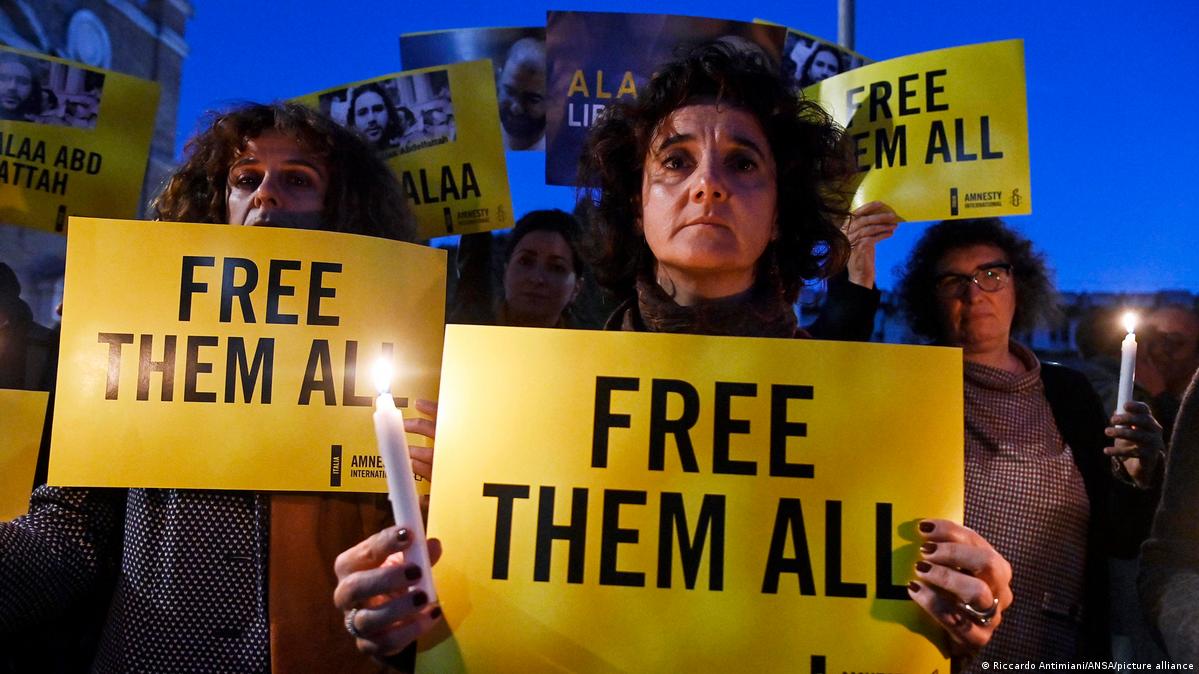
A small protest in Cairo has become a stark warning signal for anyone watching civil liberties in the Middle East. The detention of six journalists in Egypt is not just another press freedom dispute – it is a test of how far the state is willing to go to control public narratives, intimidate watchdogs, and redraw the limits of permissible dissent. For journalists, activists, diplomats, and readers who depend on independent reporting, the message is painfully clear: Egypt press freedom is under renewed pressure at a moment when regional instability makes credible information more essential than ever.
- Six journalists were reportedly detained after participating in or covering a protest linked to press and civil rights concerns.
- The case highlights Egypt’s long-running crackdown on independent media, protest activity, and public criticism.
- Press freedom advocates see the detentions as part of a broader strategy to deter scrutiny through legal pressure and intimidation.
- The stakes extend beyond Egypt: weakened media freedom affects regional diplomacy, human rights monitoring, and public accountability.
Egypt Press Freedom Faces a Familiar Stress Test
The reported detention of six journalists after the Matsadaash protest fits into a larger and troubling pattern. Egyptian authorities have repeatedly used a combination of pretrial detention, protest restrictions, national security laws, and administrative pressure to narrow the public sphere. That does not mean every case is identical, or that every detention carries the same legal basis. But taken together, these incidents create a climate where journalists learn to calculate risk before asking basic questions.
The phrase Matsadaash, loosely associated with a refusal to stay silent, captured the mood of frustration behind the protest. For a press corps already operating under intense scrutiny, even symbolic protest can be treated as a challenge to state authority. The result is a chilling effect that goes well beyond the six individuals involved.
When journalists are detained after a protest, the point is rarely only punishment. The broader signal is deterrence: do not gather, do not document, do not amplify.
This is why the case matters internationally. Egypt is a major regional power, a key diplomatic broker, and a recipient of significant foreign support. Its internal media environment influences how crises are reported, how abuses are documented, and how ordinary citizens understand state power.
What Happened Around the Matsadaash Protest
The Guardian’s reporting centers on six journalists detained in connection with a protest over detentions. The demonstration appears to have been rooted in anger over ongoing arrests and the treatment of people held in custody. While the precise legal proceedings and individual circumstances can evolve quickly, the core issue is straightforward: journalists who gather around a protest, whether as participants, observers, or reporters, can become targets themselves.
In Egypt, unauthorized protest is highly restricted. The state has long argued that tight controls are needed for stability and security. Critics counter that these laws are used to suppress peaceful assembly and shield officials from scrutiny. For journalists, this creates a dangerous ambiguity. Covering a protest can be interpreted as endorsing it. Interviewing activists can be framed as coordination. Publishing details can be treated as amplification of unrest.
The Legal Pressure Point
One of the most important tools in Egypt’s pressure architecture is pretrial detention. In theory, pretrial detention is a temporary measure used while investigations proceed. In practice, rights groups have long argued that it can become a form of punishment without conviction, especially when cases are renewed, delayed, or folded into broader security narratives.
This distinction matters. A journalist does not need to receive a long prison sentence to be silenced. Losing access to work, family, equipment, legal certainty, and freedom of movement can be enough to disrupt a career and send a warning to peers.
The Media Signal
Every detention changes newsroom behavior. Editors may pull back from sensitive coverage. Freelancers may avoid protests entirely. Sources may stop answering calls. Families may pressure reporters to leave the profession. Over time, the information ecosystem becomes less adversarial, less precise, and less useful to the public.
Pro Tip for readers: when assessing press freedom cases, look beyond whether a journalist is formally convicted. The deeper question is whether the process itself creates fear, cost, and silence.
Why Egypt Press Freedom Matters Beyond Journalism
It is tempting to treat press freedom as a professional concern for reporters and editors. That is a mistake. A constrained press affects markets, courts, diplomacy, health systems, climate resilience, and public safety. If the public cannot reliably learn who was arrested, why a protest happened, whether prison conditions are worsening, or how officials respond to criticism, then accountability becomes largely theatrical.
For Egypt specifically, the stakes are amplified by its geopolitical role. The country sits at the intersection of African, Arab, Mediterranean, and global power politics. It plays a role in migration policy, Gaza diplomacy, Red Sea security, energy routes, debt negotiations, and climate adaptation. Weakening independent reporting inside Egypt means weakening the world’s ability to understand one of the region’s central states.
- For citizens: fewer independent reports mean fewer tools to challenge official narratives.
- For investors: opaque governance increases political and regulatory risk.
- For diplomats: limited reporting makes it harder to assess public sentiment and rights conditions.
- For civil society: detentions can fracture networks and discourage lawful advocacy.
The Strategy Behind Silencing Dissent
Modern repression often looks less like dramatic censorship and more like procedural exhaustion. A journalist may not be banned outright. Instead, they may face summonses, equipment seizure, travel restrictions, blocked websites, legal complaints, accreditation hurdles, or the threat of being swept into a security case.
This approach is effective because it is deniable and scalable. Officials can argue that each case is a legal matter, not a press freedom issue. But when enough cases accumulate, the pattern becomes difficult to ignore. The system does not need to jail every critic. It needs to make enough examples that others internalize the boundary.
The most powerful censorship system is not one that deletes every story. It is one that convinces journalists not to file the story in the first place.
That is why the detention of six journalists after a protest is so consequential. It targets the connective tissue between civic dissent and public knowledge. A protest that is not documented can be dismissed. A detention that is not reported can be normalized. A newsroom that is afraid can be managed.
How International Pressure Could Shape the Outcome
International response matters, but it is rarely simple. Egypt’s strategic importance gives it leverage. Western governments often balance human rights concerns against security cooperation, migration management, energy interests, and regional diplomacy. This is where rhetoric and policy often diverge.
Still, public pressure can influence outcomes. High-profile cases may receive better legal attention, faster diplomatic engagement, or eventual release. International media coverage can also make it harder for governments to disappear cases into bureaucracy. The challenge is sustaining attention after the first headline fades.
What Accountability Should Look Like
Accountability should begin with transparency: clear information about where the journalists are held, what allegations they face, whether they have access to lawyers and family, and whether their detention complies with Egyptian and international standards. Beyond that, authorities should distinguish between journalism, peaceful assembly, and genuine criminal conduct.
Press organizations and foreign governments should avoid vague concern as a substitute for action. Useful pressure includes monitoring hearings, raising names in bilateral meetings, supporting independent legal defense, and refusing to treat press freedom as a decorative issue separate from security and economic policy.
The Future of Reporting in Egypt
The immediate question is what happens to the six detained journalists. The larger question is whether Egypt’s media sphere can retain any meaningful space for independent scrutiny. Digital platforms once offered a partial escape route, but governments have become more sophisticated in monitoring online activity, shaping narratives, and pressuring digital publishers.
Journalists now operate in a hybrid risk environment. A post, photo, encrypted message, interview request, or presence near a protest can become evidence in a case. Technical tools like secure messaging, two-factor authentication, and device encryption are useful, but they cannot solve the political problem at the center of this story.
Why this matters: if reporters cannot safely observe public dissent, citizens lose one of the few mechanisms capable of verifying state power in real time. That loss is not abstract. It affects detainees, families, lawyers, voters, workers, and anyone who relies on factual information in moments of crisis.
Egypt Press Freedom Is the Story to Watch
The detention of six journalists after the Matsadaash protest is not an isolated media dispute. It is a snapshot of a system that treats independent observation as a potential threat. Whether these journalists are quickly released or drawn into a longer legal process, the damage is already visible: fear spreads faster than any official statement can contain.
For Egypt’s allies, the case presents a choice. They can continue compartmentalizing rights concerns as secondary to strategic interests, or they can acknowledge that a state that suppresses information becomes harder to understand, harder to trust, and harder to partner with responsibly.
For readers, the lesson is equally urgent. Press freedom is not a luxury reserved for stable democracies. It is the infrastructure that allows societies to see themselves clearly. When that infrastructure is attacked, the silence that follows is not peace. It is a warning.
The information provided in this article is for general informational purposes only. While we strive for accuracy, we make no guarantees about the completeness or reliability of the content. Always verify important information through official or multiple sources before making decisions.


