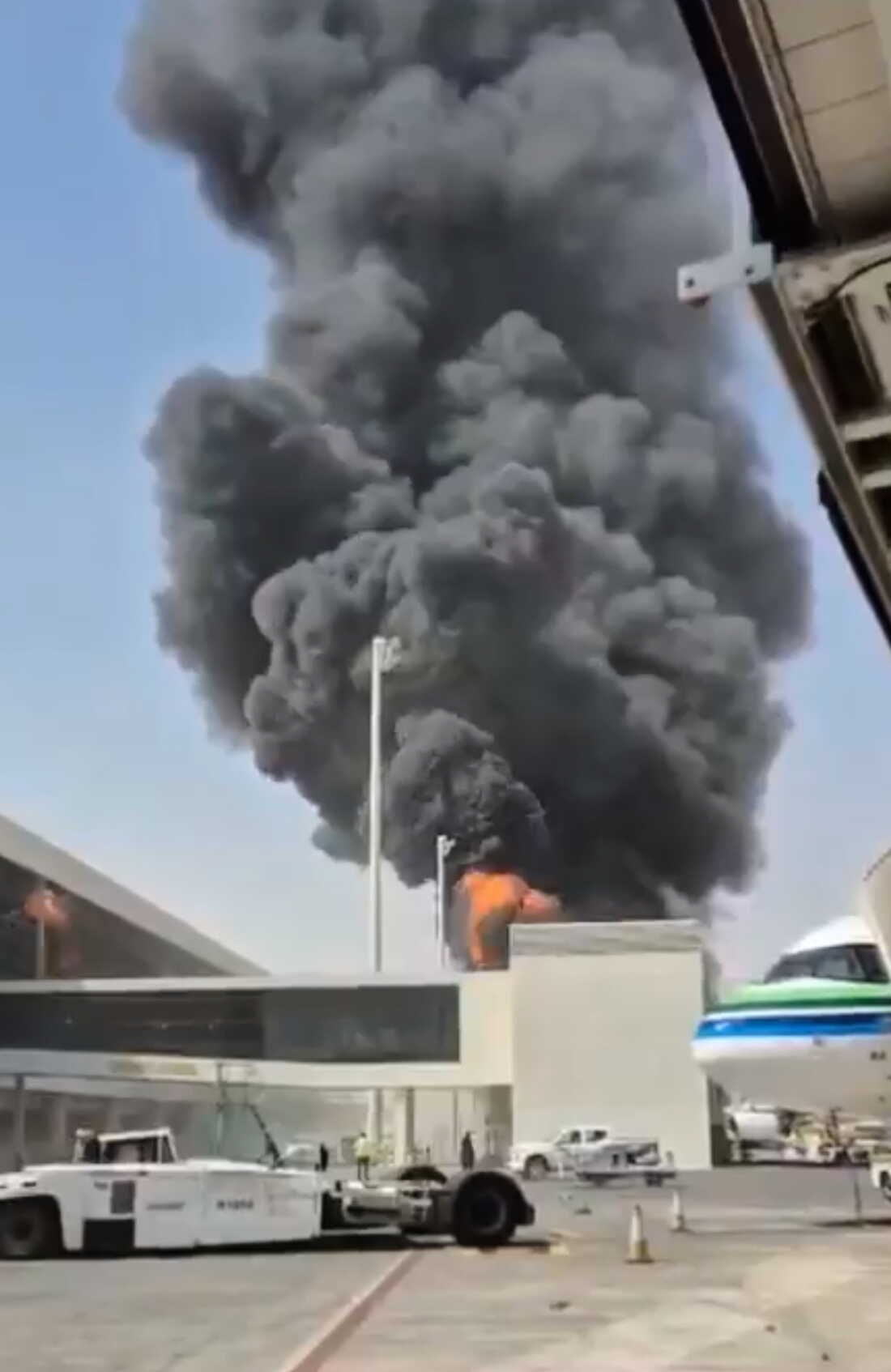
Saudi Arabia Faces Airport Strike Test

Saudi Arabia Faces Airport Strike Test
A strike on an airport is never just a strike on infrastructure. It is a message aimed at travelers, markets, governments, and the fragile psychology of national security. The reported Houthi strikes on Riyadh airport put Saudi Arabia airport strike risks back at the center of Middle East geopolitics, where drones, missiles, and air defense systems now shape the balance of power as much as diplomacy does. For Saudi Arabia, the immediate task is operational: keep flights moving, reassure civilians, and show that critical infrastructure can withstand pressure. But the bigger challenge is strategic. If airports, energy facilities, and transport hubs remain viable targets, the region’s next crisis may not begin at a battlefield. It may begin at a departures board.
- Houthi strikes targeting Riyadh airport signal a widening pressure campaign against Saudi infrastructure.
- Saudi Arabia’s pledge of resilience is aimed at domestic confidence, regional rivals, and global investors.
- The incident highlights how drones and missiles have changed the economics of conflict.
- Air defense, escalation control, and diplomatic backchannels will determine what happens next.
Saudi Arabia Airport Strike Raises The Stakes
The significance of a Saudi Arabia airport strike is not limited to physical damage. Airports are symbols of state capacity. They are where national ambition becomes visible: tourism, trade, diplomacy, and business travel all pass through the same security perimeter. When that perimeter is threatened, the political impact can outpace the material damage.
Riyadh is not merely a capital city. It is the centerpiece of Saudi Arabia’s push to present itself as a global business and travel hub. Any disruption at a major airport therefore collides directly with the kingdom’s broader transformation agenda, including tourism expansion, logistics growth, and high-profile international investment campaigns.
The core message of this kind of strike is psychological: if a capital airport can be reached, then no strategic asset can be treated as fully insulated from regional conflict.
That is why Saudi officials emphasize resilience. The word is carefully chosen. It is not only about damage repair. It is about deterrence through continuity: the claim that attacks will not derail state functions, investor confidence, or the kingdom’s strategic trajectory.
Why Houthi Strikes Still Matter
The Houthis have spent years demonstrating that relatively lower-cost systems, including drones, cruise missiles, and other long-range strike tools, can pressure wealthier states with sophisticated defenses. This asymmetry is now a defining feature of regional conflict. The point is not always to destroy a target outright. Often, the goal is to force expensive interceptions, create uncertainty, and produce headlines that amplify the political effect.
That logic gives groups like the Houthis strategic reach beyond traditional battlefield geography. A launch from one area can become a business continuity problem hundreds of miles away. A single successful impact, or even a credible near miss, can force airlines, insurers, airport operators, and security agencies to reassess risk.
The New Cost Curve Of Conflict
Modern air defense is technically impressive, but economically punishing. Interceptors can cost far more than the incoming drone or missile. That imbalance creates a grinding strategic problem: defending everything, all the time, is enormously expensive.
For Saudi Arabia and its partners, the challenge is layered defense. Radar coverage, command-and-control systems, fighter aircraft, short-range interceptors, electronic warfare, and airport emergency protocols all need to work together. One weak layer can create cascading consequences.
- Detection: identifying low-flying or small-profile threats early enough to respond.
- Attribution: determining who launched the strike and from where.
- Interception: selecting the right defense tool without exhausting high-value systems.
- Continuity: keeping airport operations stable even during disruption.
- Messaging: reassuring the public without appearing complacent.
Saudi Arabia Airport Strike And The Investor Confidence Problem
Saudi Arabia’s economic strategy depends heavily on predictability. The kingdom wants global companies, tourists, event organizers, and financial institutions to see it as a platform for growth. A Saudi Arabia airport strike complicates that pitch, even if the operational impact is contained.
Investors tend to price risk before governments want to discuss it. Aviation disruptions, insurance costs, security premiums, and contingency planning can all become hidden taxes on growth. The immediate market reaction may be limited, but repeated incidents can gradually reshape boardroom assumptions.
This is where resilience becomes more than a slogan. If Saudi authorities can demonstrate rapid recovery, transparent communication, and credible prevention, the long-term effect may be manageable. If disruptions become recurring, the perception problem becomes harder to contain.
Pro Tip For Businesses Operating In The Gulf
Companies with staff, logistics, or events tied to major Gulf transport hubs should review their business continuity plans. That means checking alternate routing, emergency communications, insurance language, and duty-of-care procedures for employees. The goal is not panic. It is operational realism.
The Regional Escalation Question
The most dangerous part of strikes on high-profile civilian infrastructure is not always the strike itself. It is the response cycle that follows. Saudi Arabia must balance deterrence with escalation control. A weak response can invite further attacks. An overly aggressive response can expand the conflict and create new political costs.
The Houthis, meanwhile, may calculate that each strike increases their leverage, especially if it forces regional and international actors to engage with them as a military and political force. That creates a grim incentive structure: attacks become bargaining tools.
Airport strikes sit in the gray zone between military pressure and civilian disruption, which is exactly why they are so destabilizing.
The wider region is already shaped by overlapping conflicts, proxy rivalries, maritime insecurity, and great-power competition. A strike on Riyadh airport does not happen in a vacuum. It lands inside a crowded strategic map where every actor is watching for weakness, opportunity, or a pretext.
What Saudi Resilience Really Requires
Resilience is often framed as toughness, but in national security terms it is more specific. It requires systems that absorb shocks without collapsing. For an airport, that includes runway inspection teams, redundant communications, emergency medical capacity, passenger management, cyber-secure operations, and coordination between civilian aviation and military defense authorities.
There is also a public trust component. People can tolerate disruption if they believe officials are competent and honest. Confusing information, unexplained closures, or visible panic can do more damage than the initial strike. In a media environment where videos and claims spread instantly, crisis communication is now part of the defense architecture.
Key Signals To Watch Next
- Flight operations: whether delays remain brief or become prolonged.
- Official language: whether Saudi statements emphasize restraint, retaliation, or investigation.
- Houthi claims: whether the group frames the strike as a one-off action or part of a campaign.
- Regional diplomacy: whether mediators push for de-escalation behind the scenes.
- Security posture: whether airports, energy sites, and ports visibly tighten defenses.
Why This Matters Beyond Saudi Arabia
The attack matters because it reflects a global trend: critical infrastructure is becoming a frontline target. Airports, ports, power grids, undersea cables, and energy facilities are increasingly central to modern conflict. They are difficult to defend, politically sensitive, and economically vital.
For governments, the lesson is uncomfortable. Conventional military superiority does not guarantee infrastructure immunity. For companies, the lesson is equally clear. Geopolitical risk is no longer an abstract line in an annual report. It can affect routes, supply chains, staff movement, and customer confidence overnight.
The Middle East has been a testing ground for these dynamics, but the implications are global. The same logic applies wherever long-range precision systems, armed groups, and strategic infrastructure intersect.
The Bottom Line
Saudi Arabia’s vow of resilience after Houthi strikes hit Riyadh airport is both a reassurance campaign and a strategic necessity. The kingdom needs to show that its capital, its aviation network, and its economic transformation plans can withstand pressure. But resilience will be judged by performance, not rhetoric.
If Saudi defenses adapt, operations stabilize, and escalation is contained, the strike may become another episode in a long-running regional contest. If attacks on critical infrastructure accelerate, it could mark a more dangerous phase: one where airports and economic hubs become recurring instruments of coercion.
For now, the message is blunt. The future of regional security will not be decided only by armies and diplomats. It will also be decided by whether states can keep the lights on, the runways open, and the public convinced that disruption is not defeat.
The information provided in this article is for general informational purposes only. While we strive for accuracy, we make no guarantees about the completeness or reliability of the content. Always verify important information through official or multiple sources before making decisions.