El Salvador Mass Trials Test Justice
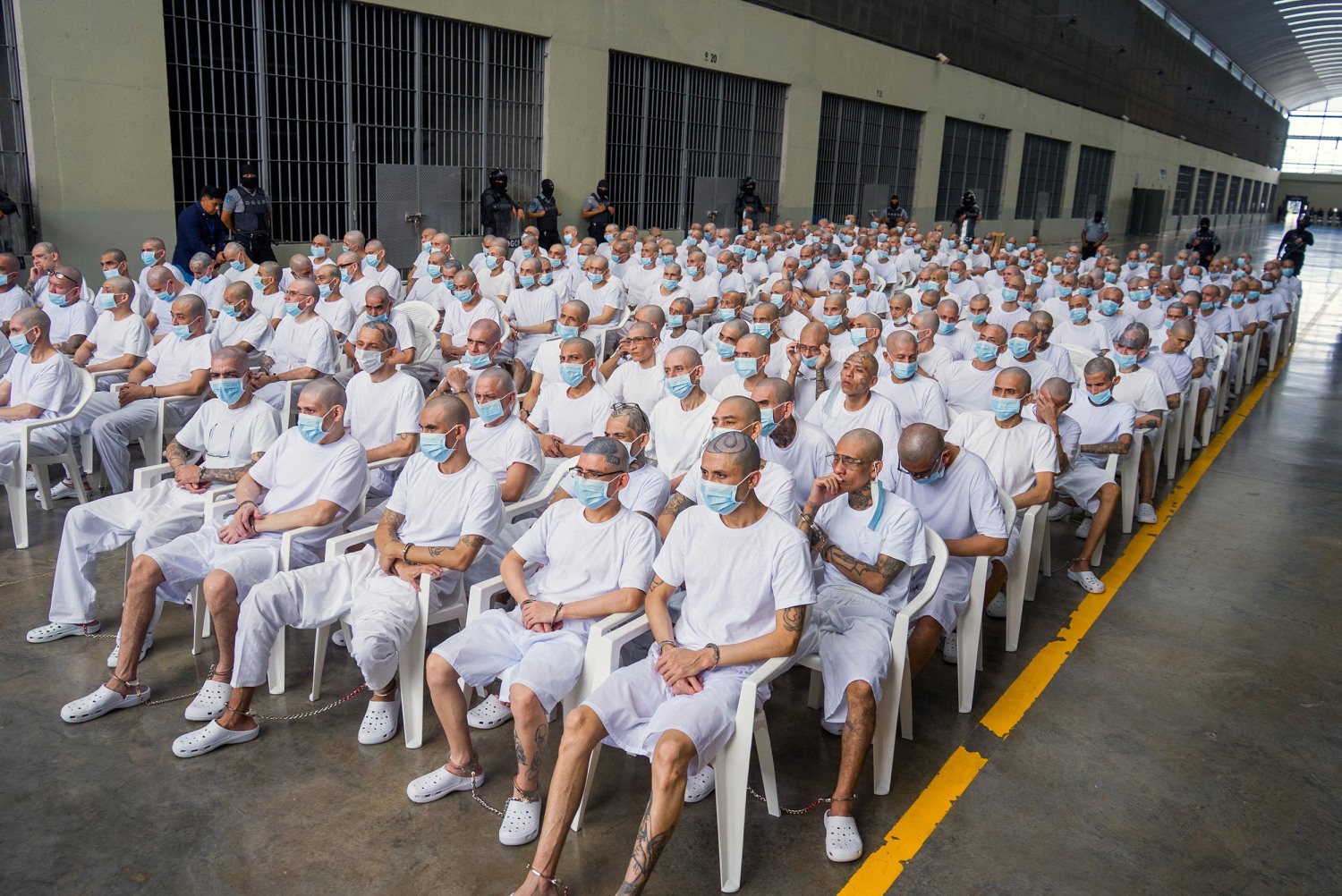
El Salvador mass trials are turning one of Latin America’s most aggressive security crackdowns into a defining test of democratic justice. President Nayib Bukele’s war on gangs has delivered what many Salvadorans desperately wanted: quieter streets, lower homicide rates, and the sense that the state finally overpowered criminal groups that once ruled neighborhoods. But the legal machinery now built to process tens of thousands of arrests is straining the idea that every defendant deserves an individual defense. When lawyers are asked to represent hundreds of people at once, the courtroom stops looking like a venue for truth and starts resembling an administrative pipeline. For families of detainees, the pain point is brutally simple: if the state can arrest at scale, can justice still judge one person at a time?
- El Salvador mass trials are designed to process large groups of alleged gang members under emergency-era laws.
- Defense lawyers say the model makes meaningful representation nearly impossible when hundreds of defendants are bundled together.
- Bukele’s crackdown remains popular because it has dramatically reduced fear in many communities.
- The core risk is that collective prosecution can blur individual guilt, weakening
due process. - The outcome could shape how other governments copy hardline security policies across the region.
El Salvador Mass Trials Put Security Gains on Trial Too
The uncomfortable truth is that Bukele’s security project did not emerge from nowhere. El Salvador lived for years under the shadow of powerful gangs, including groups that extorted workers, controlled transit routes, recruited children, and made ordinary life feel negotiable. For many citizens, the crackdown has been less an abstract policy debate than a lived transformation. Shops stay open later. Buses feel safer. Parents report less fear when children leave home.
That reality matters. Any serious analysis has to acknowledge the public demand for protection after decades of violence and institutional failure. The state’s legitimacy had already been corroded by gangs before it was tested by emergency powers.
But legitimacy is not a blank check. The same government that claims victory over criminal networks must also prove it can distinguish between actual gang members, coerced associates, wrongly accused neighbors, and people swept up by weak intelligence. That distinction is not a bureaucratic detail. It is the difference between justice and mass punishment.
The legal question is no longer whether El Salvador can fill prisons. It is whether the courts can still see the individual inside the crowd.
Why Lawyers Say the System Is Breaking
Mass trials create a numbers problem that quickly becomes a rights problem. When hundreds of defendants are grouped into a single proceeding, defense attorneys face crushing limits. They may have little time to interview clients, review evidence, identify mistaken identities, challenge police reports, or investigate alibis. The larger the case file, the easier it becomes for the individual story to disappear.
In ordinary criminal law, the prosecution must connect a person to specific conduct. Under a mass model, the prosecution’s narrative can tilt toward association: neighborhood, tattoos, alleged contacts, anonymous tips, or inclusion in a police sweep. Some of that evidence may be relevant. Some may be dangerously thin. The point of due process is to separate one from the other.
Defense lawyers are not simply complaining about workload. They are warning that the architecture of the trials may be incompatible with meaningful representation. If a lawyer cannot communicate with each defendant, test each allegation, and contest each piece of evidence, the defense becomes symbolic.
Individual Guilt Cannot Be Outsourced to a Spreadsheet
Modern states love scale. Databases, batch processing, centralized detention, standardized charges, and procedural shortcuts can make a crackdown look efficient. But criminal justice is not logistics. It carries a moral and legal burden that resists automation.
A mass proceeding may help the state move cases, but efficiency is not the same as accuracy. A justice system built around speed risks rewarding weak evidence because weak evidence is faster to process. It also pressures judges to treat defendants as categories rather than people.
Pro Tip for readers tracking rule-of-law crises: look less at the government’s headline conviction rate and more at access to counsel, evidence disclosure, appeal rights, and whether defendants can meaningfully challenge the state’s claims. Those are the pressure points where democratic systems either hold or fracture.
El Salvador Mass Trials and the Politics of Popular Order
Bukele’s political power is rooted in a simple bargain: security first, institutions later. For millions of Salvadorans exhausted by gang violence, that bargain feels rational. Critics outside the country can underestimate how transformative a drop in violence can feel in daily life. When people have lived under extortion and territorial control, constitutional warnings may sound remote compared with the relief of walking safely through a neighborhood.
That is why this moment is so politically durable and so difficult. The crackdown’s supporters see court delays, rights challenges, and international criticism as obstacles to survival. The government frames emergency measures as the necessary cost of dismantling gangs. Opponents argue that emergency powers have become normalized, giving the executive branch extraordinary influence over policing, detention, and prosecution.
The danger is not only authoritarianism in the abstract. It is institutional muscle memory. Once courts adapt to mass prosecution, once prisons expand around indefinite detention, once police learn that broad suspicion is enough, the system may not easily return to ordinary standards. Temporary tools can become permanent habits.
The Regional Copycat Problem
El Salvador has become a case study for leaders across Latin America who face organized crime, public fear, and distrust in traditional parties. Bukele’s model offers a politically seductive message: move fast, ignore elite criticism, deliver visible order. The danger is that other governments may import the spectacle without building safeguards.
Security policy travels well when it is packaged as success. Legal protections travel more slowly because they are less photogenic. Prison transfers, mass arrests, and military patrols create images of control. Public defender funding, forensic standards, judicial independence, and case-by-case review do not trend as easily.
That imbalance matters. If El Salvador’s model becomes the region’s template, mass trials could shift from an emergency response to a governance style. The result would be a tougher regional posture on crime, but potentially weaker courts and more vulnerable citizens.
The Human Cost Behind the Courtroom Scale
Every mass case contains people who do not fit neatly into the state’s narrative. Some may be hardened gang members. Some may be low-level collaborators. Some may have been pressured by gangs. Some may be innocent. Some families may not even know the evidence against their relatives.
This is where the mass trial format becomes most troubling. A defendant’s ability to prove innocence often depends on details: work schedules, phone records, witness testimony, school enrollment, medical conditions, location history, or the absence of criminal ties. Those details require time. They require access. They require a lawyer who can do more than stand beside a group.
When the defense is stretched beyond recognition, the burden effectively shifts. Instead of the state proving guilt beyond a high threshold, defendants and families may feel forced to prove they should never have been arrested. That inversion is corrosive.
A state strong enough to defeat gangs should also be strong enough to prove its cases properly.
Why This Matters Beyond El Salvador
The debate around El Salvador mass trials is not a simple clash between soft-on-crime activists and law-and-order realists. It is a collision between two legitimate public needs: safety and justice. The challenge is that governments often present them as mutually exclusive when the healthiest societies require both.
If mass trials convict the guilty while sweeping in the innocent, the short-term security gains may conceal long-term instability. Wrongful detention can radicalize families, deepen distrust, and create grievances that criminal networks later exploit. Weak courts can also become tools against political enemies, protesters, journalists, or marginalized communities once the precedent is normalized.
There is also a practical risk. Overloaded prisons and courts can become pressure cookers. If the state cannot review cases carefully, manage detention humanely, or create credible pathways for lower-risk detainees, the security system may generate new crises even as it solves old ones.
What a More Credible Path Would Require
A stronger model would not mean abandoning the fight against gangs. It would mean upgrading the legal infrastructure around it. That starts with more public defenders, better evidence management, clearer charging standards, and independent judicial review. It also means separating defendants by alleged role and evidence quality rather than processing them as a single mass.
- Individualized case files: each defendant should have specific allegations and evidence attached to their name.
- Real access to counsel: lawyers need time, privacy, and resources to prepare a defense.
- Transparent evidence rules: courts should not rely on vague association alone.
- Appeal mechanisms: wrongful detention claims need fast and credible review.
- Independent oversight: emergency powers require external checks to prevent abuse.
These safeguards are not luxuries. They are how a state proves that its campaign is against criminal conduct, not against broad social categories.
The Verdict on Bukele’s Legal Gamble
Bukele’s supporters will argue that the old system failed and that extraordinary violence required extraordinary measures. They are not wrong to point to the failures of the past. But a government cannot build lasting legitimacy on fear alone, even if that fear is redirected toward criminals. At some point, the credibility of the crackdown depends on the credibility of the courts.
El Salvador now faces a defining question: can it preserve the security gains that citizens value while restoring the legal precision that democracy requires? The answer will determine whether the country becomes a model for effective crime reduction or a warning about what happens when justice is scaled beyond recognition.
For now, the mass trials are more than a legal procedure. They are a stress test for the rule of law in an age when voters are increasingly willing to trade process for protection. The world should watch carefully, not because El Salvador’s fear was imaginary, but because its solution may become the next global export.
The information provided in this article is for general informational purposes only. While we strive for accuracy, we make no guarantees about the completeness or reliability of the content. Always verify important information through official or multiple sources before making decisions.


