France Protests Test Macron Again

France Protests Test Macron Again
France protests are no longer background noise for Europe’s second-largest economy. They are becoming a recurring stress test for the French state, its schools, its streets, and its political legitimacy. A day of planned school blockades and street demonstrations signals something larger than a single policy dispute: a generation of students, workers, and unions believes the government is not listening fast enough, or at all. For parents, commuters, teachers, and businesses, the disruption is immediate. For President Emmanuel Macron’s government, the risk is strategic. France has a uniquely powerful protest culture, and when schools become organizing hubs, the political temperature rises quickly. The question is not just how many people march. It is whether the protests can unite fragmented anger into a movement the government cannot easily outlast.
- France protests are spreading through schools and streets, increasing pressure on the government and local authorities.
- School blockades matter politically because they bring youth mobilization into the center of national unrest.
- The demonstrations reflect deeper tensions over education, inequality, policing, and trust in public institutions.
- Disruption is the point: transport delays, closed campuses, and visible street action are designed to force attention.
- The government’s response will shape what comes next, either defusing anger or hardening it into a broader movement.
Why France Protests Still Shake the State
France has a protest tradition that is both civic ritual and political weapon. Demonstrations are not treated as symbolic side events. They are a core mechanism for renegotiating power between the state and the public. That is why school blockades and street protests deserve close attention, even when they begin with localized grievances.
When students block access to schools, they are doing more than skipping class. They are turning education infrastructure into a stage. Gates, courtyards, and entrances become visible pressure points where public frustration meets daily life. The spectacle is disruptive by design: parents must adapt, teachers must respond, administrators must coordinate, and police or local officials must decide whether to intervene.
Key insight: In France, the street is not the opposite of politics. It is often where politics becomes impossible to ignore.
That dynamic makes France protests unusually consequential. A march can begin as a response to education policy, austerity, pension reform, policing, or government leadership. But once unions, students, and opposition parties find a shared rhythm, the agenda can expand quickly. The issue becomes not only what triggered the protest, but whether the government is seen as legitimate, responsive, and capable of compromise.
France Protests and the Power of School Blockades
School blockades carry a particular political charge because they involve young people at a formative moment. Students are not just future voters. They are visible symbols of national anxiety: the cost of living, the quality of education, job prospects, climate fears, and distrust in elite decision-making. When they organize collectively, the optics become difficult for any government to dismiss.
Why schools become flashpoints
Schools are dense social networks. Information moves fast through classrooms, messaging apps, student unions, and informal peer groups. A call for action can spread faster than a traditional political campaign because it is embedded in daily routines. The result is a protest structure that is decentralized but highly responsive.
Blockades also lower the barrier to participation. Not every student will attend a large march in a city center, but many can join a gathering outside their own school. That makes the movement harder to quantify and harder to contain. Instead of one crowd in one square, authorities may face dozens of smaller disruptions across multiple neighborhoods.
The symbolism of disrupted education
Education is one of the French Republic’s central promises. It represents equality, citizenship, and social mobility. When schools are blocked, the message is pointed: the institution meant to produce opportunity is being used to protest a perceived lack of it.
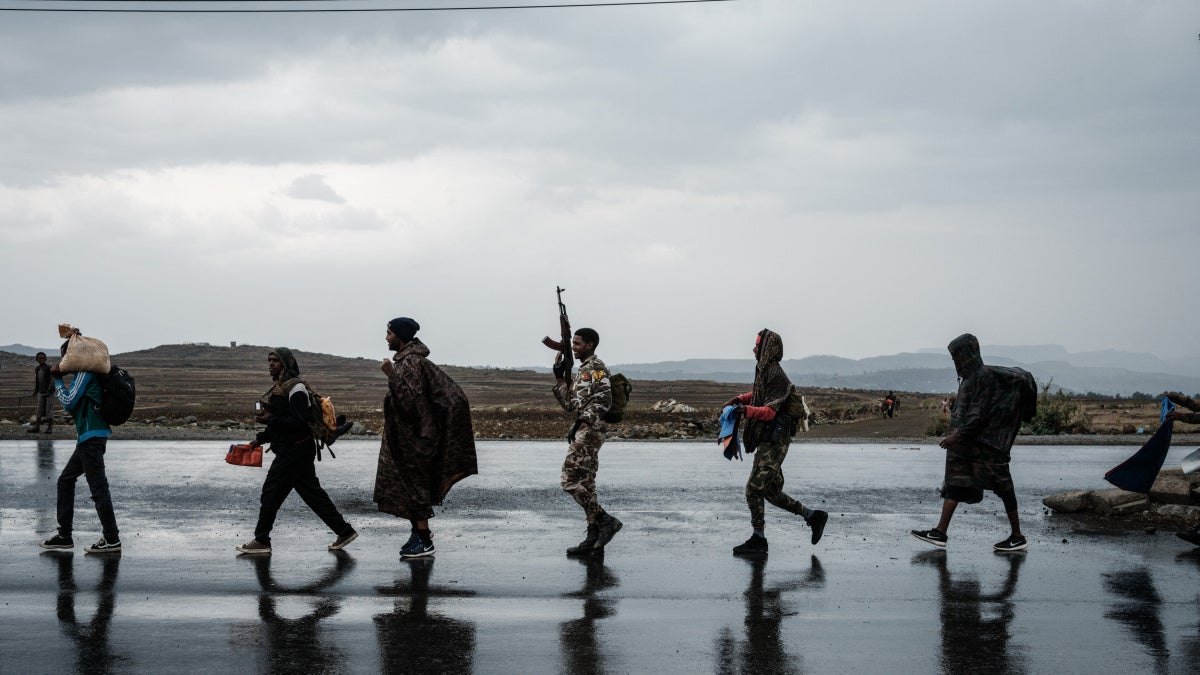
This is why images of blocked entrances, banners, and student crowds resonate beyond the immediate participants. They suggest that public frustration has reached a place the state cannot comfortably ignore. A government can argue about numbers at a march. It is harder to wave away unrest in schools without appearing disconnected from young people.
The Wider Anger Behind France Protests
Street demonstrations rarely emerge from a single cause. They are usually the visible tip of a deeper political pileup. France has spent years cycling through intense mobilizations, from labor disputes to pension reform battles to anger over policing and economic pressure. Each episode leaves behind networks, slogans, grievances, and a sense of unfinished business.
The latest day of school blockades and protests fits into that broader pattern. Even if the immediate demands are specific, the emotional fuel is wider: frustration with top-down government, anxiety about public services, and a feeling that democratic participation has been reduced to periodic elections followed by limited consultation.
Cost of living pressure changes the protest mood
Economic anxiety is a multiplier. When households feel squeezed, policy disputes become personal faster. Transport costs, rent, food prices, energy bills, and uncertain work prospects make public anger more combustible. For students and young workers, the promise of stability can feel increasingly abstract.
That matters because protests become harder to manage when they are rooted in lived pressure rather than narrow ideology. People may disagree on parties or policy details, but they can still rally around a shared sense that life is getting harder and institutions are not keeping up.
Policing remains a central variable
How authorities manage demonstrations can determine whether a protest day ends as a contained event or becomes the start of something larger. Heavy-handed policing can discourage some participants, but it can also radicalize others, particularly when images of confrontation circulate widely. In a media environment shaped by smartphones and social platforms, the optics of enforcement are part of the political battlefield.
The state faces a difficult balance. It must protect public order, keep schools and transport functioning where possible, and prevent violence. But if the response looks disproportionate, the government risks turning a policy protest into a legitimacy crisis.
What Makes This Moment Politically Dangerous
The risk for Macron’s government is not only the scale of a single protest day. It is convergence. France’s political landscape is fragmented, but protest movements can temporarily align groups that disagree on almost everything else. Students, teachers, unions, left-wing parties, climate activists, and disaffected workers may not share a full program. They may share a target.
Editorial view: The government’s biggest vulnerability is not one angry crowd. It is the possibility that separate frustrations begin to recognize themselves as one movement.
That is when the political math changes. A government can survive sporadic demonstrations. It can often wait out isolated sectoral strikes. But rolling blockades, youth mobilization, union coordination, and repeated street protests create a different kind of pressure. They disrupt routines, dominate headlines, and force political actors to choose sides.
The youth factor
Youth-led protest has a different tempo than traditional labor action. It is faster, more visual, and often less predictable. Organization can happen through informal channels rather than formal structures. That can make negotiations harder because there may not be a single leadership group capable of accepting concessions on behalf of everyone.
This is both a strength and a weakness. Decentralization makes a movement resilient, but it can also blur demands. Governments often exploit that ambiguity by asking who speaks for the protesters. The answer may be nobody and everybody, which is powerful in the street but complicated at the negotiating table.
Why This Matters Beyond France
France protests are watched closely across Europe because they often preview broader democratic tensions. Many European governments face similar pressures: strained public services, inflation fatigue, youth insecurity, migration debates, climate policy conflicts, and distrust of political elites. France is distinctive in its protest culture, but not in its underlying anxieties.
If school blockades gain traction, they could become a model for youth mobilization elsewhere. If the government contains the unrest through dialogue and targeted concessions, it may offer another lesson: that early engagement still matters. If confrontation escalates, the lesson may be darker – that democratic systems are struggling to absorb social anger before it spills into disruption.
Pro Tip for readers following the unrest
- Watch participation breadth, not just crowd size. A smaller protest spread across many schools can matter more than one large march.
- Track union involvement. If major labor groups coordinate with students, pressure on the government rises sharply.
- Look at police-protester interactions. Viral images can reshape public opinion within hours.
- Follow government language. A shift from dismissal to negotiation often signals concern inside the administration.
The Government’s Narrow Path
The government has three basic options: wait, negotiate, or crack down. Each carries risk. Waiting can work if momentum fades, but it can look arrogant. Negotiating can defuse anger, but it may encourage more mobilization if concessions appear possible. A tough security response can restore order in the short term, but it may deepen the narrative that the state listens only under pressure.
The smartest path is usually the hardest: acknowledge legitimate grievances without surrendering control of the agenda. That means separating peaceful student action from vandalism or violence, opening credible channels with educators and youth representatives, and communicating concrete steps rather than abstract reassurance.
For protest movements, the challenge is also strategic. Disruption earns attention, but sustained public support requires clarity. The more the movement can explain what it wants and why it matters to people beyond the barricades, the harder it becomes to marginalize.
France Protests Enter a Defining Phase
The day of school blockades and street demonstrations is a test of momentum. If participation is limited, the government will likely frame the unrest as manageable. If turnout spreads across campuses and cities, the political conversation changes. Suddenly, the focus shifts from isolated disruption to national dissatisfaction.
France has been here before, but repetition does not make the moment less serious. It makes it more revealing. Each new wave of protest exposes the distance between institutional confidence and public frustration. The schools and streets are sending a signal. The question is whether the government treats it as noise, negotiation, or warning.
For now, France protests remain a live measure of democratic tension: loud, disruptive, deeply political, and impossible to reduce to a single demand. That is precisely why they matter.
The information provided in this article is for general informational purposes only. While we strive for accuracy, we make no guarantees about the completeness or reliability of the content. Always verify important information through official or multiple sources before making decisions.